
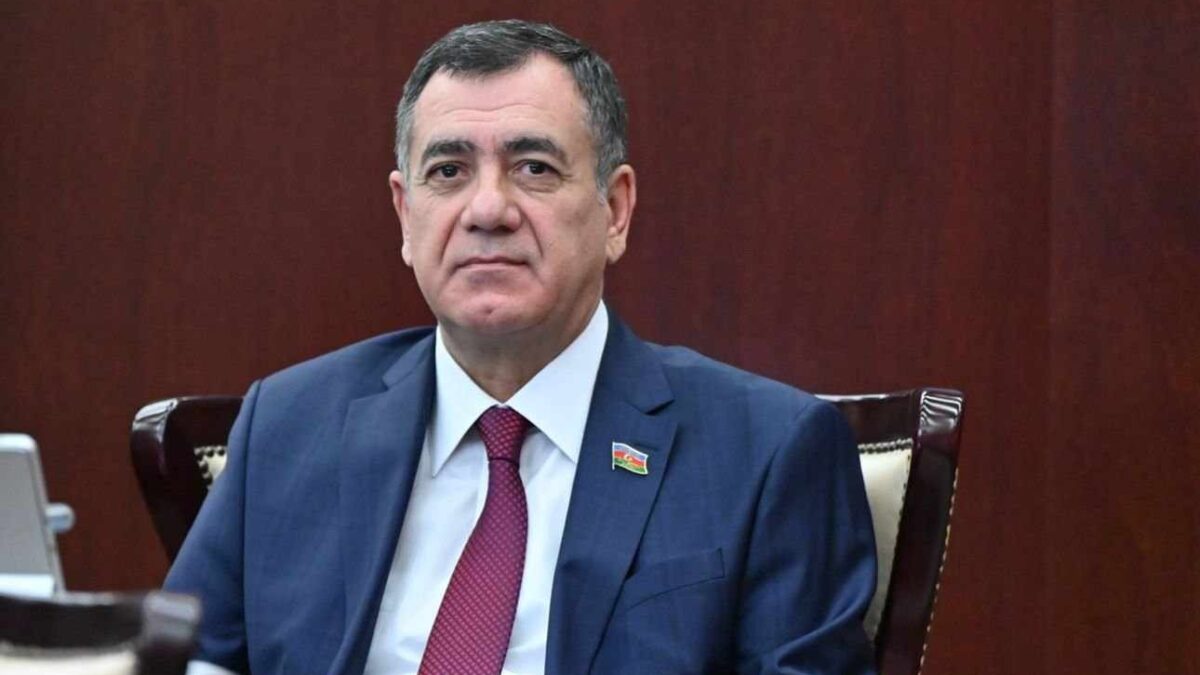
Gudrat Hasanzade, Deputy Chairman of the Committee on Defense, Security and Anti-Corruption of the Milli Majlis, and Chairman of the Justice, Law and Democracy (AHDP) Party, made a statement to “Elchi”.
-Gudrat bey, some foreign political experts and research centers claim that as a result of the US-Iran conflict, the Iranian leadership will become even stronger, Iran will turn into a regional (middle) power, and after the conflict, Iran will pursue a more aggressive policy in the region. Do you agree with this assessment, and are there any dangers awaiting Azerbaijan?
-We wish for Iran to be a free, democratic welfare state with a strong economy. Because, besides being our neighbor, our compatriots live there. A strong Iran can also contribute to our development. However, there is another bitter reality regarding Iran at present. As a result of the war, Iran’s blockade has been further strengthened, serious damage has been inflicted on the country’s military-industrial complex, and the national currency is continuously losing value. The country, which depends on oil revenues, cannot sell oil. The intolerant attitude towards alternative opinions inside the country cannot be presented as the strengthening of the country. In modern political literature and various academic classifications, Iran is not considered a middle (regional) power, and with its current policy, it will not have such an opportunity in the near future either. States are considered regional powers based on their economic power (GDP, per capita income, industry, export, financial capabilities), military power (defense budget, army capabilities, technology, missile/nuclear potential, foreign military activity), population and territory (population size, territorial size, strategic geographical position), diplomatic power (diplomatic network, influence in international organizations, mediation capacity), regional influence (ability to influence security, economy, and politics in its region), technological and industrial capabilities (possession of high technologies, defense industry, energy, and strategic sectors), soft power capabilities (culture, education, brands, international reputation, and attractiveness), and international initiative capabilities (ability to create coalitions, influence the international agenda on certain issues). How many of these indicators does Iran possess, with a GDP of 300 billion and military expenditures of 7.4 billion dollars? Even Israel, whose GDP has reached 720.7 billion dollars, whose military budget is 48.3 billion dollars (the military expenditures of Turkey, considered a regional power, amount to 30 billion dollars), and which possesses nuclear weapons and the latest technology, is not considered a regional (middle) power. Countries like India, Vietnam, Saudi Arabia, Singapore, South Africa, and Indonesia are considered “rising middle (regional) powers.”
As for the question of what danger awaits us from Iran, let me say this: almost half of Iran’s population consists of Azerbaijani Turks, and no one should forget this. The Iranian leadership should think about peace and rebuilding the country. Furthermore, Azerbaijan has the capability to respond instantly to any threats. Turkey and Russia would also stand by Azerbaijan if such a situation arises. Iran is well aware of this, and therefore I do not expect any danger from Iran. On the contrary, I think we should think about creating an economic union with Iran in the 3+3 format, which the Central Asian republics will also join, paving the way for economic integration, and thereby for security and development.