
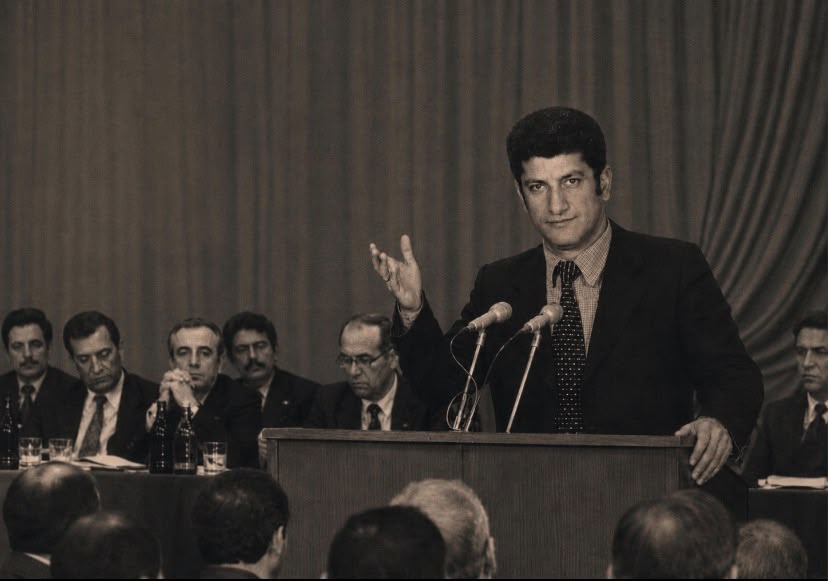
Greatness is not a physical indicator or related to age. Greatness is born with a person; it travels with them in their soul, unknown to others. Most people live only for themselves. A miserable lifestyle defines their life path, and they cannot move beyond smallness. Being great is not granted to everyone. Greatness is the power to carry a broad heart, lofty thoughts, and the burden of humanity. Our Gazanfar muallim, whom we speak of with pride and honor, was born great.
As a traveler of great ideals and sacred dreams, he dedicated his life to serving noble purposes. Today, I say with a sense of pride that this blessed scholar was one of those people who lived the highest moral values of our tribe in his own personality, the owner of a great community, a bearer of rich spirituality, a noble and complete personality. His neatness, posture, speech, and behavior inspired admiration in everyone. Wherever he went, he carried dignity, nobility, and greatness with him. There was another quality that made his greatness even more elevated. Despite all this stature, he would come to my father with the affection of a younger brother. With respect, love, and sincerity…
Everyone would fall silent in his presence and value his words. Yet, in my father’s presence, he considered himself a younger brother. At gatherings he attended, my father would sit at the head, and the final word belonged to my father. This is true greatness. As a person rises, they must be able to become simpler; as they grow, they must be able to humble themselves. Gazanfar muallim completed his secondary, vocational, and higher education, as well as the Institute of Marxism-Leninism, with honors. His deep knowledge, high culture, and rich worldview earned him a special place in the intellectual environment of Lankaran. His reputation as a teacher and public figure was great. Due to the intrigue of treacherous and hostile forces, he was removed from high positions. This injustice could not take anything away from his moral stature. Because the greatest position he held was his personality, and the greatest status he earned was his place in people’s hearts.
Those who would sit straight but speak crookedly in front of their own fathers would involuntarily stand up when they saw Gazanfar muallim, paying attention to their speech and posture, and composing themselves. When walking with him in the city of Lankaran, everyone looked at him with longing and admiration; even the city itself seemed to know him. The elderly greeted him with respect, the youth watched him with curiosity, and intellectuals considered it a moral gain to exchange a few words with him. Wherever he went, he left behind kind words, respect, and blessings.
Gazanfar muallim was not one of the ordinary people. There was an intellectual weight in his sitting, standing, clothing, and gaze. When he began to speak, everyone wanted to listen to him until the end. Because Gazanfar muallim was one of those people who valued words and used them appropriately. It was impossible to find meaninglessness in his conversation, artificiality in his behavior, or hypocrisy in his attitude.
People did not love him for his position.
Because Gazanfar muallim’s greatest position was his personality. He did not grow through his position; he rose through his personality. That is why, even after being removed from high positions, his name, reputation, and respect remained as they were. Positions came and went, but Gazanfar muallim’s greatness did not change. And I lived the pride and happiness of being related to such a noble, wise intellectual.
He was born after my uncle, who died untimely and unfulfilled, and he bore his name. That is why the relatives called him Uncle Avaz. He could not be a replacement for my unfulfilled uncle whose dreams were scattered. His fate was written to be greater. He was able to become an elder of a generation and a moral treasure of a community. He became the pillar of the family, the address of respect for the community, its elder, and its patriarch. In gatherings where his name was mentioned, people would fall silent with respect. His posture inspired respect, his words gained trust, and his presence brought peace of mind. Gazanfar muallim was not a replacement for my unfulfilled uncle; he became our collective IRREPLACEABLE place of love, trust, and faith!
Even the unseen angels applauded the lessons he taught to the children of the nation. Because Gazanfar muallim had become a household name as a living example of a perfect human being, an address of conscience, morality, and dignity. Everyone loved him for these high qualities. He had lived his life to be loved. He lived his life with honor, and with honor, he departed from this mortal world!
After August 22, 2003, the month of August became the beginning of fear, nightmare, chaos, sorrow, and longing for me. When this month comes, time stops, and memories become tender. The days, conversations, gatherings, and advice spent with him pass before my eyes one by one. The death of Gazanfar muallim tore a piece from our lives. A piece that, as years pass, remains unfilled. People born great continue to live even after they die. Gazanfar muallim is one of those people. Even though such people are laid to rest in the ground, they live on in people’s hearts and memories as a sacred value. For me, the month of August is the name, memory, and sorrow of Gazanfar muallim.
Death could do nothing to Gazanfar muallim. It became wretched itself, fell from grace, tumbled into a miserable and helpless state, and earned hatred. My beloved uncle, however, lives in our hearts, walks with us, his name is our place of oath, and his memory is our moral treasure. Death could only take his physical body from his hands. It could not touch his name, his deeds, or his greatness. Death could only hide him from our eyes! Great geniuses born great do not die; they become immortal. Like Gazanfar muallim!
Nəzərəli Ağayev,
rəssam, heykəltəraş