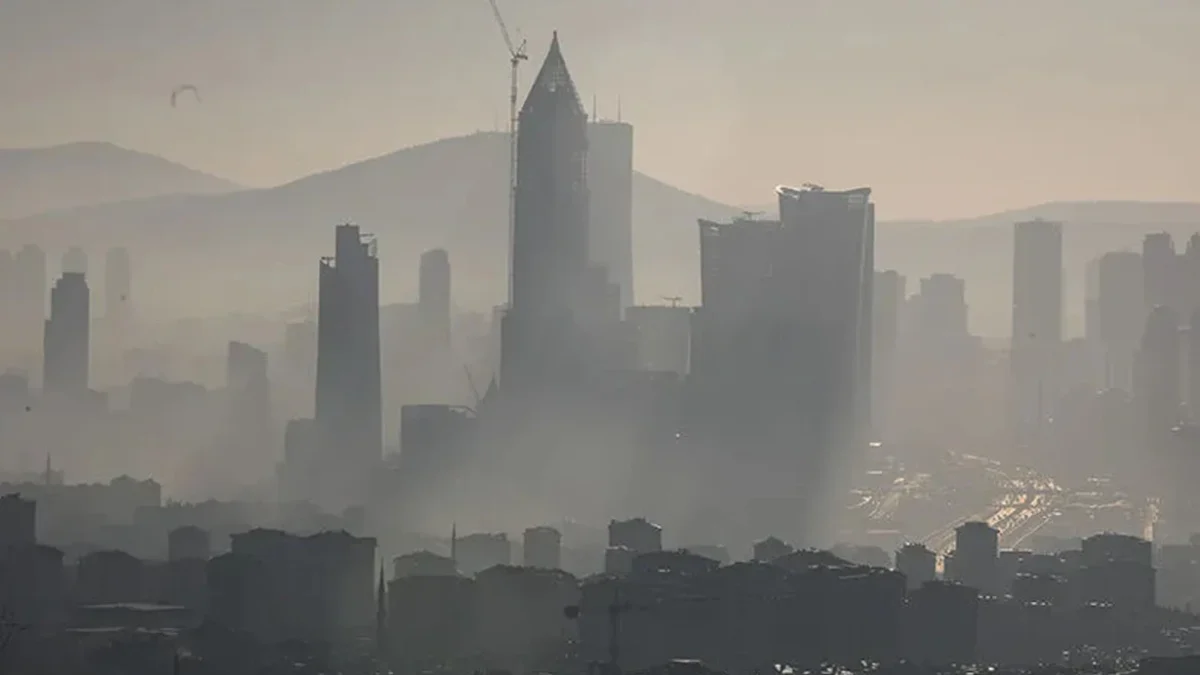
Due to extreme heat and air pollution caused by climate change – itself a consequence of global warming – approximately 40% of the world’s population has been exposed to dangerous ozone pollution this year. The region most affected by ozone pollution was Asia, followed by Europe and North America.
elchi reports that according to an analysis by the Copernicus Atmosphere Monitoring Service (CAMS), part of the European Centre for Medium-Range Weather Forecasts (ECMWF), ground-level ozone is a less visible harmful secondary pollutant; it is formed through chemical reactions among specific pollutants generated by sunlight and high temperatures.
CAMS analysis presents a global review of transboundary air pollution, including ozone, smoke from biomass burning, and desert dust, over an eight-month period in 2026, highlighting events affecting air quality on each continent and their impacts on people, livelihoods, and the environment.
Results show that ground-level ozone is detrimental to human health, ecosystems, and the productivity of agricultural crops. A combination of factors this year led to increased ground-level ozone concentrations in many regions, affecting billions of people worldwide.
While 40% of the global population was exposed to dangerous ozone pollution, only 5% experienced ozone levels classified as ‘good’ according to World Health Organization guidelines. Asia was the region most affected by ozone pollution, followed by Europe and North America.
In Asia, industrial and transport pollution, along with numerous natural precursor emission sources, led to high ozone levels throughout the year. 60% of the continent’s population was exposed to excessively high ozone levels this year.
Meanwhile, 50% of Europe’s population encountered ‘poor’ and ‘very poor’ ozone levels this year. Persistent heatwaves in Europe caused significant ozone exposure during the summer months. This situation highlights the increasingly strong link between climate-related extreme events and air quality.
In North America, ozone concentrations measured by population, based on global CAMS data, remained high, partly due to ozone precursor emissions stemming from extreme wildfires. More than two-thirds of the continent’s population was exposed to ‘bad’ or ‘very bad’ levels of ozone.
Florian Pappenberger, Director General of ECMWF, noted that the analysis shows air pollution knows no borders.
Highlighting that smoke from wildfires can affect communities thousands of kilometres away from the source of ozone and dust, Pappenberger stated: “As the international community prepares for the UN COP31 climate summit, these findings serve as a timely reminder that climate change, air quality, and public health are interconnected issues that require coordinated action on a global scale.”
Laurence Rouil, Director of CAMS, also noted these points, emphasizing that ozone pollution clearly demonstrates the close link between the atmosphere, climate, health, and people’s livelihoods:
“Pollution and our changing climate affect the chemistry of the air we breathe, determine the health of our ecosystems, and even impact our food production capabilities. At the same time, air pollution knows no national borders. Smoke from wildfires, emissions from biomass burning, and dust plumes from the Sahara can travel thousands of kilometres, affecting communities far from their source. This situation underscores the urgent need for evidence-based global action on air quality, alongside measures to combat climate change.”
Şayəstə
40% of the World’s Population Exposed to Dangerous Ozone Pollution