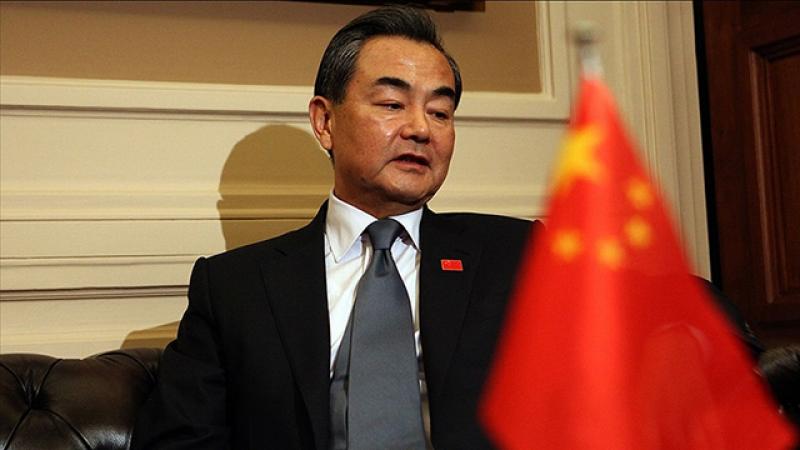
Chinese Foreign Minister Wang Yi has warned that if Japan does not learn from its history of aggression during World War II and instead attempts to return to militarism by questioning the post-war order and exonerating war criminals, it will have no future.
“Elchi” reports that, according to a statement from the Chinese Ministry of Foreign Affairs, Minister Wang met in Beijing with Takeshi Iwaya, chairman of the Japan Association for the Promotion of International Trade (JAPIT), who is visiting the country.
During the meeting, Wang noted that this year marks the 80th anniversary of the Tokyo Process (Tokyo Tribunal), where Japanese war criminals were tried after World War II. He stated: “If Japan does not learn from history—if it attempts to revive its past aggression by questioning the post-war ‘Peace Constitution’ and exonerating war criminals—it will not only be unable to move toward the future, but it will also be unable to face the world; it will have no future.”
The Chinese minister added: “The urgent task for Japan is for its leaders to correct their erroneous statements and actions regarding the Taiwan issue, take a correct stance on historical issues, and form a rational and objective understanding of China.”
Tensions between China and Japan
Wang’s statements are seen as a continuation of diplomatic tensions between Beijing and Tokyo; these tensions arose following comments by Japanese politician Sanae Takaichi, who raised the possibility of military intervention in Taiwan, a subject of a sovereignty dispute with China. Prime Minister Takaichi’s characterization of intervention in the Taiwan Strait as a “situation threatening the existence of her country” during a session of the Japanese Parliament (Diet) on November 7, 2025, and her suggestion of the potential use of military force, triggered a harsh reaction from China, which considers the region part of its territory.
With these statements, Takaichi became the first Japanese prime minister to explicitly declare that Japan would militarily intervene in the event of an invasion threat to Taiwan, thereby departing from the country’s long-standing policy of “strategic ambiguity” on the matter. Facing subsequent reactions, the Japanese Prime Minister clarified that her comments on Taiwan were hypothetical and promised to refrain from such comments in the future, although she refused to retract her statements.
Beijing lodged a diplomatic protest with Japan over Takaichi’s words, leading to a crisis that escalated with a series of events ranging from travel warnings and flight cancellations to blocked concerts, import bans, political disputes, and military confrontations.
Meanwhile, visits and offerings by leaders and politicians of Japan’s ruling Liberal Democratic Party (LDP) to the controversial Yasukuni Shrine, where the graves of high-ranking military officials convicted of World War II war crimes are located, continue to draw harsh reactions from China.
Şayəstə
Wang: If Japan does not learn from history, it will have no future