
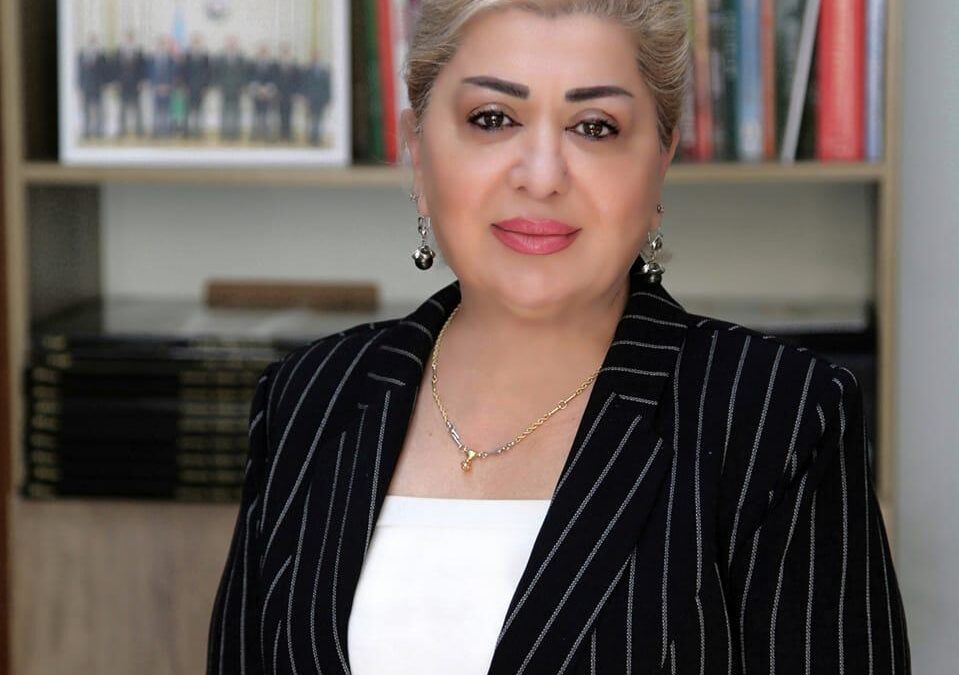
The life of a girl who, until one day, went to school, talked about her future dreams with her friends, and thought about which profession to choose, changes suddenly. Instead of books, dreams, and choices, the door to family responsibility opens before her. This step from childhood into the adult world often hides heavy consequences that are not visible behind the phrase “starting a family.” Early marriage can take away not only a child’s education but also their childhood, opportunities for choice, and belief in the future. Sometimes a child does not talk about what they are going through, sometimes they are afraid of family pressure, and sometimes they accept what happened to them as an unchangeable part of their fate. Those around them, even if they see the danger, remain silent with the thought that “it is a family matter.” But can a child’s future be considered a family matter? When a child’s voice is not heard, who should speak for them? Is it possible for children dragged into early marriage to return to life, education, and their dreams? We sought the answers to these questions in our conversation with Kamala Agazade, chair of the “Azerbaijan Children” Public Union, who has been working for years with children at risk and minors facing violence. According to her, sometimes it does not take big steps to change a child’s life, but a timely extended hand and saying “you are not alone” is enough.
– Kamala khanim, you have been working for many years in the field of children at risk, violence, neglect, early marriage, and the protection of children’s rights. Based on your experience working with children who are victims of early marriage, what are the most severe consequences this problem creates in a child’s life?
– The most severe consequence of early marriage is that the child’s childhood is taken away. We sometimes present the issue simply as “marrying early.” But here we are talking about a child who is not ready to start a family, who has not yet formed as a personality, being suddenly forced into the life of adults. The child is distanced from education, isolated from their peers, and leaves their dreams and plans unfinished. Later, they face family responsibilities, sometimes motherhood, family problems, and even violence. The most painful part is that in many cases, the child’s right to make decisions about their own life is taken away.
– What psychological traumas are most often observed in children who are victims of early marriages, and how long does it take for them to recover?
– In these children, we most often see fear, withdrawal, loss of self-confidence, feelings of guilt, and lack of faith in the future. Sometimes a child does not want to talk about what they have experienced, and sometimes, even if they do, they cannot get out of the influence of that trauma for a long time.There is no specific time for trauma recovery. A few months may be enough for one child, while another may need years of support. Because trauma is not just the event experienced, it affects how the child feels about themselves, their trust in people, and their view of the future. The most important issue is to create a safe environment for the child and make them feel that you are not guilty, you are not alone, and your life does not end here.
– What do the applications received by your Center show? What social and family problems are early marriages most often accompanied by?
– Our experience shows that early marriage is often not a single problem. Behind it lies domestic violence, neglect, social difficulties, truancy, lack of healthy communication between parents and children, and ignorance about children’s rights.
– Sometimes early marriage is evaluated only as a family matter. Why do you think it is important to approach this problem primarily as a violation of children’s rights?
– Because no family matter can be superior to a child’s rights. A child has the right to education, to live safely, to be protected from violence, and to participate in decisions about their future. The moment we step aside saying “it is a family’s internal affair,” we are actually leaving the child defenseless. Early marriage should not be accepted as a family’s personal choice, but as an issue of children’s rights and safety.
– What signs should schools pay attention to in order to identify the risk of early marriage in time? How important is the role of teachers?
– The role of teachers is huge. Because sometimes a child can tell their teacher what they cannot talk about in their family. A sudden decrease in the child’s school attendance, being withdrawn from school, changes in behavior, withdrawal, looking fearful and tense, and sudden changes in plans for the future – these should not go unnoticed. Sometimes a timely reaction from a teacher can change a child’s entire life. Therefore, a teacher should not only be a person who teaches lessons, but also a person who sees and feels the child in their life and takes the right step in case of danger.
– What support mechanisms are activated when a child facing the threat of early marriage or their relatives apply to you?
– First of all, the child’s safety is looked at. It is assessed in what conditions the child is in, and whether there has been pressure or violence against them. Then, psychological, social, and legal support is provided according to the situation. When necessary, cooperation is carried out with relevant government agencies. For us, the main issue is not just to remove the child from a dangerous situation. The child’s subsequent life is also important. Their education, psychological state, and preparation for an independent life in the future – all these are part of the reintegration process.
– What does your experience show, where is the biggest gap in preventing early marriages? In awareness, control, or inter-agency cooperation?
– I think the problem is not in just one area. Awareness is important, as are control and inter-agency cooperation. But one of the biggest problems is that sometimes the danger is visible to everyone, but no one takes the first step. Everyone thinks that maybe someone else will intervene. In the case of a child, there should not be an approach of “it’s not my business.” A teacher, neighbor, relative, social worker – whoever sees that a child is in danger must act responsibly.
– To what extent does the child’s own awareness play a role in preventing early marriage? Is awareness-raising about legal and life skills in schools sufficient?
– It is very important for the child to know their rights. A child should know that no decision about their life without their consent can be considered normal. They should also know who they can turn to when they face danger. I believe there is a need to work more in this direction in schools. It is not enough to just list rights to children. They need to be taught how to protect themselves in situations they may encounter in real life, how to say “no,” how to ask for help, and how to contact safe people.
– Families often put forward the argument “we are thinking about our child’s benefit.” Do your observations confirm this argument, or do they show the opposite?
– I believe that most parents really want a good future for their children. But good intentions do not always mean the right decision.
Sometimes a parent prioritizes their own life, their own fears, and society’s opinion over the child’s future. Thoughts like “the girl has grown up, let her start a family,” “it will be too late later,” “what will people say?” cannot determine a child’s life. Thinking about your child’s benefit is not taking away their childhood. On the contrary, it is giving them education, safety, choice, and a future.
– As an expert who has been working in this field for years, what wrong thinking must society absolutely abandon in the fight against early marriages?
– Society must abandon the thought that “this is our family’s business.” If a child’s right is violated, it is no longer just a family matter. This is everyone’s matter. And the thought that “a girl’s main future is starting a family” must change. A girl’s future is her education, dreams, choices, profession, and personality. Starting a family can only be a part of her life when she is ready and makes this decision herself.
– Among the fates you have encountered in the shelter, is there an incident that most clearly shows how early marriage changes a child’s future? What conclusion should parents and society draw from that story?
– Over the years we have worked in this field, we have encountered very difficult fates. Sometimes we see a girl who is a child in age, but because of what she has experienced, she has been forced to act like an adult for a long time. In such cases, the most painful scene is that the child no longer talks about their dreams. It is as if they have accepted that they do not have the right to think about the future. But when given a safe environment, care, psychological support, and most importantly, the right to choose, they gradually begin to change. After a while, that child talks again about their education, the profession they want, and their future dreams. This shows us once again that one cannot make decisions for a child about their life. Parents and society must understand one thing: sometimes you just need to give a child the opportunity to change their life.
– What would you like to say to every child facing the risk of early marriage today and their parents?
– To every child facing the risk of early marriage, I want to say: You are not alone. You are not guilty for what happened to you. Do not hesitate to ask for help even when you are afraid and do not see a way out. Your childhood, education, dreams, and future are valuable.To parents, I want to say: determine your child’s future not with society’s fears, but with their interests and rights. A decision you make today can affect their entire life. We have seen for years that a hand extended to a child in time, a support given, can completely change their life. Therefore, let us not ignore any child’s voice. Protecting children is not the job of just one institution or one organization – it is everyone’s responsibility.
The interview was prepared within the framework of the “First knowledge, then unity” project implemented by the “Vətəndaş” Research and Development Public Union with the support of the Agency for State Support to Non-Governmental Organizations