
Throughout human history, every major technological leap – from printing presses to steam engines, from electricity to nuclear weapons – brings the same paradox back to the agenda: can the technology created by humans become a dominant force over them? Unlike previous technological revolutions, artificial intelligence claims to completely replace intelligence, language, and decision-making. It has already entered our personal lives forever – participating in state governance, economy, education, healthcare, defense, media, and daily relationships.
The main question is: will artificial intelligence serve humanity, or will humans become objects of a system controlled by algorithms?
In the 20th century, forging a person’s signature, stealing their identity, and illegally interfering in their private life were considered serious legal violations. In the 21st century, it is possible to create not only a person’s signature but also their face, voice, behavior, way of thinking, and even words they never said using digital tools and present them to millions as truth. We believe that technology should not be an opponent of human rights, but a means of protecting them.
II. Azerbaijan’s new development priority
President of the Republic of Azerbaijan Ilham Aliyev, linking one of the main directions of our country’s new development stage to artificial intelligence, stated: “We always follow the main leading line and we must not fall behind”. The establishment of the Digital Development Council by the Decree of President Ilham Aliyev on February 27, 2026, raised the sovereignty policy to a new institutional level. The adoption of the Digital Development Concept and the 2025–2028 AI Strategy, as well as the technological military experience gained within the framework of TEKNOFEST, demonstrated our nation’s will on the battlefields. The creation of the National Artificial Intelligence Center and the Artificial Intelligence Academy is an expression of Azerbaijan’s will to become a state that, in addition to importing technology, creates national knowledge, national personnel, and national solutions. The goal is clear: along with consumerism, it is necessary to become a regional digital player.
Azerbaijan learned from its own history how technological superiority affects the fate of states through the brilliant Victory won in the 44-day Patriotic War in 2020.
III. Deepfake and the inviolability of digital identity
One of the most serious threats that artificial intelligence poses to human rights is deepfake technology. Large technological laboratories are no longer needed to show a person saying words they never said – sometimes a few photos and a short voice sample are enough. Between 2019 and 2025, the volume of deepfake content increased by more than 900 percent; women account for 79 percent of victims. Women and children are the main targets of immoral fake materials prepared without their consent, while journalists and politicians are targets of digital fraud for disinformation purposes.
According to Stanford University’s 2026 Artificial Intelligence Index, the number of documented AI-related incidents increased by approximately 55 percent in 2025.
Digital identity is becoming one of the key human rights issues of the 21st century: the principle of the inviolability of a person’s digital identity must be included in the modern legal system.
IV. Hybrid information war
Artificial intelligence-based fraud is becoming a tool of hybrid warfare against states, electoral systems, and international relations. Fake material is prepared in one country, shared on a platform located in another country, used against a third country, and spreads to the whole world in seconds. If the crime is transnational in nature, the fight against it must also be international: there is a need for interstate mechanisms for the operational exchange of digital evidence, the accountability of platforms, and the protection of victims. Currently, a French court is conducting a hybrid attack campaign against our country by turning political texts written in the Élysée into judgments and strengthening them with artificial intelligence.
V. Azerbaijan’s new legislative model
With the amendments that entered into force in May 2026, new articles 148-2 and 242-1 were added to the Criminal Code. Criminal liability has been established for the preparation and dissemination of materials that do not reflect reality using artificial intelligence by using a person’s image or voice without their consent. The main goal is to limit non-consensual fraud: freedom of innovation is protected, but the human is not left defenseless.
VI. Personal data and the digital industrialization of crime
Artificial intelligence can combine various databases to predict a person’s political views, health status, emotional vulnerability, and even future choices. The person does not know the algorithm’s data about themselves. Every person should know for what purpose the information bank collected about them is processed and to whom it is transmitted. They should have the right to demand the deletion of their data, withdraw their consent, and object to an algorithmic decision.
Artificial intelligence has lowered the cost of crime and increased its scale. Criminal groups can use artificial intelligence to contact thousands of people at the same time, clone the voices of family members, and carry out automated phishing campaigns. According to INTERPOL’s 2026 assessment, AI-enhanced fraud can be 4.5 times more profitable than traditional methods. The number of international notices has increased by 54 percent in one year.
VII. Terror networks and new social stratification
Terrorist organizations can also use the capabilities of artificial intelligence: adapting radical messages to the psychological characteristics of a specific person and creating fake emergency images requires less cost. However, on the other hand, algorithmic surveillance systems applied under the guise of fighting terrorism can include innocent people in wrong risk groups. Therefore, the main task is to protect the human from both the terrorist’s artificial intelligence and the security algorithm that makes biased decisions.
According to Stanford University’s 2026 report, private AI investments increased by 127.5 percent in 2025, reaching $344.7 billion. However, opportunities are not distributed equally: while 52 percent of large companies use artificial intelligence, the corresponding figure among small companies is 17.4 percent. According to the International Labour Organization’s research, one in four workers in the world works in a profession that could be exposed to some impact of generative artificial intelligence. In the future distribution of wealth and poverty, the main indicator, along with the question “who has how much income?”, will be the question “who has access to computing power and artificial intelligence tools?” as a new criterion for social stratification.
VIII. Doha Declaration and the human rights dimension of the digital divide
The International Declaration adopted in Doha in 2025 emphasizes that the unethical use of artificial intelligence can sharpen bias, deepen the digital divide, and violate the right to privacy. According to the International Telecommunication Union, while there are 6 billion internet users in the world, 2.2 billion people are still outside the internet network; 5G coverage is 84 percent in high-income countries and only 4 percent in low-income countries. According to the World Bank report, high-income countries possess 77 percent of global data center capacity, while the share of low-income countries is less than 0.1 percent. The issue is not just about the internet, but about devices, speed, data, computing power, and skills; the existence of the internet does not mean real access – it must be accessible and affordable.
The digital divide is not measured only by technological backwardness – it is the gap between the rights to education, labor, healthcare, access to information, and participation in state governance. Therefore, it is important for Azerbaijan to be the creator of large models in the national language and regional digital platforms, along with purchasing foreign technologies.
IX. Language and cultural divide
Advanced artificial intelligence models having a wider database in English and several major world languages leads to less informed and more incorrect results about the languages of small nations. When small languages and local knowledge are poorly represented in AI models, bias increases.
Quality artificial intelligence solutions in the Azerbaijani language are a digital defense of national identity. The elderly, rural population, and persons with disabilities should not be left out of digitalization. The poor representation of national languages in artificial intelligence systems is a matter of protecting cultural rights, linguistic diversity, and national identity in the digital space.
X. Algorithmic sharpening of social relations
In the World Economic Forum’s “Global Risks Report–2026” document, misinformation is rated as the second and social polarization as the third most serious short-term global risk.
Artificial intelligence reduces the organizational cost of dissatisfied groups, prepares millions of versions of the same message, and can make real protest look larger with fake images. Algorithms bring information that causes fear and anger to a wider audience – because emotional content brings more financial profit. Thus, the anger of an individual can turn into an image of nationwide conflict, and a local event can turn into a state crisis. Artificial intelligence is a tool for both protest and control.
XI. Intellectual property and intellectual justice
Artificial intelligence systems are trained on works created by humanity over centuries – books, photos, music, journalism materials, but the author often does not consent to this, their name is not shown, and they do not receive a share of the economic value created. Copyright is a matter of intellectual justice. The author’s consent, transparency of sources, licensing, and fair compensation mechanisms must be ensured.
XII. Natural intelligence being overshadowed
Research by Microsoft Research and Carnegie Mellon University has observed that as a user’s trust in artificial intelligence increases, their level of critical thinking decreases. In UNESCO’s 2025 survey, 90 percent of higher education representatives stated that they use artificial intelligence in their professional activities. Artificial intelligence should help humans think better, not replace the individual. The main goal in education should not be to get a ready answer, but to teach the thought process by which that answer was reached.
XIII. Fake knowledge and the image of algorithmic superiority
A person who does not know the subject deeply can prepare a high-level scientific article or legal opinion using artificial intelligence. As a result, it becomes difficult to distinguish real knowledge from the image of professionalism created algorithmically. According to the OECD, special training in artificial intelligence has reached 36 percent of those with higher education and only 18 percent of those with secondary education – the obvious difference shows that existing economic advantages will be further strengthened through technology. The future evaluation system should evaluate not only the final product but also the person’s thought process, oral defense ability, and how they use artificial intelligence.
XIV. Algorithmic framing of worldview
Digital systems cause a person to see the world in the form chosen by the algorithm by presenting information that confirms their previous views. Filters can make alternative positions invisible; when a person encounters only content that confirms their own views, they lose the ability to reach an independent conclusion. According to the OECD, in 2025, more than a third of people in member countries used generative tools, and that figure reached 75 percent among students. In the future human rights system, along with freedom of speech, we must also include the protection of thought from algorithmic manipulation.
XV. Artificial intelligence and new generation human rights
We believe that the protection of human rights in the era of artificial intelligence should be based on seven main principles: ensuring the informed consent of the person; clear labeling of content created with artificial intelligence; the possibility of objecting to an algorithmic decision; not making final decisions in high-risk areas without human control; prevention of discrimination; protection of children with higher protection standards; and independent audit of artificial intelligence systems. The phrase “the algorithm decided so” should not be an excuse to evade legal responsibility.
Azerbaijan is putting forward important initiatives on the international platform of Ombudsmen for Human Rights:
•It is important to prepare an International Deepfake Convention;
•It is useful to adopt a universal labeling standard that shows the source of artificial intelligence products,
•It is important to adopt an international protocol regulating the exchange of electronic evidence against cross-border deepfake crimes and to define the right to operational deletion of fake materials at the international level,
•There is a need to create a rapid warning mechanism between states, media, and technology companies during elections and emergencies,
•It is appropriate to prepare a separate Artificial Intelligence Code in national legislation,
•The creation of international research centers on Artificial Intelligence and Human Rights in our region will allow for the transition from political sovereignty to digital justice.
Azerbaijan restored its integrity and security over its lands in 44 days. Now a new page is being written for sovereignty in the digital space.
Electronic trenches are invisible, weapons are digital, but the values we defend are the same: the right of people to live free, nations to live independent, and states to live sovereign must be ensured.
No matter how powerful technology is, its ultimate goal must be the human.
In the era of artificial intelligence, the most important task is to be a natural human!
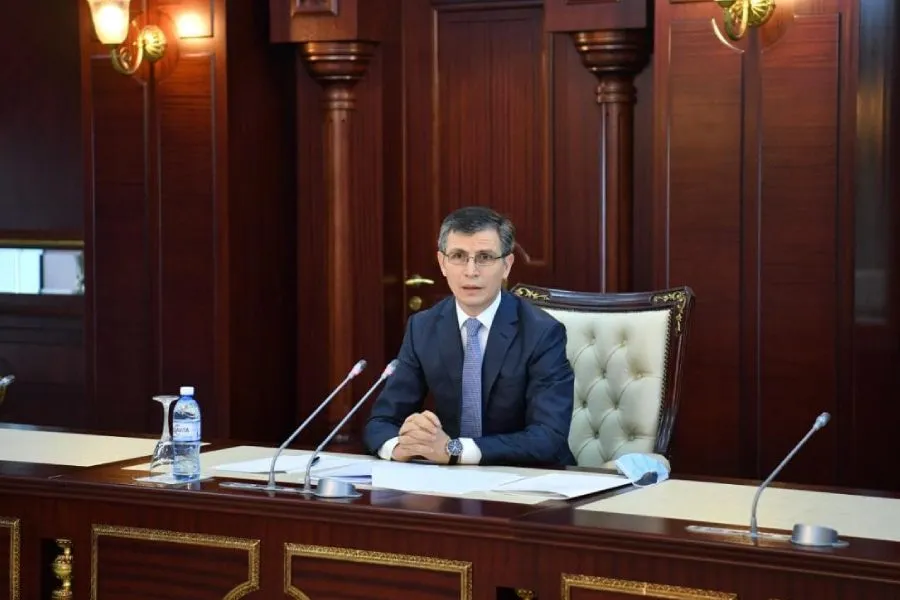
Zahid Oruc,
Milli Məclisin Komitə sədri