
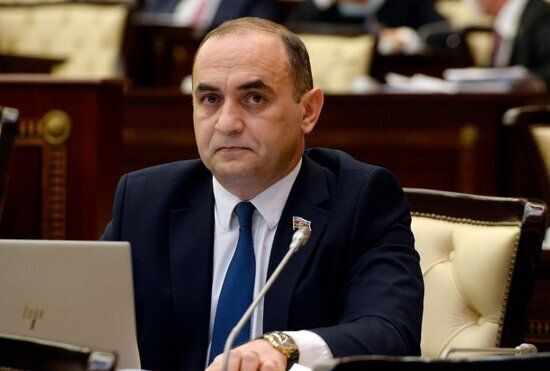
In Azerbaijan, the problem of early marriage is not only a legal issue but also a serious social matter directly related to children’s education, health, safety, and future choices. To prevent this problem, it is essential not only to tighten punitive mechanisms but also to educate families, identify cases of school absenteeism in a timely manner, and strengthen coordination between state institutions and local communities. So, what changes are needed in the legislation to prevent early marriages? How should the responsibility of parents and other individuals who facilitate such marriages be determined? How should religious and traditional values be interpreted in this context? Member of Parliament, member of the Milli Majlis Committee on Science and Education, and Doctor of Philosophy in Theology Ceyhun Mammadov shared his thoughts in an interview regarding the causes of early marriages, legal responsibility, the role of education, the duties of religious communities, and society’s approach to this issue.
– To what extent does early marriage remain a serious social problem in Azerbaijan today? How do you assess the current situation?
– Every country has its own unique social problems, and Azerbaijan is no exception in this regard. The main issue is to identify existing problems in a timely manner, investigate their causes, and form correct mechanisms for their prevention. Early marriage is one of the social issues in Azerbaijan that should not be overlooked. It is not just about the formation of a marital relationship. Behind the issue lie the child’s education, health, psychological development, social opportunities, and future life choices. Especially, removing girls from education at an early age and forcing them to face family responsibilities can affect their future opportunities. In recent years, important steps have been taken in Azerbaijan in this direction, both in terms of legislation and awareness-raising. However, acknowledging the existence of a social problem does not mean it is unsolvable. On the contrary, discussing the problem openly allows for the identification of more effective ways to solve it. I believe that the main goal is not just to take legal action after an incident occurs. It is necessary to identify risks in advance, prevent children from dropping out of school, and conduct educational work with families.
– Is the legislation strict enough in terms of preventing early marriages, or are additional legal mechanisms needed?
– Azerbaijani legislation is based on general legal principles, and it is possible to make changes to the legislation depending on the needs of society and to tighten responsibility mechanisms when necessary. However, focusing only on increasing penalties would not be correct. The main issue is the effective application of the law and clearly defining who is responsible. The role of not only the parents but also other individuals involved in the process of organizing an early marriage should be investigated. For example, who was involved in organizing, conducting, or facilitating such a marriage? Who witnessed this process? Who knowingly created conditions for the violation of a minor’s rights? Naturally, each person’s responsibility must be determined according to their specific actions and the requirements of the law. But the general principle should be that no person who knowingly facilitates a child’s entry into an early marriage should remain exempt from responsibility.
– What changes do you consider necessary in the legislation to prevent cases of early marriage?
– First of all, I consider it important to strengthen preventive mechanisms. Cases such as school absenteeism, discontinuation of education, early engagement, and preparing a child for marriage should be identified in a timely manner. As gaps in practice are identified in the legislation, it is possible to eliminate them. If necessary, responsibility mechanisms can also be tightened. But the best result is achieved not by punishing the child, but by preventing the child from falling into such a situation.
– Should the responsibility of parents and other individuals who create conditions for a minor to be forced into marriage be increased?
– It would not be correct to look at the issue of responsibility only through the prism of parents. If other individuals also create conditions for a minor to be involved in an early marriage, their activities should also be evaluated from a legal perspective. Here, the role of those who participate in organizing the marriage, facilitate such a ceremony, and knowingly join the process should be investigated. At the same time, who witnessed the marriage, who was aware of this process, and in what form they participated can also be taken into account depending on the specific case. In particular, attention should be paid to the issue of holding illegal ceremonies under the guise of religious marriage. No person can be automatically accepted as a responsible party just by saying “I was a witness” or “I participated in the ceremony.” Here, each person’s specific action and the responsibility provided for by law must be taken as a basis.
– The law is being tightened, but the root of early marriages is often family mindset. In your opinion, are punitive mechanisms or awareness-raising more effective?
– It is not correct to pit these two directions against each other. The punitive mechanism defines the legal boundary, while awareness-raising influences the mindset that lies at the root of the problem. If the idea that it is better for a girl to get married as soon as possible for her future has been formed in the family, it will be difficult to change this only with punishment. People need to be explained that it is a healthier approach for a child to first get an education, develop themselves, and be able to make conscious choices about their future. I believe that a person builds a healthier and happier life when they make important decisions themselves and make their own choices. Therefore, it is necessary to strengthen the mindset of “education first, then marriage” in society.
– How significant is the role of education in preventing early marriages? What additional state mechanisms are needed to prevent girls from dropping out of school?
– The role of education is quite significant. Education not only gives a person knowledge but also creates opportunities for choice. The better a person knows their rights and future opportunities, the more consciously they can make decisions about their life. I am a proponent of a very simple sequence here: education first, then profession and personal choice regarding life, and then marriage. A girl getting an education does not mean she is moving away from family values. On the contrary, an educated woman who knows her rights can contribute more to both the family and society. Cases of school absenteeism should be identified in a timely manner, the cause of the problem should be investigated, and social support, psychological assistance, and mechanisms for returning to education should be strengthened for children in the risk group.
– Some families present early marriage as “tradition” or “religious value.” What message should be given to society regarding this approach?
– One cannot justify the violation of a child’s rights under the name of tradition. The same approach applies to religious values. No religious reference can justify the violation of a child’s education, safety, and rights. Azerbaijan is a secular state. In our country, Islam and other religions are respected. Along with this, the basis of state governance and legal relations is the Constitution and laws of the Republic of Azerbaijan. In cases where religious or traditional approaches conflict with legal requirements, legal relations are regulated in accordance with Azerbaijani legislation. When looking at religious texts, it is not correct to approach the issue from only one side. For example, in the story of the marriage of Isaac and Rebekah in the 24th chapter of the Book of Genesis, it is noteworthy that Rebekah’s own will is taken into account. Along with the family’s participation, her consent is also asked. In Islamic sources, the principles of consent and responsibility also occupy an important place in the matter of marriage. In the 6th verse of the “Nisa” Surah in the Quran, in addition to reaching the age of marriage, the issue of “rushd” – the level at which a person can make the right decision and bear responsibility – is mentioned. In the Hadiths, there are also narrations about the prohibition of forcing a woman into marriage without her consent. One thing must be clearly distinguished here: the Quran does not set a specific age limit in the form of “marriage is possible after 18 years” as in modern legislation. Therefore, it would not be correct to equate religious texts with modern legal norms. But it is also not right to use religious values to justify forcing a child into an early marriage. Religion and tradition should not be pitted against a child’s rights.
– What steps should be taken for religious institutions and religious figures to play a more active role in preventing early marriages?
– I believe that religious figures should also be more actively involved in solving this issue. Because certain families and communities attach special importance to the opinions of religious figures in religious matters. In particular, along with the issue of legal responsibility for those who conduct religious marriages or religious ceremonies contrary to the requirements of the law, preventive awareness-raising should also be strengthened. The requirements of the legislation should be clearly communicated to religious figures, and their educational potential should be utilized. The goal here is not to pit religious values against legal principles. On the contrary, religious figures should explain to society that a religious ceremony cannot be carried out outside or contrary to the requirements of state legislation.
– Do you think the coordination between schools, families, state institutions, and religious communities in preventing early marriage is sufficient?
– There is some coordination in this direction, and efforts are continuing. The work done in this area in Baku and other large cities can be considered satisfactory to some extent. But there is a need to further strengthen coordination in the regions, especially in remote areas. Because each region may have its own social characteristics, family approaches, and problems. Therefore, the cooperation of state institutions, schools, social services, and religious communities should be organized more systematically at the local level. The goal is not to accuse any family. The goal is to see the risky situation in time and protect the child.
– Finally, if you had to give a message to parents and society on the issue of early marriage, what would you say?
– First of all, I would say this to parents: do not determine your child’s life for them in advance. Give them the opportunity to make choices, get an education, acquire a profession, and think about their future. When a person makes important decisions in their life consciously and by their own choice, they also bear the responsibility for that decision better. I believe that a healthy approach is very simple: education first, then life choice, and then marriage. Fighting early marriage is not just about preventing a marriage. We are actually protecting a child’s rights, education, safety, and future. As a society, we must respect the child’s right to choose. Because a person making important decisions about their life not by force, but by their own will and conscious choice, is of great importance in their future life.
The interview was prepared within the framework of the “Knowledge first, then unity” project implemented by the “Vatandash” Research and Development Public Union with the support of the Agency for State Support to Non-Governmental Organizations.