
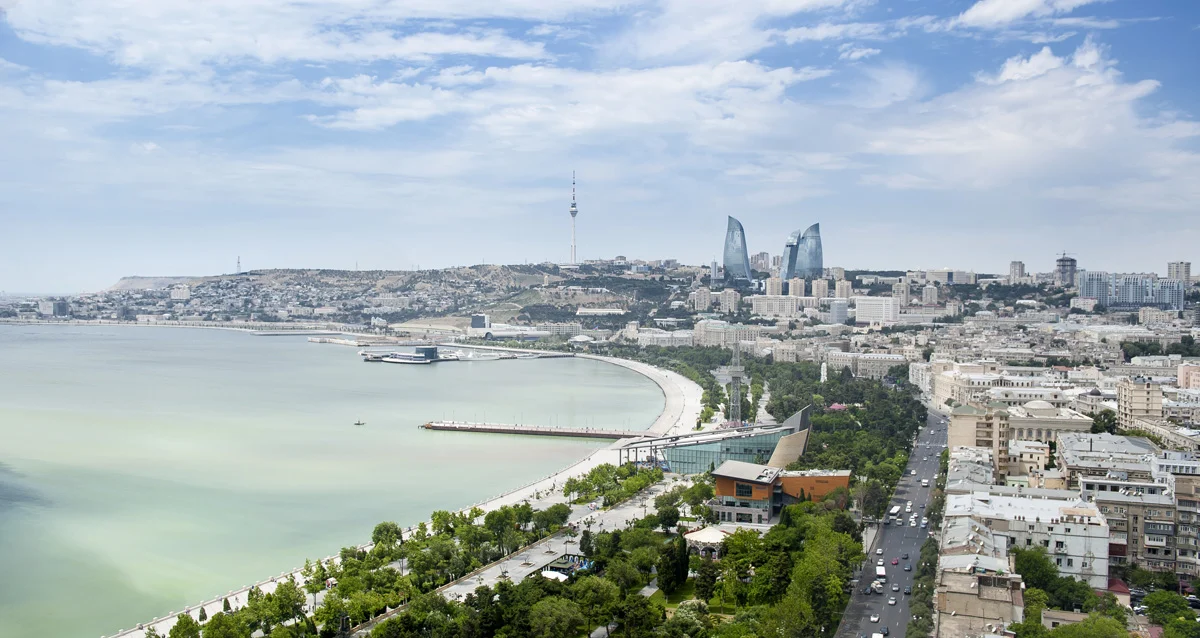
Tomorrow, an international conference titled “Media and Decolonization: Rising Voices, Strengthening Narratives” will be held in Baku, organized by the Baku Initiative Group.
elchi reports that the conference, the first such platform organized in Azerbaijan with the participation of media representatives representing colonial territories, will be held in an interactive format between journalists from those territories and local media representatives.
The conference will be attended by heads of media organizations and media representatives representing former and current colonial territories, journalists, political commentators, representatives of diaspora organizations, experts in media and communications, representatives of civil society institutions, researchers, diplomats, representatives of government agencies, and individuals representing local media.
The conference will discuss the role of the media and the challenges ahead in strengthening the voices of peoples and ethnic minorities subjected to neocolonial exploitation and living under colonial rule in the international information space. The event will pay special attention to the coverage in international media of colonial truths that have been kept in the shadows for many years – such as the economic exploitation of territories, the looting of natural resources, the erasure of cultural identity, systemic discrimination, repression against indigenous peoples, as well as the policy of deliberately changing the demographic composition of the local population at the expense of incoming populations, as seen in the examples of Kanaky (New Caledonia) and Bonaire.
Within the framework of the conference, an exchange of views will take place on overcoming the artificial information blockade created in colonial territories, the application of advanced artificial intelligence tools in the fight against disinformation and Fake News, the creation of an international coordination network between journalists and media organizations, and the strengthening of cooperation between international media organizations and local journalists.
Discussions will emphasize the role of the media in decolonization processes not only as a means of transmitting information but also as a mechanism of international pressure on those pursuing colonial policies. In this context, practical initiatives will be discussed regarding the documentation of colonial crimes, the exposure of colonial narratives, the verification of the official information policies of colonial states through fact-based research, conveying the position of indigenous peoples to an international audience, monitoring human rights violations, keeping issues of environmental justice on the global agenda—including the consequences caused by the chlordecone pesticide in Guadeloupe and Martinique—promoting reparation demands, as well as forming international solidarity and cooperation networks among journalists, human rights defenders, and civil society institutions operating in Kanaky, Maohi, Guadeloupe, Martinique, Bonaire, Sint Maarten, and other colonial territories.
It should be recalled that journalists investigating the exploitation of nickel reserves in Kanaky (New Caledonia), the rights of the Kanak people, and civilian casualties during the events of May 2024 have faced information restrictions and various forms of pressure from France. International media organizations have documented instances of threats, physical attacks, and obstruction of professional activities against journalists during that period. The imposition of a state of emergency and strict security measures significantly limited the possibilities for independent and objective coverage of the events.
Investigative journalists researching the environmental consequences, soil and water contamination, and health impacts caused by the long-term use of the chlordecone pesticide in Guadeloupe (French Caribbean) have faced various pressures for bringing the issue of France’s responsibility to the agenda. The environmental and public health problems caused by this toxic substance, which was widely used between the 1970s and 1990s, continue to this day. UN experts have expressed concern over allegations of pressure and censorship against media representatives covering environmental problems and their consequences.
Journalists investigating crimes against humanity committed by Belgium in the territory of the current Democratic Republic of the Congo, as well as in Rwanda and Burundi—such as forced labor, mass violence, and the amputation of hands—in cooperation with historians, have faced various pressures and obstacles for many years for bringing issues of historical responsibility and reparations to the international agenda. Those investigations have made a significant contribution to the expansion of international scientific and political discussions regarding Belgium’s colonial legacy, as well as to more actively bringing issues of historical justice and reparations to the agenda at the level of international organizations.