
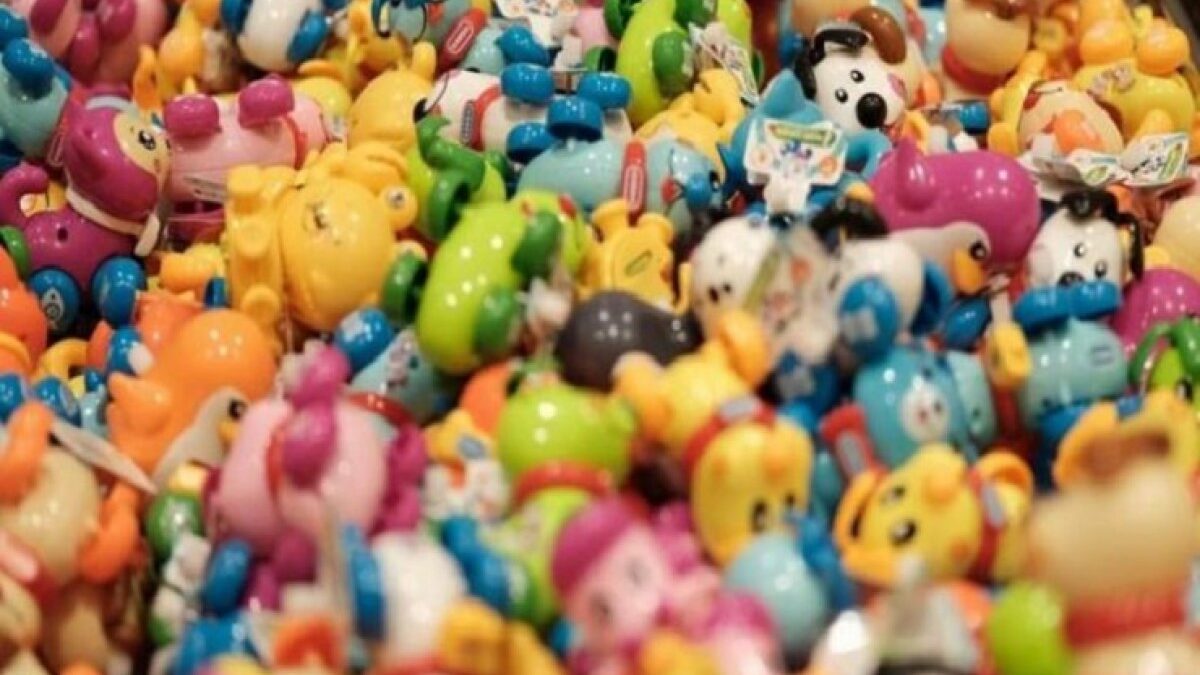
“Technical Regulation (TR 002/2026/AZ) on Toy Safety” has been approved.
According to elchi, the Cabinet of Ministers made a decision in this regard.
Toys must be designed and manufactured in a way that does not pose a risk to the life and health of users when used as intended, and any risk related to the following circumstances must be eliminated:
– due to the toy’s design;
– due to the materials used;
– due to its use, which cannot be modified without changing the toy’s function and main characteristics, or replacing the material.
Risks arising from the use of toys must be appropriate for the age characteristics of children.
The requirements for toy materials are as follows:
– The materials from which toys are made must be clean and free from infection;
– For toys intended for children under 3 years of age, natural fur, natural leather, glass, porcelain, pile materials (rubber, cardboard, and paper), granules without internal casings with dimensions of 3 millimeters or less, and rattling toy-like fillers whose dimensions increase by more than 5 percent in a humid environment must not be used;
– For toys intended for children under the age of, harmful substances and their migration levels are determined by this Technical Regulation;
– Recycled raw materials must not be used in the production of toys.
– The use of waste generated during the production of toys is permitted;
– The protective and decorative coating of the toy must be resistant to moisture, saliva, and sweat.
Toys with organoleptic properties must comply with hygienic safety requirements.
The requirements for the physical and mechanical properties of toy safety are as follows:
– When used as intended, the toy and its components, including fasteners, must withstand mechanical loads, not be damaged, and retain their consumer properties;
– Accessible edges, sharp points, hard parts, springs, fasteners, gaps, corners, protrusions, laces, cords, and fasteners must exclude the risk of child injury;
– Liquid fillers in toys must not leak;
– Moving parts of toys must exclude the risk of child injury, and transmission mechanisms must be inaccessible to children;
– Toys and their detachable parts intended for children under 3 years of age, as well as toys directly attached to food products, must be of a size that prevents them from falling into the child’s upper respiratory tract;
– Stuffed soft toys must not be equipped with hard or sharp foreign objects, and the toy’s seams must be strong;
– Toys that are in food products and/or sold with food products must be packaged, these packages must comply with the technical regulatory legal acts in the field of food safety and the requirements of this Technical Regulation, and their dimensions must not pose a risk to the life and health of children. The placement of a toy without packaging on the outside of the food product packaging is permitted;
– The toy and its components must exclude the risk of choking for the child;
– Masks and helmets made of airtight material that completely cover a child’s head must be designed and manufactured to eliminate the risk of suffocation due to insufficient ventilation;
– Toys intended to support a child’s body on the surface of water must be designed and manufactured to be airtight and durable;
– A toy that a child can fit inside and which represents an enclosed space for them must have an exit opening that can be easily opened from the inside, as well as a surface with ventilation holes;
– Toys intended to bear a child’s body weight and for riding (excluding two-wheeled bicycles) must be strong and stable. Toys with mechanical or electric drives with a free-wheeling mechanism or neutral gear must have a braking device. Toys intended to bear a child’s body weight and for riding, whose wheels are driven directly by the child’s hand or foot or by a mechanical drive, and toys equipped with an electric drive are permitted to be manufactured without a braking device;
– Toys with a chain drive must be equipped with a guard;
– The supporting surface of toys intended to bear a child’s body weight and for riding must have anti-slip elements;
– Toys intended to bear a child’s body weight but not for riding must be stable and resistant to tipping over. Suspended swings must be durable, and the swing seat must have a design that prevents children under 3 years of age from falling off;
– Projectiles released by means of a trigger mechanism, as well as those with kinetic energy, must minimize the risk of injury to the user;
– Soldering is not permitted for construction sets and models intended for assembly by children under 10 years of age.
When producing toys equipped with heating elements, the following must be taken into account:
– The temperature of all accessible surfaces for contact must not cause burns upon contact;
– The intensity level of the integral flux of infrared radiation must comply with the hygienic safety requirements defined by this Technical Regulation;
– Liquids, vapors, or gases contained in toys that may cause burns or other injuries upon release (if such release is unavoidable for the functional use of the toy) must not have high temperatures or pressure;
– The local vibration level in toys that are a source of vibration and the sound level in acoustic toys must comply with the hygienic safety requirements defined by this Technical Regulation;
– Painting and decorating the surface of rattles and other toys that come into direct contact with a child’s mouth are not permitted;
– In desktop printing toys, text and images must be clear and contrasting against the main background. The transfer of wet ink from the surface of the sheet to another or the back surface during the printing process must not be allowed;
– Optical toys must be designed and manufactured to minimize the risk of vision impairment for the child;
– Toys using LED lighting must not negatively affect the child’s vision and must not cause harmful radiation;
– Laser radiation systems must not be used in toys.
To eliminate the risk of toy flammability, the following must be considered:
– Stuffed soft toys, carnival costumes, carnival toys (beards, mustaches, wigs, crowns, masks, etc.), as well as toys that a child can fit inside must be flame-retardant;
– Toy sets containing chemical substances (not related to chemical experiment kits) must not contain chemical substances and reagents that are flammable when mixed or produce harmful gases and vapors;
– The toy must not pose an explosion hazard or contain components (substances, materials) that could create an explosion hazard during its use;
– Toys, including chemical toys, must not contain the following substances and reagents:
– Substances and reagents that can form explosive mixtures as a result of reaction when combined with oxidizing agents or when heated;
– Substances and reagents that can form flammable or explosive vapor and air mixtures.
The requirements for the chemical properties of toys are as follows:
– The risk of harm to health from the ingress of chemical substances into the respiratory tract, skin, mucous membranes, eyes, or stomach during the use of toys must be minimized;
– The sanitary-chemical indicators of toys must comply with the hygienic safety requirements defined by this Technical Regulation;
– In toy sets containing chemical substances (not related to chemical experiment kits) and in chemical toys, the use of substances or reagents is permitted within the limits of the maximum quantity established for each substance.
The requirements for the electrical properties of toys are as follows:
– In an electric toy, as well as in any of its parts, the nominal voltage must not exceed 24 V;
– To eliminate the risk of electric shock, parts of toys that are in contact or can come into contact with the power source, as well as cables and wires, must be insulated and mechanically protected to eliminate the risk of electric shock;
– The intensity levels of electrostatic, electromagnetic, and electric fields of radio-controlled, electronic, and electric toys must comply with the hygienic safety requirements defined by this Technical Regulation;
– Lanyards for flying toys must be non-metallic and have dielectric properties.
The radiation safety indicators (specific effective activity of natural radionuclides) for toys made of natural materials must comply with the hygienic safety requirements defined by this Technical Regulation.
The magnetic flux indicators of magnets and magnetic elements not attached to the toy must not exceed 0.5 Tl2 mm2 or must be of a size that prevents entry into the respiratory tract and choking.
Depending on the type of toy, the labeling includes information on completeness (for toy sets), instructions for use, cleaning methods (disinfection, washing, or cleaning from dirt depending on the toy’s material), safety precautions when handling the toy, warning notices, and assembly instructions. The warning notice must reflect the requirements defined by this Technical Regulation when using the toy. The labels and technical documents included in the toy set (a group of toys related to a specific theme or character) must be in the state language of the Republic of Azerbaijan.
The conformity assessment of toys to the requirements of this Technical Regulation is carried out by means of certification at the production stage and before being released into the consumer market.
Certification is carried out by accredited conformity assessment bodies.
Toys that meet the requirements of this Technical Regulation, as well as other technical regulations of the Republic of Azerbaijan applicable to it, and have passed the conformity assessment procedures, must be marked with a conformity mark in the consumer market of the Republic of Azerbaijan. Marking with the conformity mark in the consumer market of the Republic of Azerbaijan is carried out before toys are released into the consumer market.
This Decision enters into force 6 months after its publication.