
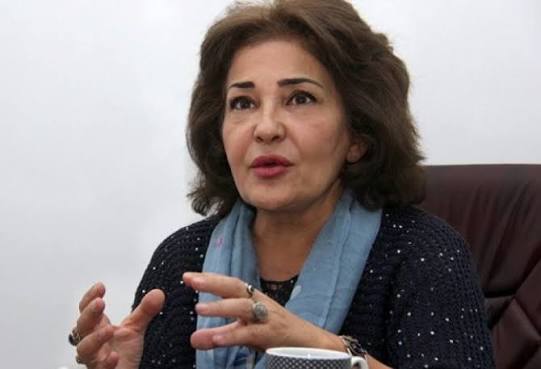
Early marriage is often presented as a “family matter” or a way to “ensure a child’s future.” However, behind this decision may lie dropping out of school, economic dependency, domestic violence, psychological trauma, and even the risk of human trafficking. Mehriban Zeynalova, chair of the “Clean World” Aid to Women Public Union, who states that “victims of early marriage are potential targets for human trafficking,” spoke about the unseen sides of early marriage based on her years of experience. She explained the dangers faced by girls forced into early marriage, the responsibility of the family and society, and the role of citizens in preventing such cases.
– Mehriban khanim, you have been working for years on domestic violence, early marriage, victims of human trafficking, and shelter services. Based on the stories of women and girls who apply to your shelter or organization, what are the most common reasons behind early marriages?
– Indeed, we have been working on these problems for a long time: we do our best to identify victims, admit them to the shelter, and help them rehabilitate and regain their self-confidence. Domestic violence, early marriage, human trafficking – these are all different forms of gender-based violence. We often encounter cases where a victim of early marriage later becomes a victim of domestic violence or human trafficking. The reasons are very diverse. But one of the main issues is that individuals do not have timely access to the service system. The biggest reason behind this is lack of information and stereotypes and taboos rooted in society: “a woman should not take her family’s secrets outside,” “a woman should not ask for help.” On the other hand, fears – especially the fear of being punished – further deepen this problem.
– What are the most severe consequences in the later lives of teenage girls forced into early marriage? What common points do you observe in their fates?
– Early marriages can be divided into several categories. Sometimes, without any coercion, girls take this step under the influence of romantic feelings. We have seen individuals who were deceived by the beautiful life in TV series, got married “for love,” and eventually became victims of human trafficking. Some choose this path to escape the violence they face at home, only to fall into the same trap later. This does not mean that all victims of early marriage will become victims of human trafficking, but they are potential victims. Because they remain uneducated, they cannot build their lives and become dependent. This can make them targets for criminal groups, drug traffickers, and marginal groups. Some are directly forced by their families. The consequences of early marriage do not end there: labor exploitation, involvement in unhealthy sexual relationships, serious health problems, inability to manage oneself, and deep psychological trauma become inevitable.
– Sometimes early marriage is presented by families as “ensuring the child’s future.” Why do you think this mindset still exists, and what needs to be done to change it?
– Unfortunately, some parents, when a wealthy person appears, consider it a successful marriage with the thought that “my daughter is still young, her eyes have not been opened, and she is far from the negative tendencies of life.” They think they are ensuring the child’s safety, protecting her from the negatives around her, and that she will be safe within the family. But unfortunately, this decision leaves their children facing the exact opposite situation, sometimes a great tragedy.
– You have been working in this field for years. Is there a decrease in applications related to early marriage in recent years, or has the problem just become more hidden?
– Yes, decreases are observed. The activity of non-governmental organizations and bringing these issues to the public and digital environment are yielding results. The tightening of legislation, the application of punitive measures, and the prompt response of law enforcement agencies play a serious role. But of course, there is also a possibility that this process is being carried out secretly. The most important factor here is the intolerance of civil society. Relatives and neighbors no longer remain silent; they report it. Just as the crime of “bride kidnapping” was once hidden under the name of “tradition” and was prevented after the law was tightened, I believe that early marriages will also become a thing of the past in the same way in a short time.
– What is the biggest obstacle for girls who want to escape early marriage? Family pressure, economic dependency, or social stigma?
– There are girls who call hotlines and ask for help or apply to the police at a young age. But when the situation is delayed — when there is a child involved, and the girl has no experience, education, or professional skills, the process becomes very difficult. A family does not accept back a girl they forced into marriage. Lack of economic stability, social stigma, and most importantly, lack of support are the biggest obstacles preventing these girls from being saved.
– If a teenage girl said to you, “I am being forced into an early marriage,” what steps would you recommend she take first?
– I recommend calling the 102 service or the Ministry of Internal Affairs immediately. If she cannot call herself, we act as intermediaries to take this step. This is unequivocally a crime. The Criminal Code provides for liability regarding forced and early marriage. In the next stage, we inform the rapid intervention group and strictly monitor whether the process is being prevented.
– Parents often see the danger only in physical violence. However, early marriage also has psychological and social effects. What can you say about this?
– Parents sometimes do not see this as a danger because they live in the same psychological and social environment themselves, and they consider it a normal life process. They do not know that psychological violence sometimes causes more severe consequences than physical violence. About 10 years ago, there was an incident: a girl forced into marriage was begging her mother to “take me away from here.” But her mother insisted, “you are married, you must stay there.” As a result, that girl committed suicide. Parents must understand that this way of thinking leads to tragedies.
– What mistakes does the media make most often when covering the topic of early marriage?
– Unfortunately, in some cases, the media spreads toxic information and the personal and confidential details of victims. Showing names, surnames, and addresses is strictly prohibited because it poses a serious threat to the person’s future. Also, there are hints of victim-blaming and accusing the woman. Sometimes this is given through subtext messages. The media must be completely impartial and maintain ethical standards in such sensitive matters.
– What is the level of cooperation between NGOs, schools, and government agencies in preventing early marriages?
– We have an agile and operational working group at a very good level. Here, NGOs are represented on an equal footing with government agencies. As soon as information discovered by NGOs is received, the agencies immediately take action. The Ministry of Internal Affairs is one of the most operational parties, as well as TABIB, the State Committee for Family, Women and Children Affairs, and the Executive Authorities are also involved in the process. However, we would like the local representatives of the executive authorities not to remain passive figures on the ground, but to become more active participants.
– Many families put forward the argument, “it is a tradition in our family.” Where does the border between human rights and tradition begin?
– There is an invisible but very thin border between the tradition system and international legislation. Our people can both respect tradition and obey the law. We need to develop a culture of obeying the law and respect for the rule of law. In other countries, an ordinary citizen knows their rights in detail. Our people should also read the laws and be aware of their rights.
– Among the cases you have encountered over these years, is there a story that most clearly shows how early marriage changes a child’s life?
– I am cautious about telling the stories of specific individuals. But society should know this: early marriage is not the protection of a child’s future. These marriages create very large consequences. We have seen victims of these realities, ranging from suicide, severe murder cases, and drug addiction to the most terrible crimes. This is never a way of protection; it is a disaster for the child.
– If everyone could take only one step to prevent early marriages, what should that step be?
– Just provide information. If you see that such an incident is happening around you, among your relatives, or in your neighborhood, report it to confidential hotlines. Do not remain indifferent and be intolerant of this situation!
Müsahibə QHT-lərə Dövlət Dəstəyi Agentliyinin dəstəyi ilə “Vətəndaş” Tədqiqat və İnkişaf İctimai Birliyi tərəfindən həyata keçirilən “Əvvəl bilik, sonra birlik” layihəsi çərçivəsində hazırlanıb.