
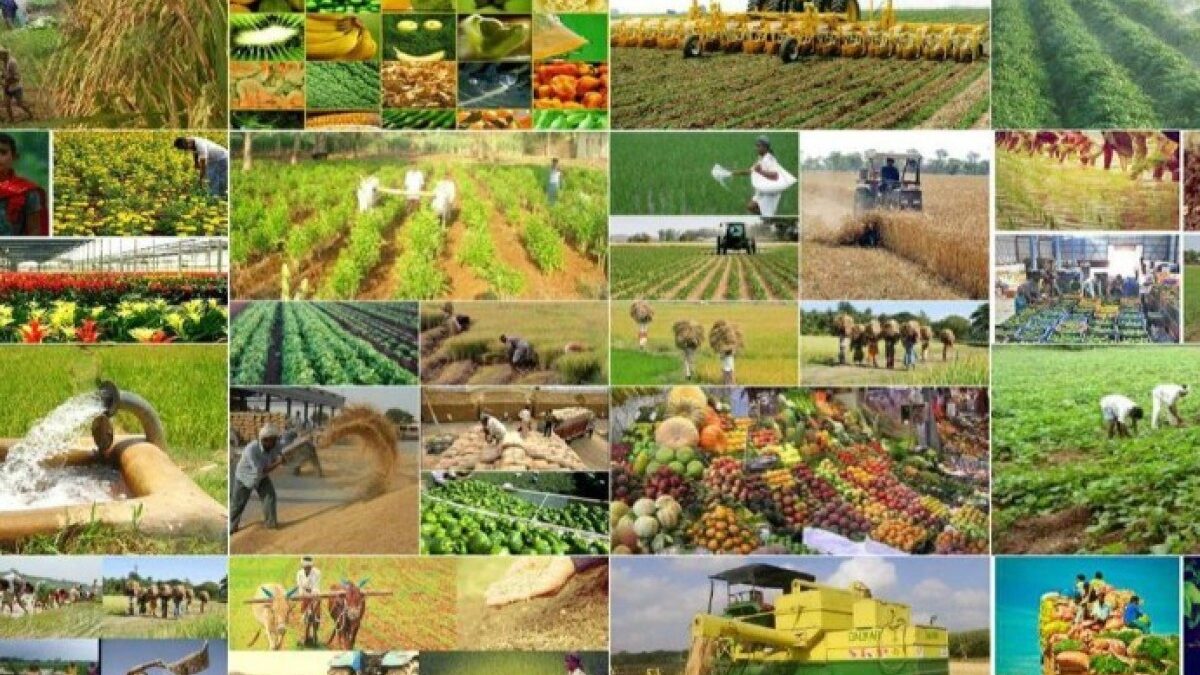
New subsidy mechanisms and state support amounts for agriculture in Azerbaijan have been determined.
elchi reports that, by the decision of the Agrarian Subsidy Council, new subsidies will be applied in the fields of livestock and fisheries, in addition to crop production.
According to the decision, a subsidy of 400 manats per hectare will be paid for wheat cultivation under modern irrigation in 22 specialized districts, and 200 manats per hectare for traditional irrigation and rain-fed crops. For potatoes, vegetables, peas, beans, and other legumes under modern irrigation, the subsidy is set at 500 manats/ha, and for melons at 310 manats/ha.
In mountainous regions and the Nakhchivan Autonomous Republic, a subsidy of 600 manats per hectare will be provided for potato and vegetable cultivation using modern irrigation, and 400 manats per hectare in other areas.
Product subsidies for cotton will also be differentiated based on the irrigation method. The subsidy will be 200 manats/ton for traditional irrigation, 215 manats/ton for sprinkler and pivot irrigation, and 300 manats/ton for drip irrigation.
Under the new decision, subsidies ranging from 500 manats to 5,000 manats per hectare have been set for greenhouses, depending on their technological level and covering material. The highest amount – 5,000 manats/ha – will be granted to 4th-generation glass-covered high-tech greenhouses.
Cultivation of new export-oriented crops will also be supported. A one-time subsidy of 7,500 manats/ha is planned for establishing aronia orchards, and 6,000 manats/ha for rose plantations for essential oil production. To develop boutique winemaking, a subsidy of 20,000 manats/ha will be provided for super-intensive vineyards of 5-20 hectares, and 10,000 manats/ha for intensive vineyards. The goal is to create 20 new boutique wineries by 2030.
The scope of subsidies for products delivered to processing enterprises will also be expanded. A subsidy of 50 manats/ton has been set for technical grapes and persimmons, 30 manats/ton for olives and shelled almonds, 100 manats/ton for roses used in essential oil production, 10 manats/ton for licorice, and 50 manats/ton for malting barley.
To facilitate the access of farmers and agricultural enterprises to foreign markets, the acquisition of international certificates will also be subsidized. State support for Global G.A.P., FSSC 22000, HACCP, GRASP, BRCGS, FSMA, and international organic certificates will range from 7,000 to 36,000 manats, depending on the type of certificate.
New support mechanisms will also be applied in livestock farming. For intensive farms established after October 1, 2026, a subsidy of 1,500 manats/head will be provided for dairy and dual-purpose cattle, and 1,000 manats/head for beef cattle. In existing farms, an annual subsidy of 500 manats/head is planned for purebred dairy cattle, 800 manats/head for dairy cattle raised from local breeding stock, and 200 manats/head for crossbred dairy cattle.
To increase milk production, a subsidy of 7 qepiks per liter or 70 manats per ton of chilled raw milk delivered to processing enterprises and milk collection points will be provided. If milk is delivered through cooperatives, the amount will be increased by an additional 20%.
To encourage the slaughter of cattle with a live weight of 600 kilograms or more, a subsidy of 40 qepiks per kilogram of live weight will be paid. A subsidy of 3 manats/piece for cattle hides, 30 qepiks/piece for small ruminant hides, and 30 qepiks/kg for wool will be applied for products delivered for processing.
In fisheries, a product subsidy will be applied for the first time. The subsidy for salmonids and sturgeons produced in the country will be 2,000 manats/ton, and 600 manats/ton for cyprinids and other species.
Furthermore, discounts on agricultural machinery and technological equipment are being expanded. The subsidized portion for combines, laser levelers, refrigerated warehouses, grain silos, membranes for irrigation ponds, and solar panels used in agricultural production is being increased up to 50%. The discount for locally produced drip irrigation systems will be 60%, and 50% for foreign-produced systems.
For farmers engaged in agriculture in listed border settlements, the subsidy coefficient will be calculated 0.5 points higher than the national base coefficient.
The new state support mechanisms are aimed at expanding modern irrigation, producing high-value products, supplying the processing industry with local raw materials, and increasing export opportunities and the competitiveness of agriculture, in line with the goals of the 2026–2030 State Program.