
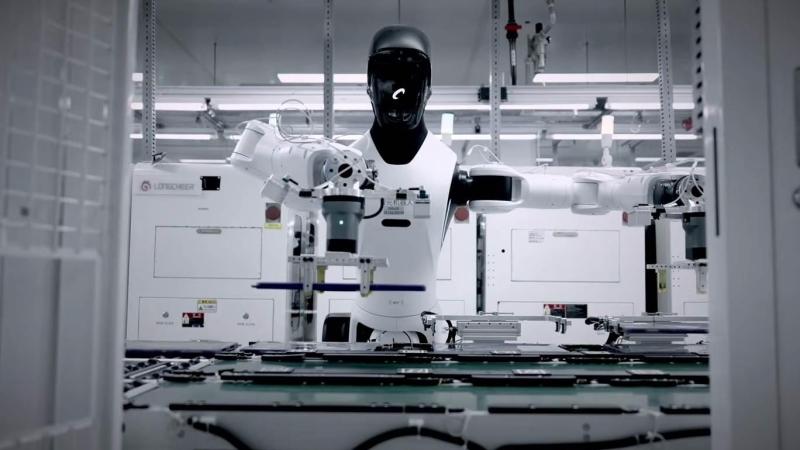
China has deployed humanoid robots on a real production line. Developed by Agibot, the robots completed over 60,000 tasks in six days with near-perfect precision, marking the beginning of a new era in industrial artificial intelligence.
elchi reports that humanoid robots developed in China worked continuously on a factory production line for six days, performing quality control and material processing tasks almost flawlessly.
Produced by the Shanghai-based technology startup Agibot, the robots operated for over 64 hours at the Longcheer Technology factory in Nanchang, eastern China. In a live-streamed test, the robots successfully completed 99.99% of more than 60,000 tasks on the production line.
Company officials stated that the test aimed to demonstrate that humanoid robots can operate efficiently in real production conditions outside of laboratory environments.
Dr. Yao Maoqing, Vice President of Agibot, stated, “The real question is not what robots can do, but whether they can create value by being integrated into real work environments.”
Agibot has announced that it has produced more than 15,000 humanoid robots to date, which is considered a significant step toward the widespread commercial use of robots.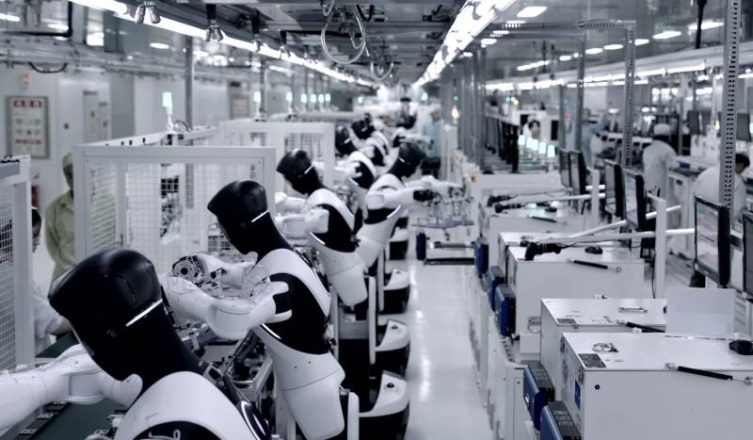
In China’s Five-Year Plan covering 2026-2030, humanoid robots are among the priority strategic areas for economic growth. According to experts, the country is accelerating the transition from traditional industrial automation to intelligent robot systems supported by artificial intelligence.
Barclays analysts predict that approximately 11 million humanoid robots could be deployed in China by 2035, while Morgan Stanley notes that current sales figures are below these projections.
In a statement following the 6-day live broadcast, Agibot claimed that the tests demonstrated the commercial value of humanoid robots and that the sector has reached a new stage in the transition from laboratory research to real-world applications.
Şayəstə