
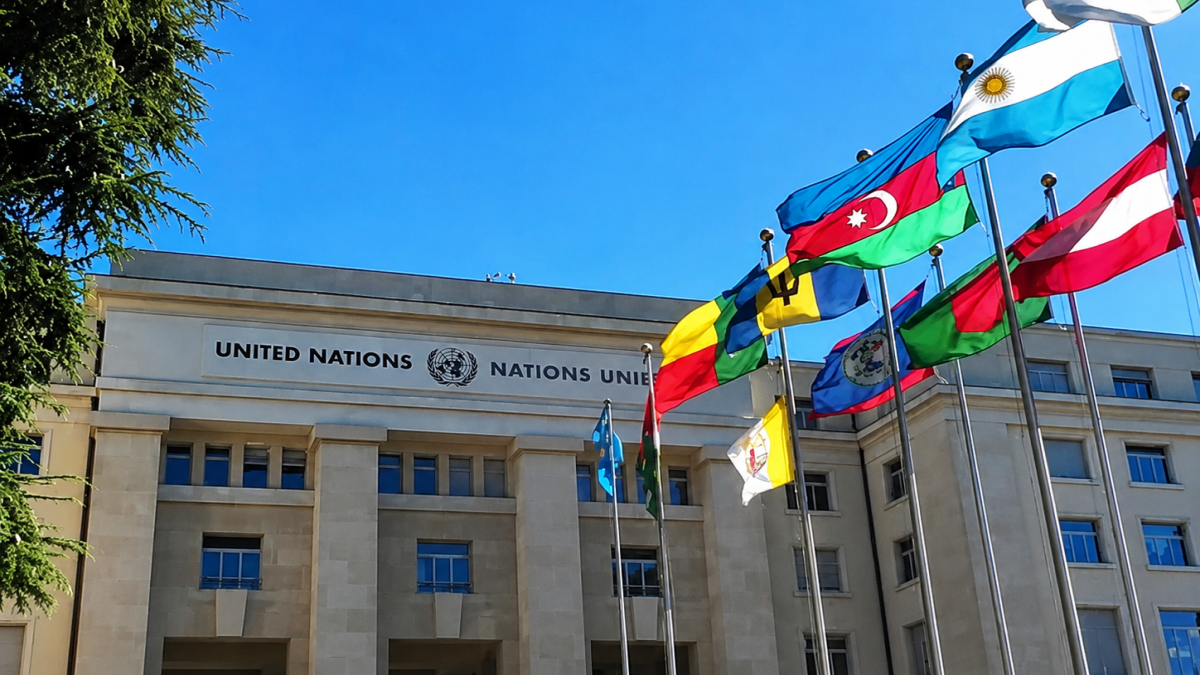
In the modern system of international relations, the international prestige of states is no longer determined solely by their economic potential, military capabilities, or geographical position. The geopolitical realities of the 21st century show that one of the key factors defining global influence is the place states hold in multilateral diplomacy, the trust they earn in international organizations, and their level of participation in global decision-making processes. In this regard, representation in elective bodies of international organizations, participation in leadership structures, and victories in international elections are considered important criteria demonstrating the diplomatic weight of states.
In recent years, Azerbaijan has achieved remarkable results in this very direction. While in the early years of independence the main goal of foreign policy was integration into international organizations, the establishment of new partnerships, and the strengthening of state independence, today the country acts as a state that puts forward initiatives within the international system, contributes to the development of multilateral cooperation, and participates in shaping the global agenda.
Azerbaijan expands the scope of its diplomatic activity
Azerbaijan has already established diplomatic relations with nearly 200 states, is represented through more than 90 diplomatic missions in various countries around the world, and is a full member of more than 50 international and regional organizations. In recent years, the initiatives put forward in the UN, the Non-Aligned Movement, the Organization of Turkic States, the Organization of Islamic Cooperation, UNESCO, ICESCO, the Conference on Interaction and Confidence-Building Measures in Asia (CICA), and other multilateral platforms, as well as hosting international events, show that the scope of Azerbaijan’s diplomatic activity has expanded significantly.
This rise is particularly evident over the last five years. The extension of the chairmanship of the Non-Aligned Movement for one year with the unanimous support of the 120 member states is considered one of the rare events in international practice. Subsequently, Azerbaijan’s selection as the host of COP29 was further confirmation of the trust shown in the country by nearly 200 states. Both decisions demonstrated that Azerbaijan is accepted as a reliable and responsible partner not only at the regional but also at the global level.
This process was accompanied by more concrete results in 2025. Last year, Azerbaijan achieved a 100 percent success rate by winning all 14 candidacies it put forward for elective bodies of international organizations. In addition, representatives of the country have gained the right to representation in various bodies of the UN system, UNESCO, the World Tourism Organization, ICESCO, and other international organizations’ decision-making structures.
These successes should be assessed not as isolated diplomatic achievements, but as the logical result of a long-term and consistent foreign policy strategy. Victories in international elections and expanding representation in multilateral institutions have further strengthened Azerbaijan’s position as a reliable partner in the international arena. This diplomatic rise is part of a broader geopolitical transformation.
No regional project can be realized without the participation of Azerbaijan
Department Head of the Center of Analysis of International Relations Vasif Hüseynov APA stated that today, Azerbaijan’s prestige and political weight in the system of international relations have reached their highest level in the years of independence.
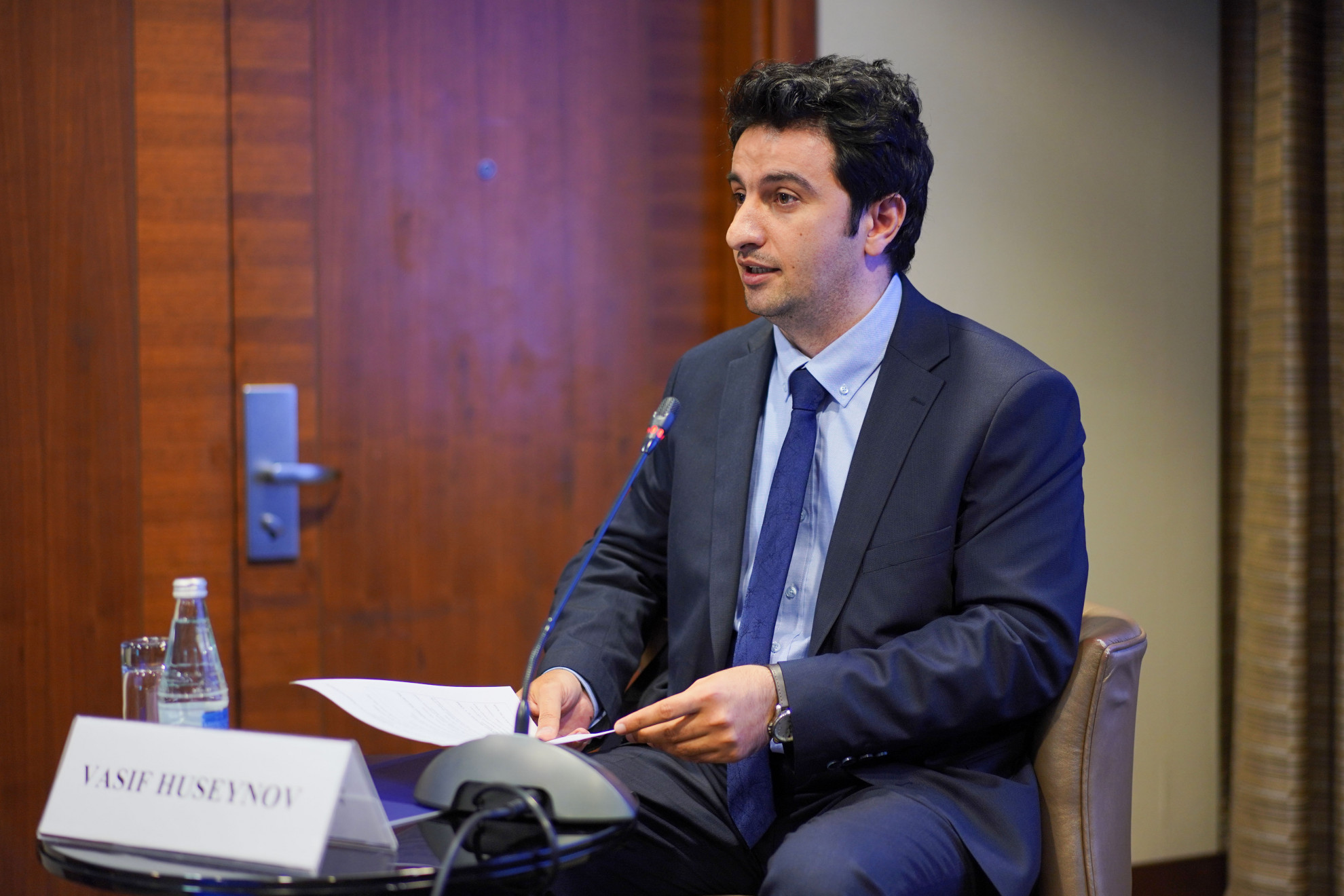
According to him, especially in the period after the Second Karabakh War, Azerbaijan has begun to perform the function of a middle power both in the region and on a global scale, becoming an active participant in global and regional processes and forming various influence mechanisms.
The expert emphasized that currently, it is impossible for any regionally significant project in the South Caucasus to be realized without the participation of Azerbaijan: “Azerbaijan is directly involved in processes not only in the South Caucasus but also in Central Asia and Eastern Europe. Participation in energy and transport projects, in particular, is very important and inevitable. The foreign policy pursued in this direction by the Republic of Azerbaijan and its President, Mr. Ilham Aliyev, is yielding important results, and part of these results is reflected in Azerbaijan’s representation in international organizations”.
Behind these results achieved in international organizations lie not only statistical indicators but also the political trust formed between states. In diplomatic practice, votes held for elective bodies are considered real indicators of each country’s international prestige and partnership relations. It is precisely for this reason that Azerbaijan’s consistent successes in international elections in recent years are assessed as a practical expression of the international support shown for the country’s foreign policy course.
In this regard, the victory in all candidacies in 2025 can be evaluated not just as a statistical indicator, but as a concrete confirmation of the trust Azerbaijan has earned in multilateral diplomacy and its international position.
Record representation in the UN system: a new stage of international trust
One of the most important successes of Azerbaijani diplomacy in recent years is the significant expansion of its representation in UN human rights mechanisms. This shows that the country’s international activity is no longer limited to political, energy, and security issues, but that it has also become a participant in global decision-making processes in the field of human rights.
The elections held in June 2026 are of special importance in this regard. In June alone, Azerbaijan was elected as a member of the UN Committee on the Elimination of Discrimination against Women (CEDAW), the Human Rights Committee (ICCPR), and the Committee on the Rights of the Child (CRC). Elections to these bodies take place in highly competitive conditions, and in addition to the professionalism of the candidates, the international prestige of the states nominating them is considered one of the decisive factors.
This success was a continuation of the diplomatic line formed in previous years. Azerbaijan is already represented in the Committee on Economic, Social and Cultural Rights (CESCR) and the Committee on Migrant Workers (CMW). With this, our country has become one of the few states represented in five of the ten treaty bodies operating under the UN for human rights.
According to official information, based on this indicator, Azerbaijan shares second and third places among the 193 UN member states along with China. This fact is considered one of the important indicators of the trust shown in the country and the prestige it has gained in multilateral cooperation in international diplomatic practice.
In Vasif Hüseynov’s opinion, the results achieved in recent months also show that this trust is of a sustainable nature.
“It is no coincidence that in the last month alone, Azerbaijan’s candidacy for three important international organizations has been supported by the international community, and Azerbaijan has begun to participate in the decision-making bodies of those organizations. According to him, this type of activity and such active participation in the system of international relations leads to a further increase in Azerbaijan’s prestige”.
International elections are a real indicator of diplomatic trust
In diplomatic practice, elections held for elective bodies of international organizations are considered one of the most objective indicators of the trust formed between states. Each vote reflects the result of long-term diplomatic activity, bilateral relations, and multilateral cooperation. For this reason, successes in international elections are accepted not as statistical indicators, but as a political assessment given to the state’s foreign policy course.
Azerbaijan gaining the support of states representing different regions in recent years shows that it is accepted as a reliable partner in multilateral diplomacy. The fact that all candidacies put forward in 2025 won was a practical expression of this trust and is assessed as one of the rare results in international election diplomacy.
According to Vasif Hüseynov, the results Azerbaijan has achieved in recent years are a manifestation of the international trust shown to the country: “The Republic of Azerbaijan is today an important participant in international organizations and one of the states playing an active role there. The representation of the Republic of Azerbaijan in international organizations, especially the participation of Azerbaijan in elective bodies, has increased significantly in recent years, and this is an indicator of the respect and trust in our country”.
The expert stated that as a result of this, all candidacies put forward for elective bodies of international organizations in 2025 achieved success: “For each of the 14 candidacies, Azerbaijan was able to gain support in international organizations and ensure its representation. These successes continued in the current year as well. It is no coincidence that in the last month alone, Azerbaijan’s candidacy for three important international organizations has been supported by the international community, and Azerbaijan has begun to participate in the decision-making bodies of these organizations. These are the UN Committee on the Elimination of Discrimination against Women, the Human Rights Committee, and the Committee on the Rights of the Child”.
The universality of Azerbaijan’s foreign policy
An analysis of the mandates obtained in recent years shows that Azerbaijan’s successes in international organizations are not limited to any one field. The bodies and elective organs in which the country is represented cover various directions such as human rights, sustainable development, tourism, migration, social policy, environment, cultural heritage, and humanitarian cooperation.
This trend shows that Azerbaijan’s foreign policy is taking on a multifaceted character. In modern international relations, the prestige of states is no longer determined solely by political and security issues. Sustainable development, social policy, gender equality, climate change, humanitarian cooperation, and the protection of cultural heritage have also become key directions of the global agenda. Azerbaijan’s activity in international platforms across various fields shows that the country’s multilateral diplomacy is developing in line with these very challenges.
This change has also affected the country’s international image. While previously Azerbaijan was associated more with energy security and transport corridors, in recent years it is accepted as a state actively participating in the fields of human rights, climate diplomacy, intercultural dialogue, and humanitarian cooperation.
UNESCO and cultural diplomacy: Azerbaijan’s “soft power” policy
Azerbaijan’s increasing activity in international organizations is not limited to political and legal platforms. Cooperation with UNESCO and other specialized international bodies shows that the country also consistently uses “soft power” in its foreign policy.
Within the framework of UNESCO, the inclusion of Azerbaijan’s intangible cultural heritage examples in international lists, initiatives aimed at protecting historical and cultural heritage, projects promoting intercultural dialogue, and international humanitarian programs constitute the main elements of the policy implemented by Azerbaijan in this direction.
As a result of this activity, Azerbaijan is recognized not only as a country with a rich cultural heritage but also as a responsible partner contributing to the protection of world cultural heritage.
The importance of cultural diplomacy is not limited to the humanitarian sphere. It is one of the important diplomatic tools serving to strengthen trust between states, create new cooperation platforms, and strengthen the country’s international image. The activity carried out by Azerbaijan within the framework of UNESCO serves these very goals.
Representation in international organizations: new opportunities
Participation in the decision-making structures of international organizations not only brings prestige to states but also creates an opportunity to be more closely involved in global legal and institutional processes. Azerbaijani representatives operating in various international mechanisms participate in the preparation of new initiatives, expand multilateral cooperation ties, and contribute to the more complete presentation of the country’s position on international platforms.
In the opinion of Vüsal Hüseynov, Azerbaijan’s participation in the decision-making bodies of international organizations creates conditions for increased interest in our state: “When important decisions are made, various states and various members of the international community apply to our country to gain Azerbaijan’s support and take steps towards deepening their relations. This is an indicator that Azerbaijan is already accepted in the system of international relations not just as a participant, but as an actor capable of influencing decision-making”.
This approach shows that Azerbaijan’s activity in international organizations is no longer limited to representation. By participating in various directions of multilateral diplomacy, the country expands its international cooperation network and strengthens its position on the global agenda.
Azerbaijan’s diplomatic capital
In the modern system of international relations, the success of states is not measured only by the number of mandates they obtain. One of the main indicators is the ability to turn the diplomatic capital formed over a long-term period into real political results. The successes Azerbaijan has achieved in international organizations in recent years should be evaluated from this very perspective.
In conditions where global geopolitical competition is deepening and multilateral institutions are facing new challenges, gaining broad support in elective bodies of international organizations has become a more complex process compared to previous periods. In such an environment, Azerbaijan’s consistent successes show that the country is accepted as a reliable partner on various political and regional platforms.
This position is not only an indicator of international prestige but also a practical result of Azerbaijan’s foreign policy. The experience gained in multilateral diplomacy expands the country’s institutional capabilities, creates conditions for the emergence of new international cooperation formats, and makes an additional contribution to the development of the diplomatic school.
Vasif Hüseynov believes that there is sufficient basis to highly value Azerbaijan’s participation in international organizations and the successes of its diplomacy: “The achievements made in this direction create additional opportunities for our state to defend its national interests more successfully in the system of international relations, and to achieve the goals it has set in both regional economic projects and geopolitical projects”.
According to the expert, the position Azerbaijan has gained in the system of international relations is the logical result of a balanced foreign policy.
As can be seen from the views of the AIR Center department head, representation in international organizations is no longer just a matter of diplomatic status. It has become a strategic tool that strengthens Azerbaijan’s position in regional and global processes, expands opportunities for multilateral cooperation, and strengthens the defense of national interests.
Vasif Hüseynov also believes that the successes achieved in international organizations will create conditions for Azerbaijan to defend its national interests more successfully in the system of international relations in the coming period: “These successes open additional opportunities for the country to achieve the strategic goals it has set in both regional economic projects and geopolitical initiatives.”
Azerbaijan is an important actor in the international arena
Results achieved in recent years show that Azerbaijan’s activity in international organizations has entered a qualitatively new stage. The country no longer acts just as a state participating in international platforms, but as an actor that puts forward initiatives in various directions, contributes to the preparation of decisions, and gains broad international support.
One of the main reasons for this is Azerbaijan’s harmonization of political, legal, humanitarian, and cultural diplomacy within the framework of a unified foreign policy strategy. Increasing representation in the field of human rights, consistent successes in international elections, cooperation with UNESCO and other specialized bodies, hosting global platforms like COP29, and active participation in various multilateral initiatives constitute the complementary directions of the country’s international activity.
These results show that Azerbaijan is gradually able to turn the trust it has formed in the system of international relations into broader political influence. It is precisely this factor that strengthens the country’s position in international organizations, increases its role in multilateral diplomacy, and creates new opportunities for more effective defense of its national interests at the global level.