
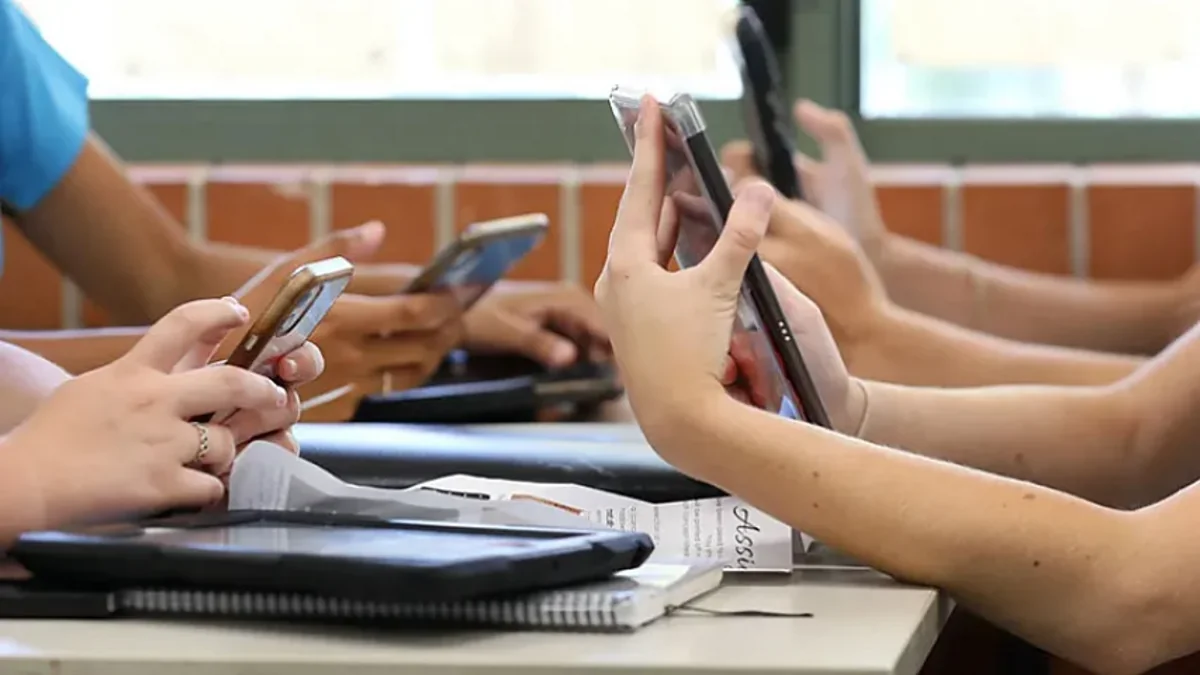
Rules regarding the use of mobile and electronic devices in preschool groups and general education institutions have been approved.
elchi reports that the Board of the Ministry of Science and Education has made a decision in this regard.
These Rules regulate the procedures for the use of mobile and electronic devices by students in preschool groups and general education institutions (hereinafter – the institution).
Mobile and electronic devices refer to mobile phones, tablets, smartwatches, laptops, portable game consoles, and other similar portable electronic devices used for voice and video communication, internet access, data processing, storage and transmission, playing games, as well as executing multimedia functions.
Regarding the requirements for the use of mobile and electronic devices, it is prohibited for students to use mobile and electronic devices during lessons (classes).
Mobile and electronic devices brought to the institution by students must be kept in storage areas (mobile boxes, lockers, etc.) determined by the institution’s management in a turned-off or silent mode until the end of the lesson (class) period.
Students may use mobile and electronic devices during lessons (classes) only with the permission of the teacher and under their supervision as auxiliary tools for educational purposes (access to electronic lesson materials, use of educational applications, for presentation and research work, etc.).
Students may use mobile and electronic devices on the institution’s premises only in necessary cases (natural disasters and other emergencies, health-related issues, etc.) for information exchange.
Control over the implementation of the rules in the institution will be determined by the institution’s internal disciplinary rules.
In cases where violations of the rules are detected, the institution’s management will inform the student’s parents (or other legal representatives) within 1 business day and implement preventive measures (conducting individual preventive conversations with the student, inviting the parent (or other legal representative) to the school for a joint discussion with the participation of teachers, involving the student in extracurricular activities and educational events, etc.).