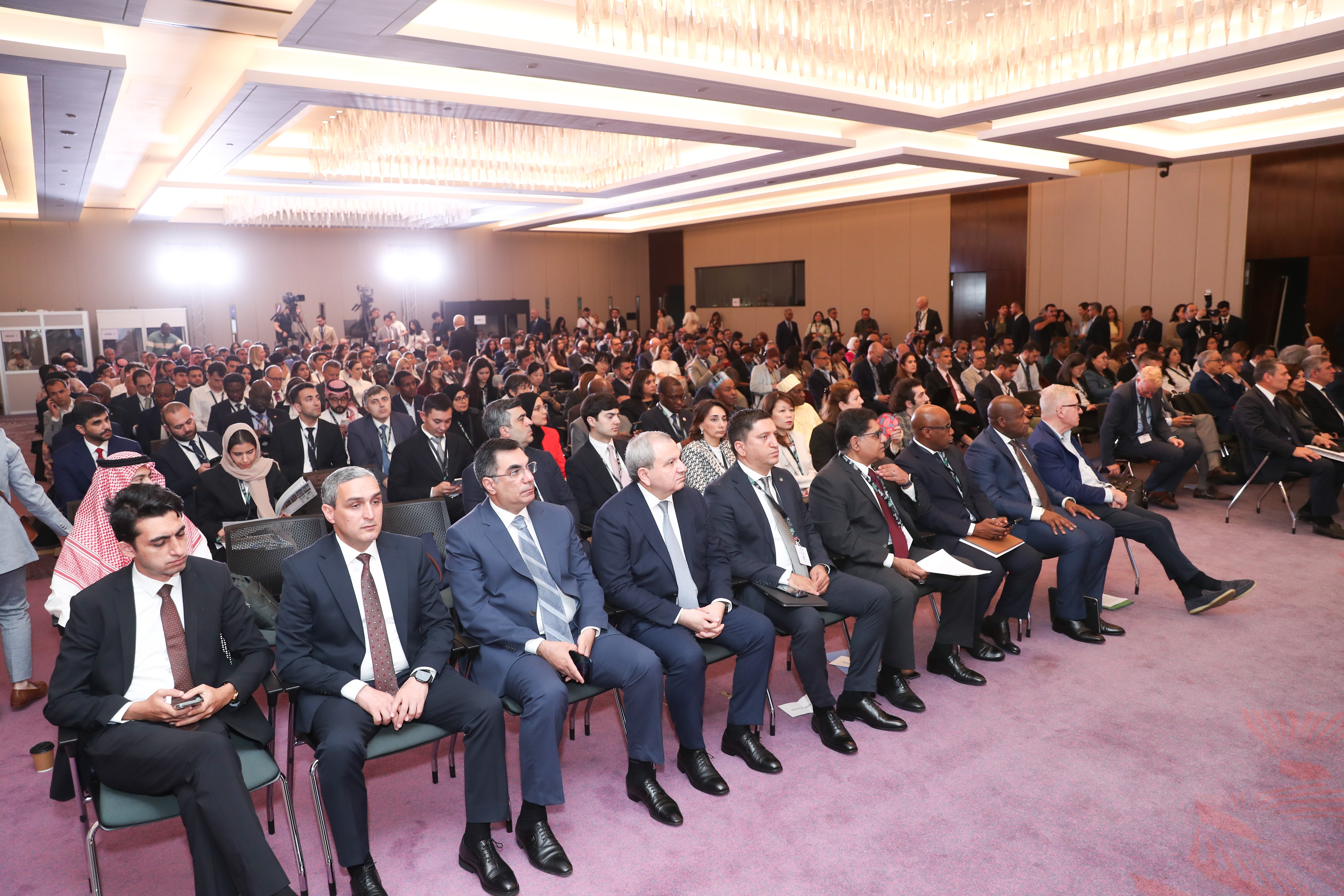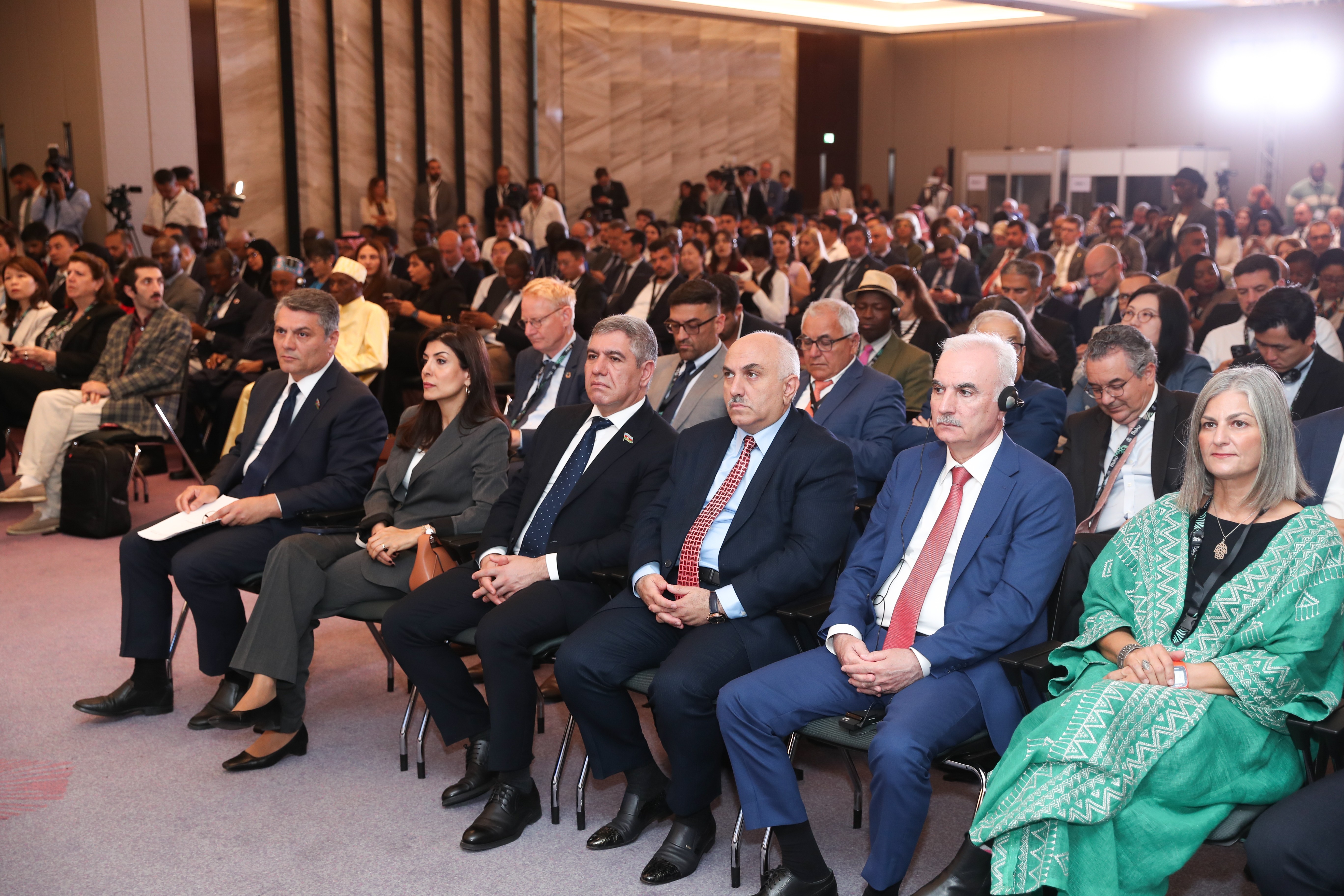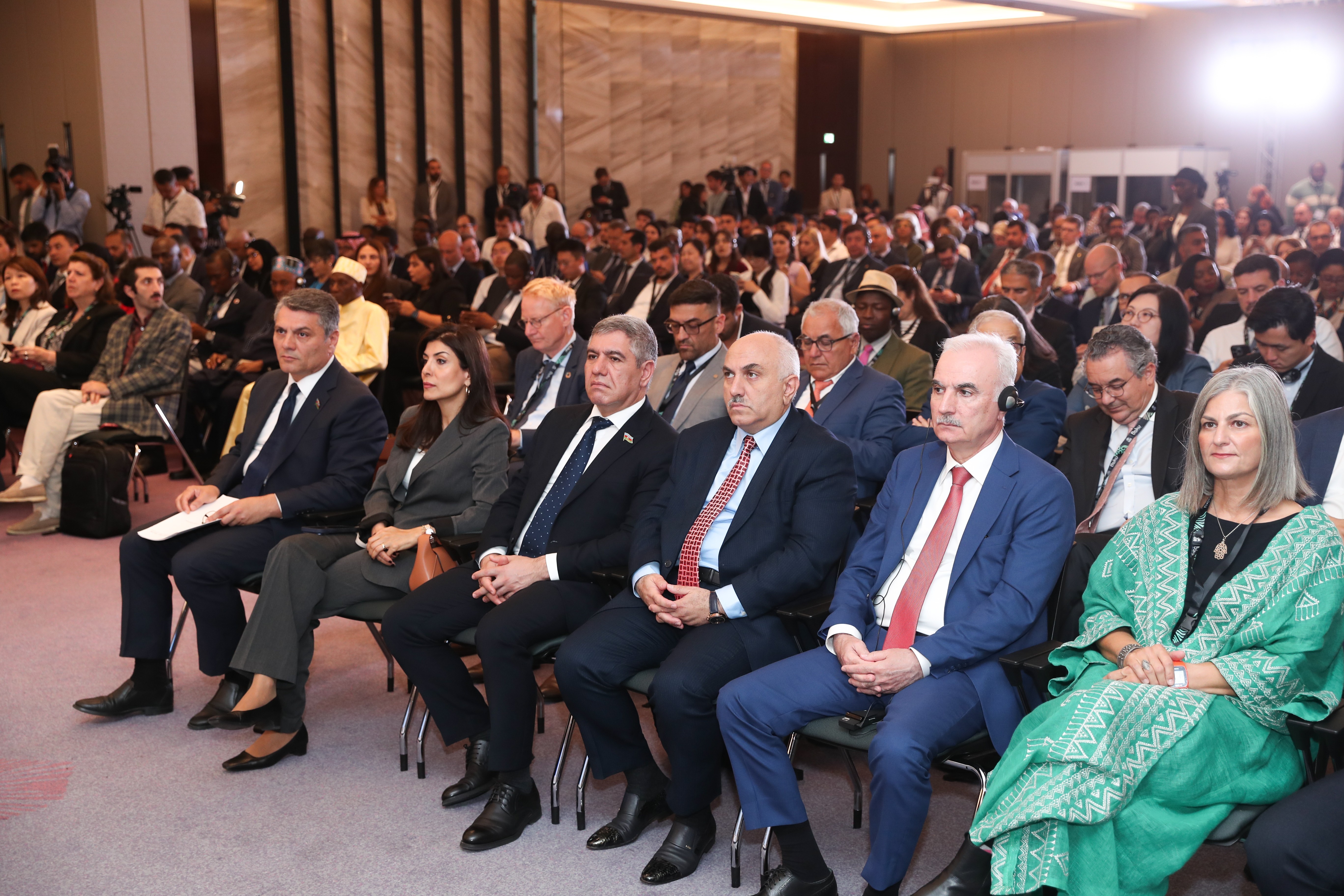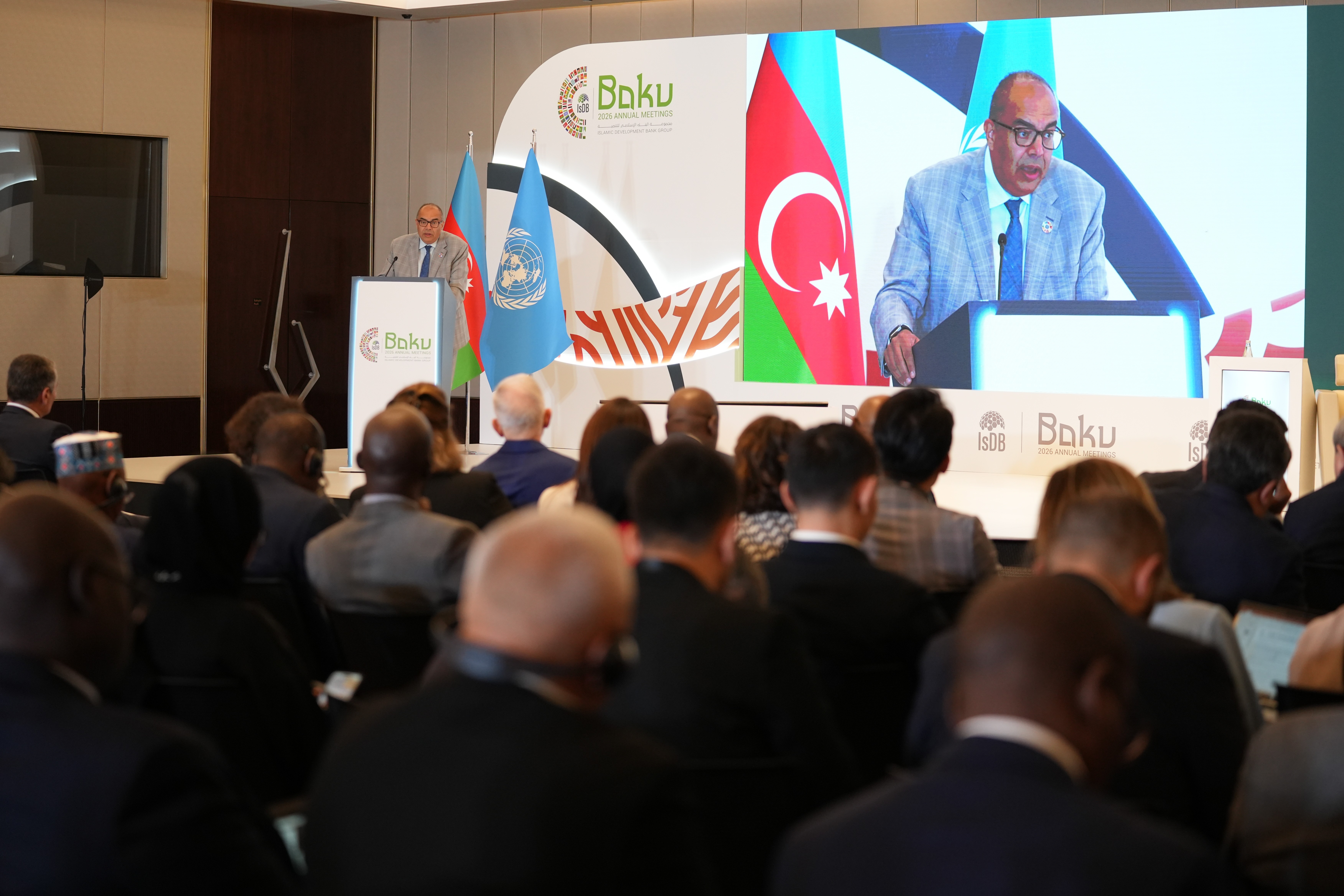
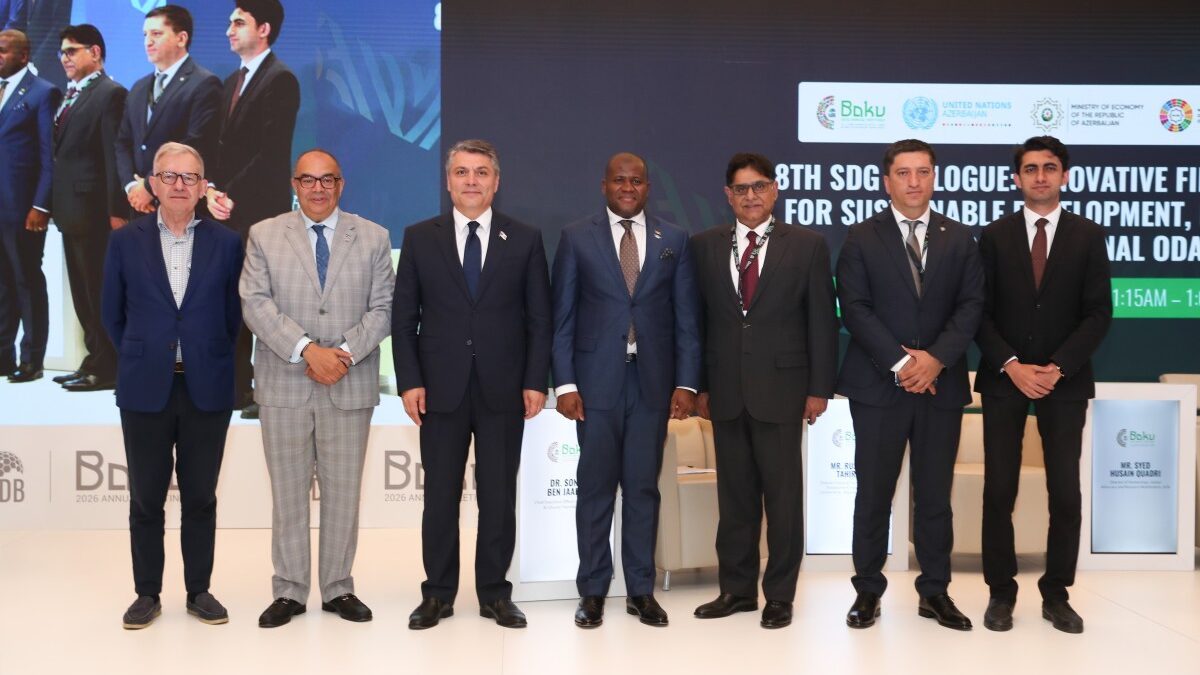
On the first day of the 2026 Annual Meetings of the Islamic Development Bank (IsDB) Group held in Baku, innovative financing methods for sustainable development were reviewed at a high-level dialogue attended by numerous stakeholders.
“Elchi” reports that the high-level event was co-organized by the IsDB Group, the Government of the Republic of Azerbaijan, and the United Nations under the title “8th SDG Dialogue: Innovative Financing for Sustainable Development – Perspectives Beyond Aid and Traditional Official Development Assistance (ODA).”
The main directions of the discussions covered Islamic finance, foreign direct investment, blended finance, capital market instruments, and digital finance, as well as policies and best practices that stimulate innovative financing aimed at realizing the Sustainable Development Goals (SDGs).
During the dialogue, His Excellency Mr. Ismaël Nabé, Minister of Planning, International Cooperation, and Development of the Republic of Guinea, emphasized that the main challenge in financing sustainable development is not a shortage of capital, but the need to build collective capabilities for large-scale mobilization, structuring, risk mitigation, and directing existing resources toward sustainable development goals. He noted that neither public finance nor private capital is sufficient on its own to achieve transformative results, and their synergistic use is of decisive importance.
Dr. Mahmoud Mohieldin, UN Special Envoy on Financing the 2030 Agenda for Sustainable Development, highlighted the central role of human dignity in development financing. He stated that the failure to adequately combat poverty and the lack of opportunities for a dignified life ultimately undermine the fundamental purpose of sustainable development.
Nasar Hayat, acting UN Resident Coordinator in Azerbaijan, highlighted in his speech the importance of collective efforts to close the SDG financing gap through attracting private capital, strengthening the mobilization of domestic resources, and expanding the use of innovative financial instruments. He also noted that the SDG Dialogue creates an extremely favorable opportunity to link national efforts implemented in Azerbaijan with more comprehensive regional and global discussions, as well as to promote the exchange of experience on this important issue.
Huseyn Huseynov, Advisor to the Minister of Economy, emphasized the growing role of public-private partnerships in realizing development priorities. He noted that public-private partnership mechanisms, while providing increasing support for infrastructure modernization, industrial development, strengthening transport connectivity, renewable energy initiatives, and economic diversification, play an increasingly important role in mobilizing additional investments, strengthening efficiency and innovation, and promoting long-term sustainable development.
Rustam Tahirov, Director of the Sustainable Development of the Financial Sector Department of the Central Bank of the Republic of Azerbaijan, spoke about the strategic role of sustainable finance frameworks, especially green taxonomies, in directing capital to priority areas. He highlighted that such frameworks allow both public and private sector entities to accelerate decarbonization efforts and noted the growing momentum toward transforming regulatory mechanisms into real investments directed at renewable energy, energy efficiency, and other sustainable sectors.
The event was also attended by representatives of member states of the Islamic Development Bank (IsDB), international financial institutions, and leading stakeholders in the field of development, as well as representatives of the private sector, academic circles, and civil society.
Participants emphasized the urgent need to mobilize sustainable investments on a large scale against the backdrop of declining Official Development Assistance (ODA), rising debt burdens, and the acute global deficit in SDG financing, while also declaring the strategic importance of regional integration and South-South cooperation among IsDB Group member states.
The dialogue further strengthened the IsDB Group’s role as a strategic partner in advancing practical financial solutions that support regional integration and sustainable development.
The key insights and recommendations resulting from the discussions will be reflected in a policy brief to be prepared to ensure the continuity of knowledge exchange and partnership among member states.