
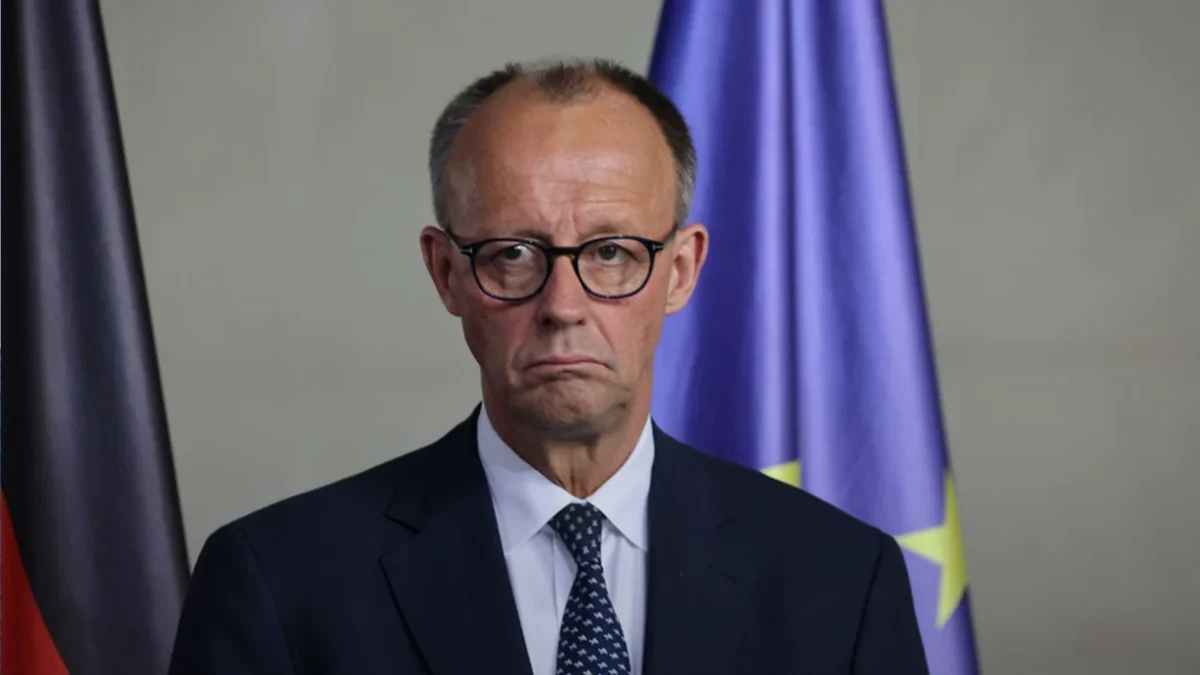
Chancellor Friedrich Merz’s government in Germany is rapidly losing support due to economic crisis, stalled reforms, and foreign policy, while the rise of the far-right AfD is seen as the main threat in the country. The AfD, which is ahead of the CDU/CSU in opinion polls, is strengthening amid the Russia-Ukraine war, economic uncertainty, racist anger against foreigners, and social polarization, making Merz’s first year a symbol of political instability and a crisis of confidence in Germany.
elchi reports that after Merz’s first year in power, falling approval ratings, stalled reforms, pro-Israel foreign policy, and police intervention against pro-Palestinian demonstrations have increased pressure on the government. Although German media claims that figures like Hendrik Wüst are being discussed as alternatives to Merz within the CDU, government spokesperson Stefan Cornelius has denied these claims. According to a Forsa poll, the percentage of those satisfied with Merz has dropped to 14%, and in some polls, the far-right AfD has overtaken the CDU/CSU bloc. Experts say the real danger overshadowing Germany is the rise of the far-right AfD.
Public pressure against Israel
One of the most criticized aspects of Friedrich Merz’s government was its political support for Israel. Although Germany has kept the Israeli security doctrine, defined as “Staatsräson” (reason of state) after the Holocaust, at the center of its foreign policy, the growing massacre in Gaza has led to an increase in public backlash against this position in Berlin. In September 2025, approximately 50,000 people marched in Berlin demanding an end to the war in Gaza, a halt to German arms exports to Israel, and the imposition of sanctions against Israel by the European Union. During the same period, pro-Palestinian demonstrations in Berlin, Düsseldorf, and other cities were met with heavy police intervention. The indiscriminate use of force by police during the demonstrations further fueled public anger.
Şayəstə