
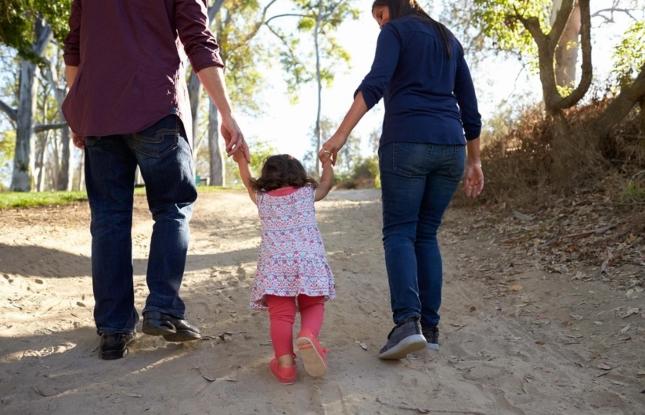
The Social Services Agency (SSA) under the Ministry of Labor and Social Protection of the Population (MLSPP) has placed 78 children in foster families during the past period.
elchi reports that this information was noted in a post shared by the MLSPP on May 31 on the occasion of World Foster Care Day in Azerbaijan.
It was stated that agreements on placing the children in foster families were signed between the SSA and the individuals taking the children into foster care:
“Of the children placed in foster families, 34 are boys and 44 are girls. Currently, 41 of these children live in families in Baku, 4 in Absheron, and 33 in the regions (1 in Aghjabadi, 1 in Astara, 1 in Bilasuvar, 1 in Jalilabad, 4 in Ganja, 1 in Goychay, 3 in Goygol, 3 in Khachmaz, 4 in Lankaran, 1 in Shamakhi, 1 in Shaki, 4 in Shamkir, 1 in Zagatala, 3 in Oghuz, 2 in Imishli, 1 in Mingachevir, 1 in Zardab).”
It was noted that the ministry also provides monthly social payments to foster families. Thus, a monthly allowance of 355 manats is paid for children under 6 years old, 375 manats for children aged 7-13, and 395 manats for children aged 14-18. For children with disabilities, these amounts are 500, 600, and 650 manats, respectively, depending on the age group.
In addition, to ensure that children placed in foster families are provided with seasonal clothing, families are given a one-time allowance of 200 manats per child once every quarter.
It should be noted that May 31 is celebrated as World Foster Care Day in a number of countries, including Azerbaijan. The goal is to emphasize the importance of foster families who temporarily raise children deprived of parental care in a family environment and to support them.
According to the legislative acts signed by President Ilham Aliyev on July 12, 2023, the foster family institution is being implemented in our country. The “Foster Family” model, which is widely used globally in the field of alternative care for children, ensures that children deprived of parental care live and develop in a family environment under state supervision and on a paid basis for a certain period of time.