
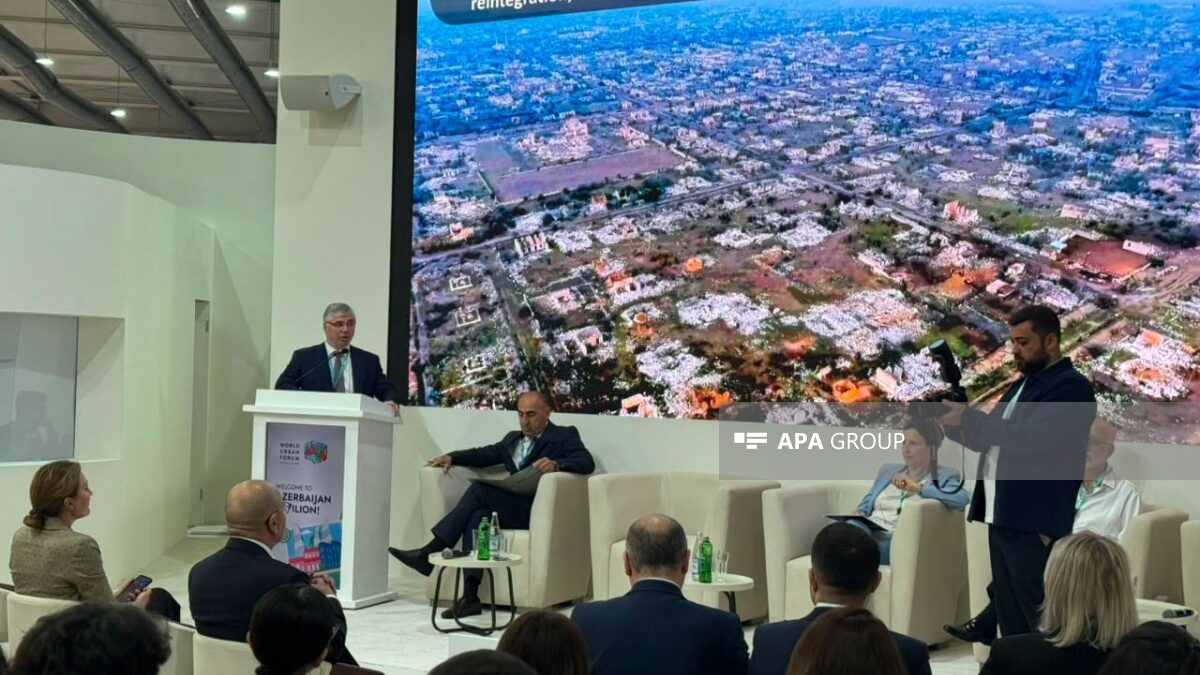
Mine clearance is not only a humanitarian activity that saves human lives, but also the main foundation for restoration and reconstruction.
elchi reports that ANAMA Chairman Vugar Suleymanov stated this at the event titled “Post-Conflict Urban Reconstruction: The Crucial Role of Humanitarian Mine Action” held within the framework of WUF13.
ANAMA Chairman stated that this activity creates the necessary conditions for the reconstruction of residential houses, restoration of infrastructure, revival of agriculture, development of transport networks, and revitalization of economic activity: “Within the framework of the ‘Great Return’ Program, mine action has been fully integrated into urban planning, reconstruction, and development processes.”
He emphasized that the mine threat slows down the recovery process, limits development opportunities, and puts the safety of the population at risk not only in Azerbaijan but also in a number of countries around the world: “That is why today’s platform is of particular importance. Eliminating the mine problem is not limited to national efforts; it requires continuous international support, partnership, innovative approaches, and the sharing of best practices.”
ANAMA Chairman also disclosed the work done since November 2020: “After the end of the Patriotic War in 2020, Azerbaijan has implemented large-scale measures to eliminate this problem. Since November 2020, more than 270 thousand hectares of land have been cleared of mines and unexploded ordnance, and more than 250 thousand mines and unexploded ordnance have been detected and neutralized.”
