
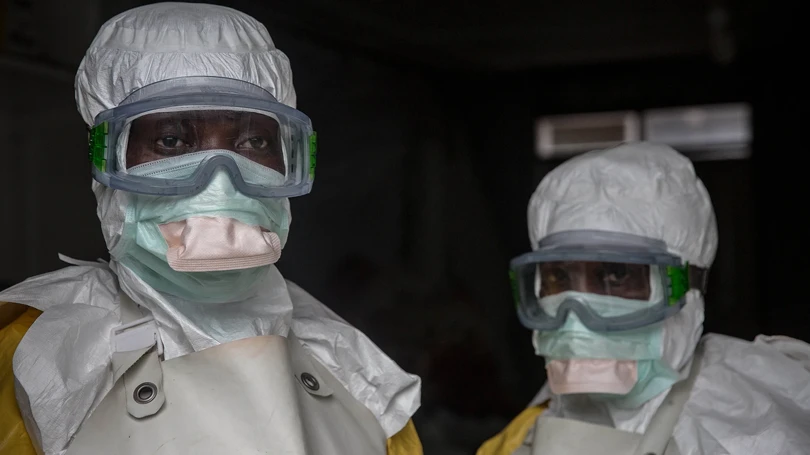
World Health Organization (WHO) Director-General Dr. Tedros Adhanom Ghebreyesus has expressed deep concern regarding the “scale and speed of spread” of the deadly Ebola epidemic in the Democratic Republic of the Congo (DRC) and Uganda. The speed of the response to the spread of the epidemic has also been a target of criticism.
“Elchi” reports that WHO Director-General Dr. Tedros Adhanom Ghebreyesus stated that the epidemic caused by the “Bundibugyo” variant of Ebola mainly covers the Ituri province in the northeast of the Democratic Republic of the Congo.
According to information shared by the Minister of Health of the Democratic Republic of the Congo, Dr. Samuel Roger Kamba, the number of deaths due to the epidemic has reached 131, with more than 500 suspected cases.
“I suspect that the actual number of cases is higher than reported”
Despite the Democratic Republic of the Congo’s past experience with Ebola, the question of why it took so long to detect and track the first cases has caused concern. Dr. Craig Spencer, who recovered from Ebola in 2014, stated, “Undoubtedly, the situation is worse than we currently think. I suspect that the actual number of infection cases is higher than reported.”
When did the Ebola epidemic start?
According to WHO data, the first known suspected case showed symptoms in a healthcare worker on April 24. The patient passed away at a medical center in Bunia, the capital of Ituri province.
Later, on May 5, the WHO received information about an “unknown disease” with a high mortality rate in the province. After investigations launched by a rapid response team on May 13, it was confirmed on May 15 that the disease was the Bundibugyo virus.
Under the auspices of the UN, the WHO has declared the epidemic a “public health emergency of international concern.” It was emphasized that the high positivity rate and the increasing number of infections and deaths point to a “potentially larger epidemic.”
Ghebreyesus stated that this is the first time a director-general has declared an emergency of this scale without convening an emergency committee, adding: “I did not take this decision lightly.”
What is the Bundibugyo variant?
According to the Africa Centres for Disease Control and Prevention (CDC), Ebola is a serious and often fatal disease transmitted through contact with the bodily fluids of an infected person, contaminated materials, or a person who has died from the disease. Currently, there is no specifically approved treatment or vaccine for the Bundibugyo virus.
Məryəm