
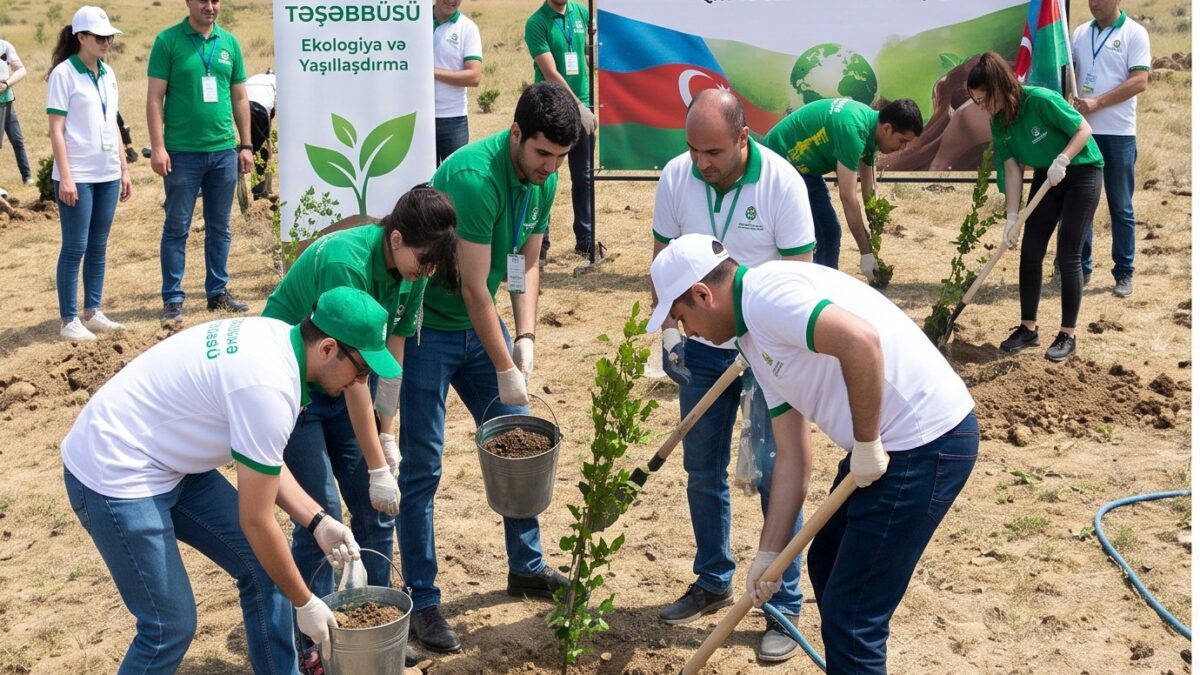
NGOs and businesses should transition to creating “shared value” and real cooperation mechanisms
Against the backdrop of modern global economic and social challenges, the social responsibility of the business sector has moved beyond the traditional concept of charity to become an integral part of corporate sustainability, risk management, and strategic development. The development of the Corporate Social Responsibility (CSR) institution in Azerbaijan is at a crucial transitional stage. Companies operating in our country must now realize that the national CSR experience cannot develop solely within the framework of traditional “passive charity” and one-off sponsorship models. The CSR tool must transcend its narrow, limited scope, be integrated into the core business strategy, and be applied more effectively on a broader scale.
Why can’t CSR be considered solely an internal company matter?
Historically, many companies have viewed social responsibility as an internal PR tool, insurance against tax audits, or simply a personal charitable initiative of management. However, modern Sustainable Development Goals (SDGs) and ESG (Environmental, Social, and Governance) principles dictate that CSR cannot be considered solely an internal corporate matter for companies. A company’s impact on society and the environment extends far beyond its office walls. If an enterprise’s activities affect the ecological environment, community well-being, education, and the overall development of society, its social responsibility strategy should be developed in collaboration with representatives of these communities, i.e., civil society institutions.
The Azerbaijani corporate sector, companies, and entrepreneurs must engage in broader, institutional, and sustainable cooperation with NGOs. Only then can CSR be effective. While businesses possess financial and managerial resources, they do not understand the depth of social problems, the specific needs of communities, and the optimal approaches to them as deeply as NGOs do. When implementing CSR initiatives, the corporate sector must absolutely aim to benefit from the expertise of civil society. Otherwise, CSR projects with budgets of millions of manats will simply become cosmetic measures implemented “for the sake of reporting,” leaving no real impact or sustainable change in society.
Expectations clash, what does business want, and what are NGOs looking for?
Research and extensive surveys conducted within the framework of the project “Strengthening NGO-Business Partnership: Joint Initiatives for Social Responsibility” by the “Prioritet” Social Economic Research Center NGO, with the financial support of the Azerbaijan Republic’s Council on State Support to NGOs, show a sharp “perception gap” between the parties. The expectations of NGOs from businesses are often limited to mere financial donations. 61.2% of NGOs believe that the sole purpose of business in CSR activities is PR, advertising, and enhancing brand reputation. This mindset misdirects NGOs, prompting them to approach companies with superficial projects that only promise “advertising opportunities.”
However, businesses’ expectations from NGOs are different and more serious. For 68% of companies, the most important criterion in CSR partnership is the real, measurable net social impact the project will create in society. Businesses are looking for “shared value” rather than just PR. Companies expect professional project proposals from NGOs that are based on investment arguments, risk management, and key performance indicators (KPIs), not just a “give us money, let’s help children” approach. Unfortunately, 28% of companies report that incoming applications fail to maintain a commercial and social balance and are purely “donor or grant requests,” while 52% state that these projects do not align with their business strategy at all. These figures prove that the main obstacle is the parties’ inability to understand each other’s language.
NGOs must transition to creating “shared value” for businesses
To resolve these contradictions, civil society institutions must first fundamentally change their approaches. NGOs should not view CSR solely as a tool for attracting grants or meeting the organization’s financial needs. CSR should be seen as an activity to create social value together with the corporate sector and bring innovative approaches to solving social problems.
NGOs must urgently enhance their competencies to develop effective CSR projects, establish professional dialogue with companies, and learn global contemporary practices in this field. Research shows that 56.1% of NGOs experience a significant knowledge gap in writing proposals aligned with ESG strategies, and 30.6% lack knowledge in social impact measurement (SROI – Social Return on Investment) methodology. If an NGO cannot explain the outcome/impact indicators of the work to be done in a project proposal with digital arguments (e.g., “Your investment of 10,000 AZN will return to society as 40,000 AZN in social benefits”), no serious company will cooperate.
NGOs should prepare their applications not with traditional donor templates, but in the format of an “investment proposal” that reflects the business’s corporate interests, brand value, employee loyalty, and reduction of societal risks. At the same time, full financial transparency must be ensured in project implementation, and independent audit results should be kept open.
Overcoming obstacles and public advocacy for a common future
One of the biggest obstacles to effective cooperation is the lack of joint participation of parties in the project design phase. Often, an NGO knocks on a company’s door with a ready-made project, and the company rejects it. Or, a company develops an idea internally and hires an NGO simply as an “executing contractor.” Both approaches are wrong. True joint cooperation is possible only at the stage of joint project development. The needs assessment, target group identification, and intervention logic of the problem must be agreed upon by NGO and company representatives at a common table.
The role of the state in this area is to provide an infrastructure where both business and NGOs can build dialogue. The NGO sector and business expect transparent rules of the game from the state, legislative initiatives that encourage companies towards CSR, and platforms that facilitate direct contact. For the sustainable progress of society, it is a historical necessity for CSR initiatives to transcend corporate walls and reach communities, and for NGOs to become the driving force of this process.
You can familiarize yourself with the Research Report prepared by the “Prioritet” Social Economic Research Center NGO within the framework of the project “Strengthening NGO-Business Partnership: Joint Initiatives for Social Responsibility,” implemented by the “Prioritet” Social Economic Research Center NGO with the support of the Azerbaijan Republic’s Council on State Support to NGOs, via the following link.
https://qht.az/media-sources/qht-1792097032454.pdf
This article was prepared by the “Prioritet” Social Economic Research Center NGO within the framework of the project “Strengthening NGO-Business Partnership: Joint Initiatives for Social Responsibility,” implemented by the “Prioritet” Social Economic Research Center NGO with the support of the Azerbaijan Republic’s Council on State Support to NGOs.
Şahin Nəsrullayev
Project expert