
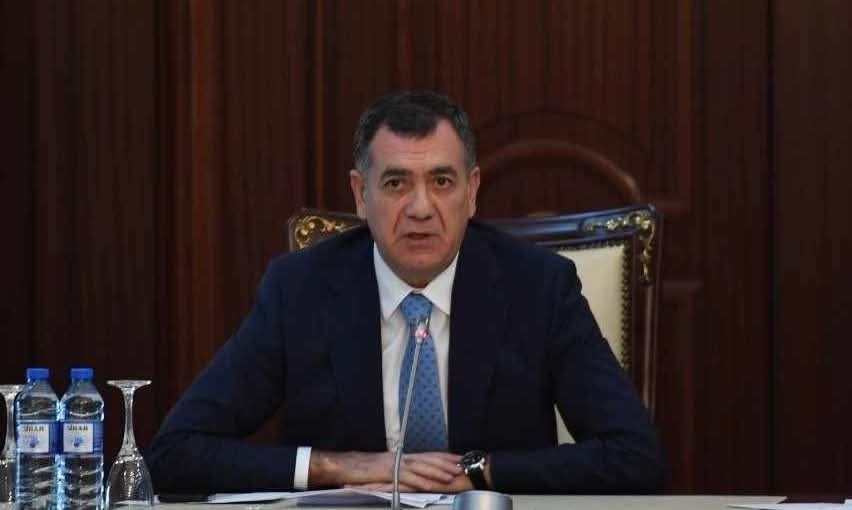
Gudrat Hasanguliyev: “If there are corruption crimes of this kind, people must understand that they make their lives difficult”
Speaking during the discussion of the draft law “On the encouragement and protection of persons reporting corruption-related offenses” in parliament, Gudrat Hasanguliyev, Deputy Chairman of the Committee on Defense, Security and Anti-Corruption of the Milli Majlis, shared his views.
The MP stated:
“Of course, this is a very vital and important draft law, despite the fact that stereotypes left over from the Soviet era still exist in our society. Winston Churchill used to say that in a capitalist society wealth is distributed unequally, while in socialism with a state-managed economy, poverty is distributed equally. Therefore, in an impoverished socialist society, the theft of state property—for example, on the eve of the collapse of the USSR—no longer caused public censure. Moreover, those who reported on individuals stealing state property were called ‘snitches’ (ishveren).
Most people sometimes wrote anonymous complaints about this, hesitating to report it under their own names. However, in February of 1988, a decision was made that anonymous complaints would no longer be considered, and from then on, anonymous complaints were not considered at all.
Now, those stereotypes must be dismantled in our country, and we must take into account that corruption spoils the business environment and has become a major obstacle to the country’s rapid economic development. From that perspective, the current presentation of this draft is highly commendable.
However, Mr. Chairman, in accordance with the requirements of the first reading, what do I propose? I previously raised these issues in parliament.
In the draft law, the entities receiving information related to corruption-related offenses—the authorized structural unit (person), the head of the organization, or the specialized prosecution authority—will not prove effective.
It is extremely difficult for corruption crimes to occur in any field without the knowledge of the organization’s management. Therefore, I see no point in a whistleblower applying to the management of the organization.
In fact, let us state in the law that applications are made to the Anti-Corruption Commission. In this case, the relevant Anti-Corruption Commission should send the application it deems justified to the relevant state bodies for investigation.
It is noted here that information of a criminal nature is sent to the anti-corruption department within the prosecutor’s office. However, suppose there is a corruption crime in the prosecutor’s office and information about it is received; inevitably, there will be departmental partisanship there. We just recently witnessed that in Ukraine, employees of prosecution bodies participated in serious crimes through certain call centers.
Therefore, if there is a complaint against the prosecutor’s office, the Anti-Corruption Commission can send it to the State Security Service or the Main Department for Combating Organized Crime of the Ministry of Internal Affairs.
In other words, I do not think that giving whistleporters the option in the draft law to ‘you can apply to these bodies’ will prove justified.
Also, with the exception of the Chairman of the Anti-Corruption Commission, others should not be individuals who are subjects of corruption—neither deputies, nor ministers, nor heads of other state agencies. I think it would be much more effective if the Commission is formed entirely of independent individuals.”
The MP also added:
“I want to touch upon a second issue.
Unlike international practice, our legislation does not regulate the resolution of the issue regarding persons who have participated in a crime and report a corruption crime.
Whereas in international practice, say in the United States, if a person who has participated in a crime reports a corruption crime, the issues of how that person is protected, exempted from criminal liability, and rewarded are regulated by law. When determining a financial reward for encouragement, the conditions under which the person reports corruption crimes, the time elapsed since the incident, and their role if they participated in the crime are taken into account.
The reward for a person who reports this while sensing the threat of being exposed should be different.
Furthermore, the draft envisages the payment of only 20 thousand manats in compensation if the whistleblower is killed in connection with this, which is a very small figure. That is, at least under current conditions, we should envisage this figure in the amount of at least 150 thousand manats.
In the US, if a person reports any major corruption crimes and those funds are returned to the state, 10 to 30 percent of the returned funds are paid to the whistleblower. Providing for 5 percent in our law is not enough. I believe this should also be taken into consideration.
Also, a very big task falls upon our press to prepare public opinion. That is, society must not condemn steps of this kind, but applaud them. In fact, if there are corruption crimes of this kind, people must understand that they make their lives difficult. It holds back the development of society. The state is now taking a step on its part, but we must also prepare society so that they cooperate with law enforcement agencies regarding such crimes and inform state bodies.”