
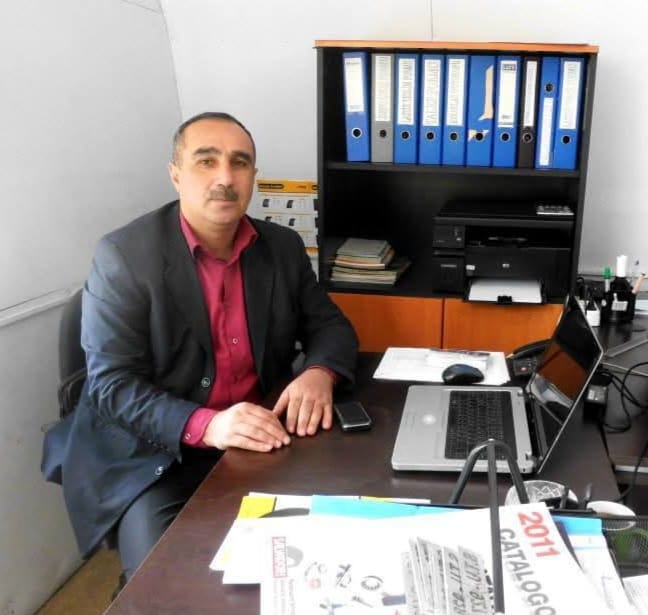
Sometimes a phone call takes a person back years. It is as if the voice coming from the other end of the line does not bring news, but opens a door from the past. Four days ago, when I heard my brother Aqil’s voice on the other end of the line, a strange heaviness settled in my heart. And the sentence I heard next only increased that weight…
“Nazar has passed away…”
The ground slipped from under my feet; I felt as if something had torn inside me.
The last time Aqil called me in this manner was about our father. At that time, too, the same voice, the same heaviness, the same news I did not want to believe were in that call. For a moment, lightning struck within me. This time, the loved one we lost was Nazar.
We have been in the sorrow of this news for four days. We are trying to believe in Nazar’s absence. But the mind believes in the death of some people, while the heart does not. You think that soon you will meet him on some street in the city, hear his voice, sit in a gathering, and chat. Then you suddenly remember that the dear person is no longer there.
Nazar was one of the tender-hearted, warm-blooded, and genuine people of our village. Although he later moved to Baku like most others, he never spiritually left his native land. Because some people move away from the village, but the village can never move away from them… Their childhood, youth, loved ones, friends, and memories remain in that soil. Nazar’s connection to the village was like that.
Our childhood and school years intersected with the youth of that generation. Back then, we were just beginning to look at life, while they had already begun to see the harsh side of life. Looking at the adults—at them—we learned many things without words. Nazar was one of the exemplary figures in the memory of those years of ours.
He was a tiger-like person, worthy of his surname. Strong-armed, brave-hearted, his word and response were weighty and on point… But we will not remember him only for these aspects. Because behind the visible side of Nazar’s life, there was also a heavy responsibility.
Life had begun to make him grow up early.
Although his two older brothers, Nabatali and Abulfat, were far from the village in those years, the responsibility of being the head of the family in the village rested on Nazar. After the untimely passing of Uncle Gulam, this responsibility became even heavier.
Nazar set his youth aside to some extent and began to carry the burden of responsibility for a large family.
Perhaps that is why the hardships of life were not foreign to him later. He always believed in the labor of his hands. He was a man of prosperity and blessing. Life had prepared him for various jobs and trials. But there is a trial in a person’s life for which no one is ever prepared.
And that is His Majesty, Death…
Nazar also had a special love for the word. Now, it is the word that reminds us of him and keeps him alive.
He loved poetry, valued literature, and treated journalism with respect. He was one of those who knew the weight of a word. Perhaps that is why his words had a special place in gatherings. He had a heartfelt admiration for reciting poetry. When he said a line, you felt as if the weight of that line had been living in his memory for years.
It was this love that made Nazar an ornament of gatherings.
He especially loved Bakhtiyar Vahabzadeh’s poem “Time ages a person, time ages.”
Now, when one mentions the name of this poem, one inevitably stops and thinks. Time had taken much from Nazar’s life. He had given his youth to responsibility, his years to labor, and the greater part of his life to his loved ones.
But no one knew that his path with time would part in his fifty-sixth autumn. His final journey would pass through autumn. As autumn sheds its leaves, the leaves of his life would also fall silently to the ground.
From the 90s to the early 2000s, he recorded the village’s joyous events into the memory of his camera as a professional operator.
Perhaps no one ever thought about what a great job this was for time.
Weddings, engagements, gatherings, the people of the village, laughter, voices of conversation…
Years passed, people changed, some departed from the world.
But in the recordings of Nazar’s camera, a part of them remained as they were.
Now those images are the memory of a village. How strange it is that the man who created that memory is now becoming a memory within that very memory.
One day, if one of the old recordings is opened, we will see the village from years ago on the screen. People will laugh, talk, and the gathering will continue in its flow. Perhaps in a few places, Nazar’s voice will also be heard.
Then for a moment, we will think that time has turned back.
But the image will end, and the screen will go dark.
Suddenly we will realize:
Nazar is no longer here.
At fifty-six… At a place where his life should have still been continuing.
Perhaps there were words he would say, work he would do…
Perhaps poems he would recite…
Perhaps roads he would travel…
But life has a final sentence written in one place. Nazar’s final sentence was also written in his fifty-sixth autumn: “The final sentence of some lives is not written; it remains unfinished.”
Now, for four days, we have been trying to get used to his absence.
But I don’t think we will get used to it.
Because one cannot get used to the absence of some people. You just learn to live with their absence over time.
Nazar will remain in the memory of those who loved him, the community, the people of his native land, his family, and his children in this way.
In a poem recited at a gathering.
In the tape of the wedding cassettes he filmed.
In the value he gave to the word.
In the conversations of the people who knew him.
And inside a phone call…
“Nazar has passed away…”
Perhaps for many years, this sentence will not just be the news of Nazar’s death for me. The news of my father will also live within that sentence. The pain of two separate losses will unite in one voice, in one memory.
Autumn will come again.
Leaves will fall again.
The village and the city will live again.
But Nazar’s fifty-sixth autumn will never be completed. Perhaps that is the most painful part.
It is not humans, but the seasons that write the final sentence of a life.
Like Nazar’s life…
People who value words, love, and passion leave their words behind even after they are gone. He once wrote the joy of our village’s happy days into history and kept its people alive in the memory of his camera.
Now it is our turn.
Now we must keep him alive in our memory.
One day, when we talk about him, mention his name, look at an old image, or hear a line from his favorite poem, Nazar will be with us again for a moment.
Perhaps that is what it means for a person not to fully leave the world.
To live a little in the place where your name is mentioned…
To appear again in the place where you are remembered…
And even if years pass, someone in the evening of a village quietly saying:
“Nazar was here; his words and his character were different…”
Then a moment of silence in the conversation…
Because everyone will know: he is no longer here.
The earth has taken him into its embrace.
But the village’s memory has not let him go yet.
This autumn was very heavy for us. Because this was your fifty-sixth autumn… And the fifty-seventh autumn will never come. The winds will blow again, the leaves will fall again, but a deep silence will remain where a life should have continued.
And every time we hear that silence, we will remember you.
May your place be filled with light, Nazar. May the place you have fallen be bright, and may the mark you left in life never be erased!
Ceyhun ALIŞLI