
Azerbaijan remains the most advanced and institutionally prepared operator of unmanned systems in the South Caucasus, continuing to consistently expand its capabilities in both the acquisition of modern UAVs and the development of domestic production.
According to elchi, this is stated in the “Geopolitical Monitor” article titled “The Drone Arms Race: Integrating Unmanned Warfare in the South Caucasus.”
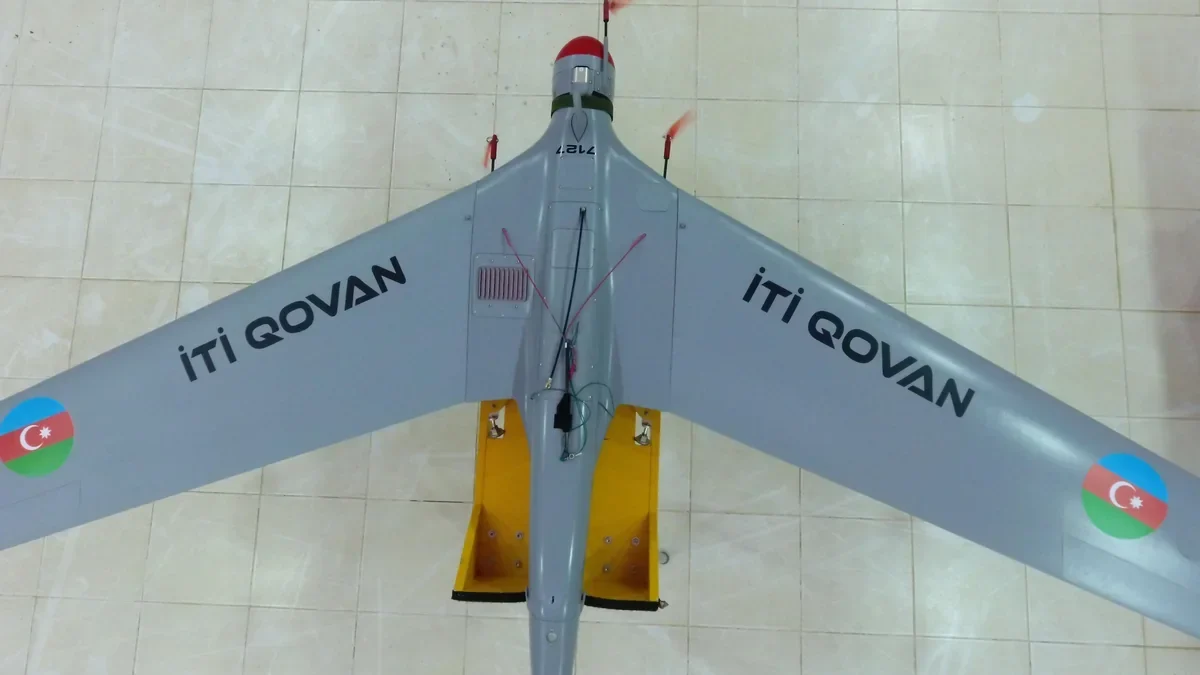
The article notes that in recent years, Azerbaijan has adopted a number of new unmanned systems, including those of domestic production such as the “Iti qovan.”
“Azerbaijan’s leading defense manufacturer, ‘Azersilah,’ is also actively involved in the development and production of drones. In addition to domestic production initiatives, Azerbaijan continues to operate various unmanned systems from Turkey and Israel, including ‘Bayraktar TB2’ and ‘Akıncı’ drones, and has expressed interest in acquiring additional modern UAVs in the future. The country has also established specialized training and maintenance centers for ‘Akıncı’ drones,” the article states.
The authors also draw attention to the fact that the Shusha Declaration signed with Turkey in 2021 has significantly strengthened bilateral cooperation in the fields of defense technology, personnel training, and military-industrial development. According to their assessment, Azerbaijan is moving beyond arms procurement, consistently expanding its ties with Turkish defense companies by exploring opportunities for joint drone production, as well as broader military-industrial cooperation with “Baykar.”
“In recent years, the parties have signed cooperation agreements and memoranda regarding technology transfer, industrial collaboration, and the potential localization of ‘Baykar’ system production in Azerbaijan. This demonstrates Baku’s long-term interest in developing more resilient domestic unmanned systems production. One of the most significant developments that has attracted international attention has been the official creation of a separate Unmanned Systems Force within the Azerbaijani Armed Forces,” the authors note.
Citing the Ukrainian experience, the authors emphasize that the institutionalization of unmanned forces facilitates better coordination and increased effectiveness on the battlefield.
“The sequence of units represented in the 2025 military parade shows that the new troops have been integrated into the structure of the Azerbaijani Air Force. The expansion of Azerbaijan’s capabilities in the field of unmanned aerial vehicles is also reinforced by the continuous growth of military spending. The country’s defense budget has increased from approximately $2.24 billion in 2020 to a planned $5.1 billion in 2026, reflecting Baku’s sustained focus on military modernization and technological development,” the article states.
The authors recall that the use of drones for military purposes began several decades ago: the first reconnaissance drones were used during the Vietnam War. However, a qualitatively new stage in the development of drone warfare began in 2020 during the Second Karabakh War, which became the first major interstate conflict where unmanned systems played a primary role.
According to the “Geopolitical Monitor” assessment, Azerbaijan’s large-scale use of attack drones has clearly demonstrated their high effectiveness against armored vehicles, artillery systems, and air defense systems, cementing the status of UAVs as a key element of modern warfare.
“The South Caucasus remains one of the regions where the importance of unmanned systems is particularly noticeable. The experience of the Karabakh war and the subsequent lessons learned from the war in Ukraine showed regional players that drones are the primary weapon of 21st-century warfare. As a result, all three states of the South Caucasus show varying degrees of interest in developing unmanned warfare capabilities, although the scale of their application varies significantly. Azerbaijan is currently clearly emerging as a regional leader in the integration of unmanned systems thanks to domestic production, diversified procurement, and the creation of specialized unmanned system structures,” the authors conclude.