
Language is a social phenomenon, it belongs to humans, and it is both the written and phonetic expression of human thought. Words also belong to humans; they are spoken, protected, and even pledged or given away. But great words are the share of those who are born great and think greatly. Because the value of a word is measured by the personality, intention, and responsibility of the one who utters it. Therefore, a word is a mirror reflecting the speaker’s morality, thoughts, and identity. First, there was the word; it turned into thought, was understood, and became the greatest power of man. The world changed its sword for the word. Geniuses turned the word into a weapon, making it the greatest force standing against truth, freedom, and time. Only those who bore the responsibility of the word could give it its due. This right is still being granted today. A person of the word is either elevated or silenced by those who control the word. This right is granted today by those who do not submit to the word, but rather force the word to submit to their will—the right to the word!
The word is inherently sacred, and the main strength of literature lies in its responsible use. However, when a word turns into a heap or a means of pathos, it becomes worthless and loses its power to influence the reader.
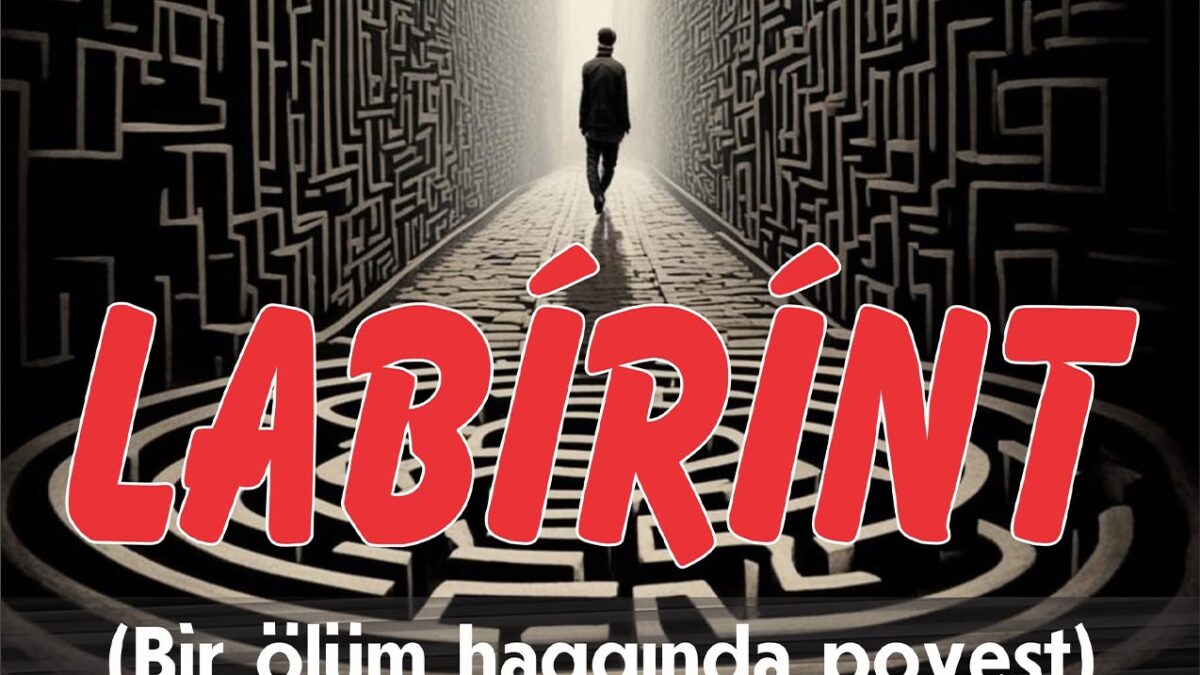
“Labyrinth,” penned by the esteemed Imamverdi muallim, gives the impression of a text that crosses this dangerous threshold. Although the work tries to present itself as a literary event, it is ultimately remembered more for its exaggerated descriptions, artificial artistic embellishments, and an abundance of expressions that overwhelm the content. Instead of leading the reader to thought, it loses them in a labyrinth of words. “Labyrinth” appears more as a journalistic-artistic confusion created by the irresponsible use of words rather than having literary value, and this harms the reputation of literature as a whole.
If we approach this text purely by literary criteria and set aside the author’s name, status, and position, the resulting picture is not very encouraging. The first and most serious problem with the text is that the author wanted to write a psychological novella but ended up creating a heap of artistic words. There is more stylistic display here than internal dramatism. The author wants to show the reader something in every sentence, but it does not work. As a result, the work does not align with life and becomes a product of the author’s passion for language. The work describes a person suffering from obsessive-compulsive disorder. However, the psychological anatomy of this illness is not revealed. Instead of delving into the hero’s inner world, the author circles around him. The reader reads hundreds of words but does not get closer to the hero’s soul. Because the author observes the expressions. The countless similes used throughout the text are an artistic flaw. The author forces himself in every paragraph to use some kind of comparison. After a while, these expressions do not affect the reader; on the contrary, they tire them and make the text heavy.
Here, the author retreats behind the description in almost every sentence.
As for the plot, the situation is even more pathetic. After reading dozens of paragraphs, it becomes clear that no serious event has actually occurred. The hero wakes up, goes to the doctor, talks, walks on the street, and thinks again. For a text of this length, such weak event dynamics stretch the reader’s patience and nerves. Another problem is the author’s infatuation with his own writing.
Although the language of the work is based on the folk speaking style, this does not always create an advantage. In many places, these expressions, instead of revealing the character’s nature, give the impression of ostentatious folklore. The author shows the reader his vocabulary along with the hero.
One of the most dangerous flaws in literature is when writing considers itself literature, and this is exactly the problem felt in the text. The author tries to present the abundance of sentences that look artistic as artistic value. Yet, great literature is created by the power of ideas, images, and human truth. When reading this piece, the author’s admiration for his own writing is visible. This is a dangerous and unforgivable flaw for serious literature.
Our esteemed writer’s “Labyrinth,” presented as a great literary event, actually resembles an empty coffin. The text is a heap of dead, dying words decorated with pathos; no serious literary weight is visible here. The word loses its value and gets lost within the labyrinth itself. As a result, the reader encounters more artificial artistic pretension than literature. Words are not treated this way, and such literature does not exist. The author claims Nietzschean-like ideas, such as what would happen if the wind regretted breaking a branch of a devastated tree. As I read this work, I regretted the time I dedicated to it; this time, the wind that wounded the regretful branches was not the one in the book, but I became the one in the “Labyrinth”.