
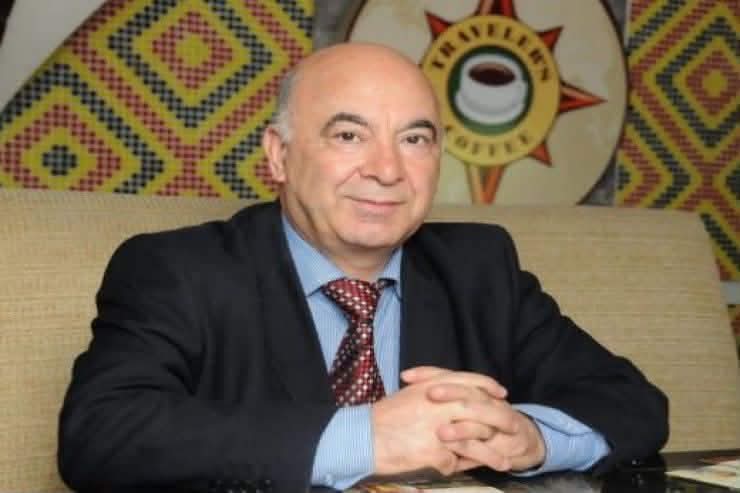
“Some people choose a path in life and follow it until the end of their days. I, too, had chosen…”
When Ibrahim Yusifzade says these words, he is not just talking about his own fate. He expresses the worldview of an entire generation. A generation for whom the word ‘state’ sounded sacred, and for whom a service vehicle seen on village roads created an entire world in the imagination of children…
Growing up in the village of Shikhlar in Yardimli, that village boy would look at the state vehicles appearing from afar and dream. The people coming along the dusty roads did not seem like ordinary people to him. He thought the state itself was coming. Perhaps that child’s future fate was written in those very days. Decades have passed. Now, that village boy’s hair has turned gray, and a great state responsibility rests on his shoulders. Life has brought him from a teacher’s desk to the corridors of parliament, from regional administration to the country’s supreme legislative body. But one thing has not changed: loyalty to the chosen path.
Celebrating his 79th birthday today, Ibrahim Yusifzade’s life journey is a history of responsibility, not high positions. It is impossible to measure his life simply by the posts he held. Because some people work in positions and for the sake of positions, while others hold positions to serve the state and the people.
Ibrahim Yusifzade belongs to the latter. His life journey, which began on June 10, 1947, in the village of Shikhlar in Yardimli, is a living embodiment of the Azerbaijani people’s traditions of dedication to hard work, science, and the state.
In the early years of this life journey, the village school student became a teacher, the teacher joined public activities, and worked at various levels of state administration. Although life brought him to different positions, at every stage he remained faithful to the same principle: prioritizing service to the state over personal interests.
Having married in 1967, Ibrahim muallim has treated family values with the same responsibility and loyalty throughout his life. In his life journey, family has always been a moral support and a source of strength.
Ibrahim Yusifzade’s life path is not only the fate of one person but also the life of a civil servant who has witnessed various stages of Azerbaijani statehood. The path that started at the Shikhlar village school took him first to the Zaqatala Pedagogical College, and later to the Faculty of Philology at the Azerbaijan State Pedagogical University. During his student years, his attachment to words, literature, and national thought was formed. Perhaps the essence of the poems he wrote later, but never published, was kneaded in those very years.
Starting his labor activity as a teacher in 1966, Ibrahim muallim was soon involved in public work. He rose from department head to first secretary at the District Komsomol Committee. Serving as the first secretary of the Yardimli District Komsomol Committee for five years, he played an active role in organizing work with youth and revitalizing public life. Later, he studied state building and political science, worked in various responsible positions in party and state structures, led the cultural life of the district, and worked in the people’s control system. In 1989, he was appointed chairman of the Party Commission at the Absheron District Party Committee, continuing his activities in a broader administrative plane.
There are many positions in this biography. But the main value of his life path is not in the number of positions, but in the trust and credibility he earned in the places he worked. It is possible to spend years in state service, but not everyone is destined to finish those years with respect and prestige.
Since 1991, he has linked his fate with the Milli Majlis of the Republic of Azerbaijan. Working in parliament during the complex and contradictory period of the early years of independence required not only professionalism but also a strong sense of statehood. For many years, he headed the Department for Reception of Citizens and Appeals of the Milli Majlis Apparatus. Working as the head of that department from 2005 to 2020, he carried out important activities in the direction of investigating citizen appeals and improving state-citizen relations.
This position might seem simple from the outside. But one of the most sensitive contact points between the state and the citizen is the system of appeals.
A letter…
An application…
A complaint…
Sometimes, behind that piece of paper lies the fate of a family, the hope of a person, and the expectations of a lifetime. Ibrahim muallim never looked at appeals simply as documents. He knew that behind every letter stands a human fate. Maintaining trust between the state and the citizen begins with this invisible responsibility. Because the strength of the state is not only in the decisions it makes, but is seen in the results those decisions create in human life.
Years of experience taught him patience. He understood that the greatest success in state administration is not making loud speeches, but maintaining the harmony of the system. Sometimes, a small issue resolved in time creates great relief in the lives of hundreds of people. But most of that work neither makes it to newspaper headlines nor turns into television reports.
The strength of the state often begins not from visible peaks, but from invisible supports. And those supports are usually built on the hard work of people working behind the scenes, not in front of the stage.
In his character, principle and composure have always walked side by side. Personal relationships have never taken precedence over his professional decisions. Because he knew well that the greatest wealth of a civil servant is not his office, but his reputation. And reputation is not earned in a day. It is formed by the hard work of years and can be lost by the mistake of a moment.
Today, Ibrahim Yusifzade is a 2nd-class state advisor; he has been awarded the “For Distinction in Civil Service” medal for his effective activity in the civil service, and in 2017, he was awarded the 3rd-degree “For Service to the Fatherland” order.
However, when talking about him, it is not enough to just list titles. Because there is another side to this life. The poet’s side. He says himself: “I also write poems. Not for anyone. For myself. In my youth, poetry helped with love, now it helps the soul. As a person gets older, they tell the paper the words they cannot find anyone to say to.”
There is a great life truth in this confession. A man who worked among state documents for years has also kept a place for words in his heart. He did not chase fame, he did not publish what he wrote. Because two worlds live inside every person: the visible and the invisible. If his visible world was state service, his invisible world was the world of poetry, emotion, and thought.
Perhaps this is what makes a person whole—the ability of duty and conscience, intellect and emotion, the statesman and the poetic soul to live in the same heart.
Looking back today, he still feels like that same village boy.
His hair has turned gray.
His life paths have lengthened.
Great responsibilities have been placed on his shoulders.
But the man who gets emotional when hearing the sound of a saz, who writes lines when he sees beauty, and who believes in friendship with all his heart has not changed.
Perhaps this is the greatest success of a life—to be able to preserve one’s humanity without letting time change the person. Because the true age of a person is measured not by the numbers written on documents, but by the moral values they have preserved.
His activity in state service was not limited only to the Milli Majlis. At different times, he worked at the Constitutional Court, and later continued to share his rich experience in the field of state administration by working as an advisor at the Intellectual Property Agency.
Ibrahim Yusifzade’s life journey shows once again that not everyone writes history. Some do not end up in history books, do not appear in front of podiums, and are not remembered for thunderous speeches. But they are often the ones who ensure the stability of the state. Without their names appearing in headlines, without appearing in front of podiums, through their daily hard work.
Silently.
Conscientiously.
With dignity.
And by remaining faithful to the path they chose until the end of their lives. And such lives are remembered more for their high values than for high positions. Because what makes a person great is not the chair they hold, but the cause they serve. And Ibrahim Yusifzade’s life journey is the story of this very cause—loyalty to the state, respect for people, and living with a conscience.
Samir Əsədli
VHP sədrinin müavini