
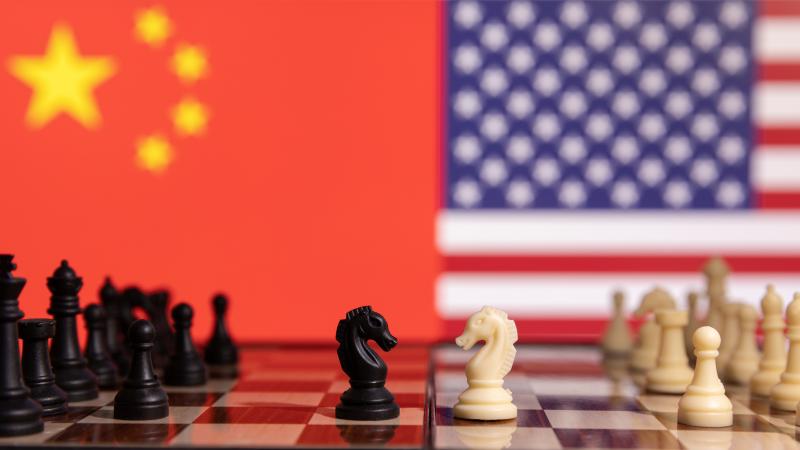
Beijing’s blocking of the Meta-Manus deal has once again highlighted the critical role of artificial intelligence in geopolitical competition. According to experts, this move could also affect global investment balances.
elchi reports that the competition in artificial intelligence between China and the US continues to impact global technology and financial markets. Most recently, Beijing’s blocking of Meta’s attempt to acquire the Chinese startup Manus shows that this competition has gained a new dimension.
Founded by three engineers in Wuhan, Manus quickly attracted attention with its AI agent capable of performing autonomous tasks. A potential acquisition deal with Meta worth approximately $2 billion by the end of 2025 was considered significant for the Chinese startup’s entry into the global market.
However, the Chinese government imposed a travel ban on the company’s CEO, Xiao Hong, and chief scientist, Ji Yichao. Furthermore, an investigation conducted by the National Development and Reform Commission determined that the sales process violated investment regulations. According to an analysis by The New York Times, this move indicates that China now openly views artificial intelligence technologies as a “strategic asset.”
This development has also deepened the geopolitical competition between Washington and Beijing over advanced technology. Data shows that deals between Chinese companies and foreign investors have dropped sharply since 2021. In 2024, the number of deals fell by 73 percent, while the total volume dropped from $54 billion to $7.8 billion.
Increasing political and regulatory risks are also changing investment strategies. Chinese startups are increasingly turning to local capital, while US-based funds have begun to exit the Chinese market.
Some companies are looking for alternative paths for globalization. For example, firms like ByteDance and Shein have moved their headquarters to Singapore. Manus also moved to Singapore shortly after.
The Global Times, the official publication of the Chinese Communist Party, claimed that the decision was more about security concerns than geopolitical competition. The analysis emphasized that agreements based on artificial intelligence and data cannot be considered “ordinary commercial deals” and that state control is inevitable.
According to experts, Beijing’s intervention will directly affect not only the Meta-Manus deal but also similar future technology investments.
Şayəstə