
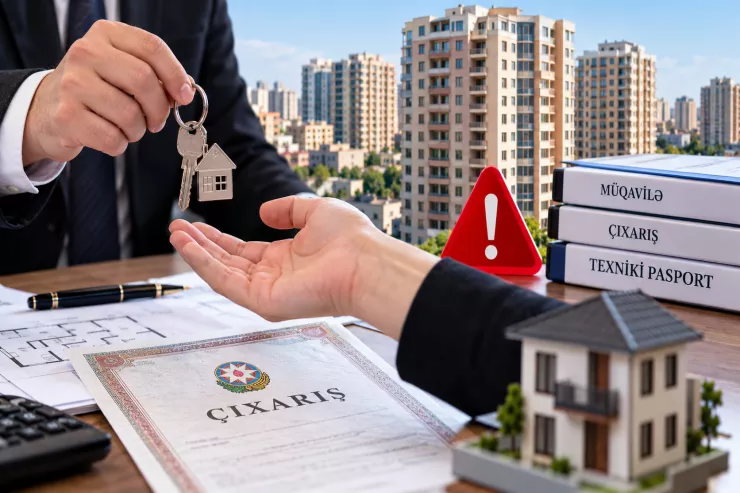
What is the biggest fear for a family in Baku saving money for years to buy an apartment? Is it the price increase, loan interest rates, or renovation costs? In fact, the biggest danger is sometimes hidden in a document that escapes the buyer’s attention. Because getting the key to an apartment doesn’t mean you are its legal owner yet.
Lent.az presents its investigation on the topic:
One of the most important documents to check when buying real estate in Azerbaijan is the extract from the state registry. This document, known colloquially as the “kupcha,” confirms the state registration of ownership rights. However, the mere existence of the extract does not indicate that the purchase and sale are completely safe. The apartment may have a mortgage, seizure, rights of other persons, or restrictions preventing its sale.
So, how should the buyer protect themselves, and what checks are risky to proceed with before paying money?
The most dangerous mistake: the extract exists, but the apartment is not problem-free
Imagine you found an apartment in Baku for 150,000 manats. The house is renovated, its location is convenient, and the seller, claiming an urgent need for money, offers a discount. You pay a deposit and prepare to move. However, it later turns out that the apartment is mortgaged to a bank or has legal restrictions on it. In such cases, the main issue is to check the information about rights and encumbrances from the state registry of real estate. This information allows you to determine who owns the apartment and what rights and restrictions are registered on it. Notaries in Azerbaijan check this information through an electronic system during purchase and sale transactions. Nevertheless, the safest approach for the buyer is to clarify the legal status of the property even before paying the deposit.
Can you believe the promise of “the kupcha will be given later”?
In various parts of the capital, especially in new buildings, buyers are sometimes promised that “the building’s kupcha is being prepared,” or “documents will be issued in the coming months.” These promises are not always a sign of fraud. However, they require serious legal scrutiny. According to the explanation from the State Service of Real Estate Affairs, the issuance of an extract for an apartment purchased from a housing construction cooperative requires important documents such as the building’s acceptance for use, a relevant decision, and proof of payment of share contributions. If the building is still under construction, construction permits, land rights, project details, and pre-registration possibilities must be investigated separately. A financial certificate or payment receipt issued by the company cannot be equated with an extract confirming ownership rights.
Can the same apartment be sold to several people?
One of the risks that buyers in new buildings are wary of is multiple claims to the same apartment. For example, a citizen makes an initial payment to a construction company, signs a contract, and pays the remaining amount in installments. However, if the exact apartment number, floor, area, and handover conditions are not clearly specified in the contract, disputes may arise later. Therefore, the buyer should pay attention not only to the signing of the contract but also to the authority of the person signing the contract and the legal status of the apartment. The company’s seal, the sales manager’s promise, and the advertising brochure are not substitutes for legal guarantees.
The apartment owner is the seller, but who else has rights?
There are also issues that go unnoticed in the secondary apartment market. If the apartment was acquired during marriage, the rights of the spouses to common property must be considered. In some cases, the notarized consent of the other spouse may be required for the sale. If the apartment was inherited, the proper registration of inheritance documents is also important. Furthermore, the status of persons registered in the house and their right to use the living space must be investigated separately. This is because it is incorrect to assume that all possible rights of use are automatically terminated by the sale of the apartment.
What to do before paying a deposit?
To reduce legal risks, the buyer should compare the address, area, and owner information on the extract with the actual apartment. The seller should be asked to facilitate the verification of rights and encumbrances in the state registry. It is important to formalize the purchase and sale through a notary, document the payments, and carefully read the contract terms. If a deposit is to be paid, the conditions under which it will be refunded, the obligations of the parties, and the liability arising from the failure of the purchase and sale should be determined in writing.
The most expensive mistake is to rush
Phrases like “you won’t find another apartment at this price” or “another buyer is waiting” in the real estate market can rush your decision. However, buying an apartment is not a matter of a few hours, but a financial commitment that lasts for years. Therefore, the time spent verifying documents can prevent future court disputes, additional expenses, and ownership disputes. The main conclusion is this: before trusting the appearance of the apartment, its price, and the seller’s promise, check its legal history. Because the most profitable-looking home can sometimes turn into the most expensive purchase.