
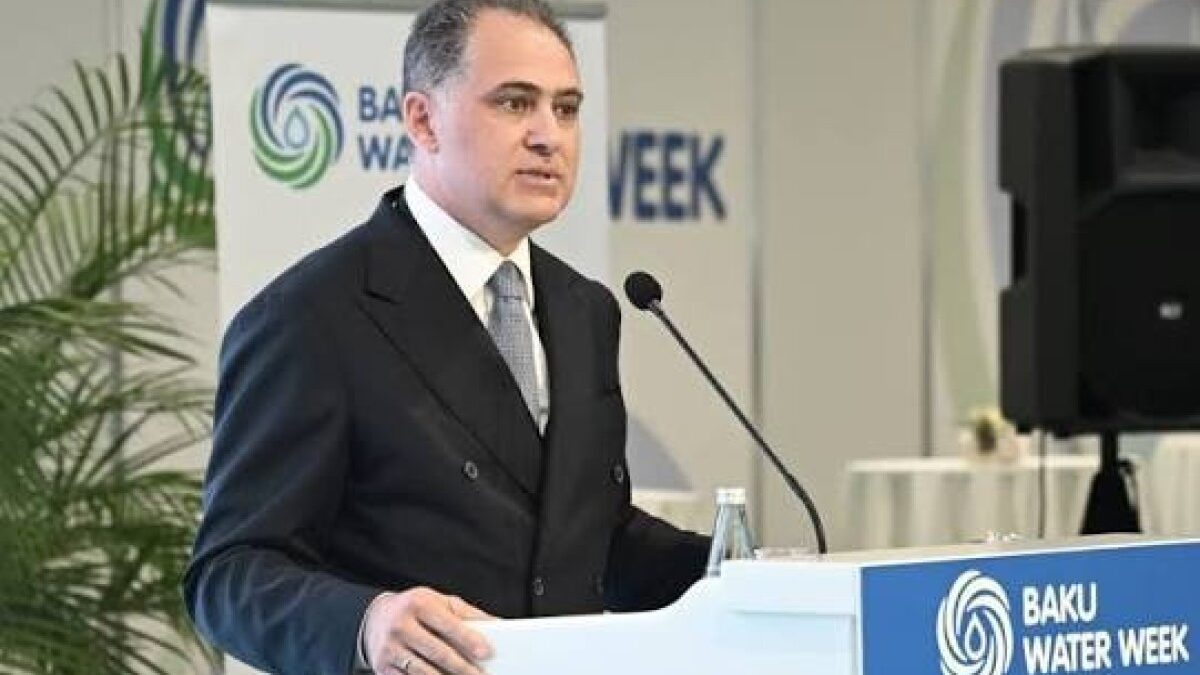
“While flood events in the country were previously observed approximately 10-20 times a year, this figure has increased by about 10-15 times in recent years.”
“Elchi” reports that Khayyam Mammadov, First Deputy Chairman of the State Water Resources Agency of Azerbaijan, stated this during a panel discussion on “Benefits and Challenges of Integrating Artificial Intelligence into Multi-Hazard Early Warning Systems” held within the framework of “Baku Climate Action Week 2026” (BCAW 2026).
He noted that these indicators show that infrastructure development and operational response to events are no longer sufficient, requiring a shift to a more proactive approach.
“We must monitor the processes occurring in the atmosphere and river basins in real-time, forecast what will happen in the next stage, and take necessary preventive measures by identifying potential threats in advance. In this regard, the integration of digital technologies, early warning systems, and artificial intelligence can play a crucial role.
Currently, there are 84 hydrological stations operating in the country to assess water flows in rivers. Of these, 40 use automated measuring devices, while 44 use traditional methods.
Within the framework of the “National Strategy for Ensuring Efficient Use of Water Resources,” our main goal is to expand and further modernize the mentioned observation network and to form a flexible, accurate, and operational database.
These steps can enable the forecasting of water discharge and water levels in rivers, earlier identification of flood and drought risks, detection of high-risk areas, and preliminary assessment of potential impact zones.
In the next stage, the analysis of historical hydrological data, meteorological observations, satellite data, GIS maps, and climate scenarios with the support of artificial intelligence can allow for the identification of climate risks at an early stage,” added X.Məmmədov.