
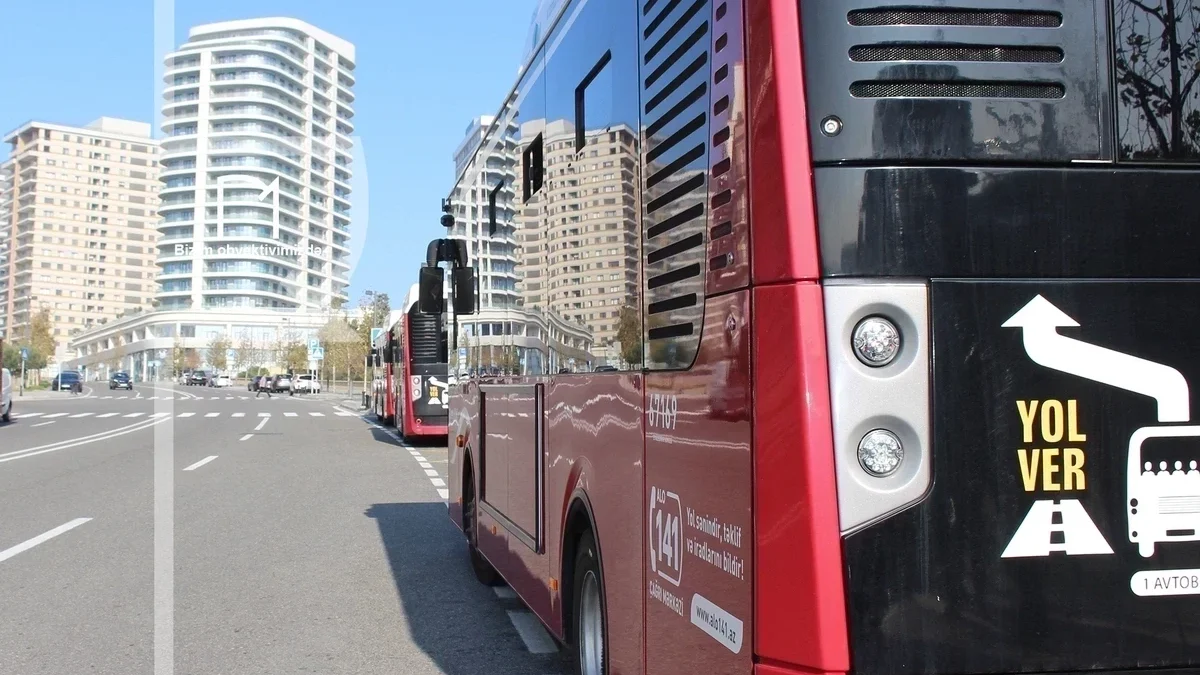
The application of the “Rules for the calculation and payment of subsidies paid for the provision of distance-based road transport services by carriers carrying out regular passenger transport by road,” approved by the Decision of the Cabinet of Ministers No. 250 dated July 31, 2026, has begun.
elchi reports this with reference to the Azerbaijan Land Transport Agency.
According to the new “gross contract” model, carriers will now be paid based on the distance traveled and the quality of service. The number of buses on the route, movement intervals, distance to be covered, and other service indicators are determined in advance. The carrier receives payment for the service provided in accordance with these requirements. Thus, it will be ensured that buses serve passengers and adhere to the schedule even during hours when the number of passengers is low, including evening hours.
This model will allow for the formation of a more regular, reliable, and predictable public transport service for passengers. At the same time, it will prevent carriers from prioritizing only profitable routes and will create conditions for improving the level of service on suburban, less profitable routes.
The “gross contract” model is widely used in many countries around the world to provide high-level and quality service to passengers. The successful implementation of this progressive model is now beginning in our country.
Initially, regular routes numbered 130, 205, 211, 500, and 503 have joined the “gross contract” system. In accordance with the requirements, other routes will also join this system soon.
The new model also creates opportunities for more systematic control over the activities of carriers. In case of violation of established quality requirements, financial and other influence mechanisms will be applied within the framework of the contract. Through the created special software, the measurement of the quality of service provided by carriers and the control of service organization will be ensured.
The “gross contract” model will also increase the financial stability and long-term planning capabilities of carriers. This will allow for the renewal of the bus fleet, the purchase of modern and environmentally friendly vehicles, the improvement of technical maintenance, and more investment in service quality.