
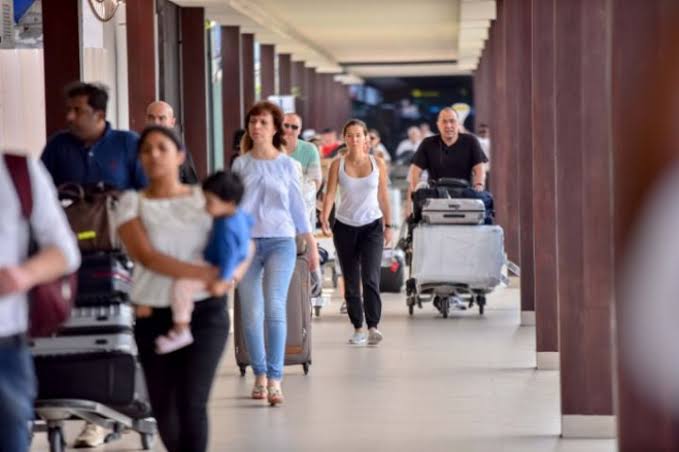
In January-June 2026, the number of foreigners visiting Azerbaijan decreased compared to the same period last year.
“Elchi” reports that according to the report released by the State Statistical Committee based on data from the State Border Service, 1 million 92.6 thousand foreigners and stateless persons from 189 countries of the world visited Azerbaijan in the first six months of the current year. This is 10.3 percent less compared to the same period of 2025.
Of those who visited Azerbaijan, 28.1 percent were citizens of Russia, 21 percent of Turkey, 8.2 percent of Iran, 4.9 percent of Georgia, 4.6 percent of Kazakhstan, 3.2 percent of Uzbekistan, 2.9 percent of Pakistan, 2.8 percent of India, 2.6 percent of Israel, 2.4 percent of China, 1.8 percent of Saudi Arabia, 1.6 percent of Ukraine, 1.3 percent of Turkmenistan, and 1.1 percent each from Germany and the United Kingdom. The share of other countries was 12.4 percent.
68.7 percent of those arriving in the country were men, and 31.3 percent were women.
According to the report, the number of arrivals from European Union countries increased by 9.3 percent to 54.4 thousand people, and the number of arrivals from CIS countries increased by 1.8 percent to 430.4 thousand people. The number of arrivals from Gulf countries decreased by 31.4 percent, and the number of arrivals from other countries decreased by 14.1 percent.
71.1 percent of foreigners entered Azerbaijan by air, 27.5 percent by rail and road, and 1.4 percent by sea.
During the same period, the number of Azerbaijani citizens traveling to foreign countries also decreased. Thus, in January-June 2026, the number of Azerbaijani citizens traveling abroad decreased by 5.1 percent compared to the corresponding period of the previous year, amounting to 937.4 thousand people.
41.5 percent of Azerbaijani citizens visited Turkey, 17.1 percent Russia, 11.7 percent Georgia, 6.2 percent Iran, and 23.5 percent visited other countries.
69.8 percent of Azerbaijani citizens traveling abroad used air transport, 28.1 percent used rail and road, and 2.1 percent used sea transport.