
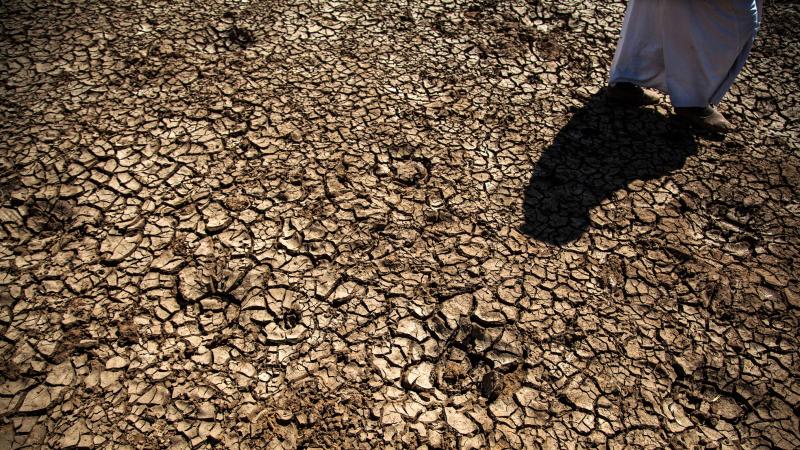
Extreme heat, fueled by the climate crisis, is rapidly evaporating moisture from rivers, lakes, and soil across Europe, further exacerbating the continent’s drought.
elchi reports that, according to research by World Weather Attribution (WWA) scientists, record-breaking heatwaves have caused water loss across vast areas, from rivers and lakes to soil and vegetation.
It is reported that this situation caused by high temperatures is 80 times more likely in Western Europe and 40 times more likely in Eastern Europe due to global warming. It was noted that fossil fuel pollution has increased the soil-drying effect by 5 times in Western Europe and 11 times in Eastern Europe.
Despite a rainy winter in Western Europe, high temperatures during the summer months were identified as the primary factor for the drought. It was emphasized that drought conditions, which could have been classified as “moderate” before the climate crisis, have now reached “extreme” levels.
Water restrictions and agricultural losses are increasing
The analysis, covering the period up to the end of June, highlighted the negative impacts of the drought on water resources and agriculture. It was reported that emergency water usage restrictions have been implemented in many countries, and hosepipe bans have been imposed in many regions of southern England.
It was reported that forest fires have affected Spain and France, and farmers are facing the driest soil conditions in recent years. It was noted that approximately 9 million tons of grain loss are expected in Europe, France has seen its lowest corn harvest in the last 50 years, and more than 1 million hectares of agricultural land have been damaged in Romania.
It was noted that due to falling water levels in European rivers, hydroelectric power production has decreased and freight transport has been disrupted. In the Netherlands, the water level of the Rhine River has fallen below the historically lowest level of the summer of 1976. Experts warned that these disruptions could negatively affect low-income families by increasing food and energy prices.
Şayəstə