
Central and West Asia are increasingly becoming important driving forces for economic development, innovation, connectivity, and regional cooperation.
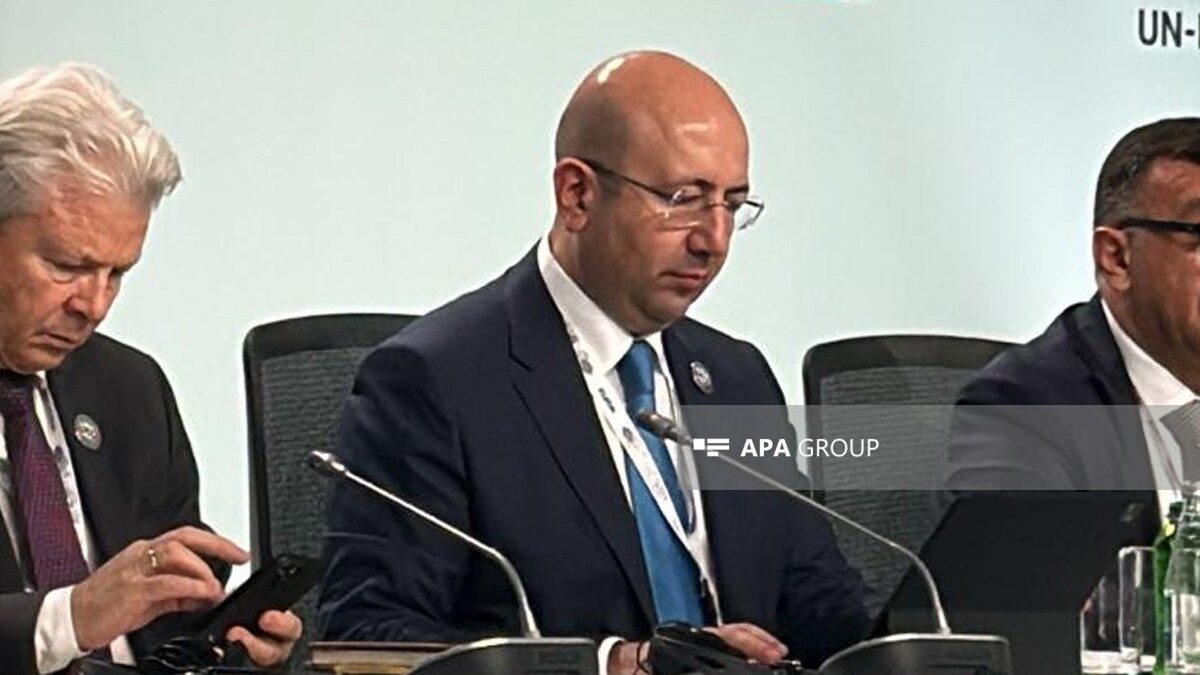
“Elchi” reports that this was stated by Anar Guliyev, Chairman of the State Committee on Urban Planning and Architecture of the Republic of Azerbaijan and National Coordinator for WUF13, at the session titled “Special Forum on Cities: Housing Solutions for an Inclusive and Sustainable Urban Future” held within the framework of WUF13.
He noted that cities are facing increasing demands related to affordable housing, sustainable infrastructure, efficient public services, and sustainable land management: “Many residential buildings across the region were constructed before modern energy efficiency and seismic standards were implemented. Climate-related risks are intensifying, and the urban population continues to grow. Just as these challenges are common to our region, so are the opportunities.”
Anar Guliyev stated that the establishment of the SPECA Cities Forum within the framework of COP29 demonstrated a shared vision for stronger urban cooperation in the region: “The SPECA Cities Forum is not just an institutional mechanism, but also a platform for solidarity, partnership, and practical cooperation. It is built on the understanding that a sustainable urban future is possible only through dialogue, exchange of experience, and coordinated action. Today’s discussions are dedicated to interconnected priorities that are highly relevant for all our cities: the issue of affordable housing in the context of rapid urbanization, climate resilience and energy efficiency in the housing sector, as well as ‘smart city’ approaches in housing management. These issues are closely linked. Expanding access to housing cannot be considered separately from issues of climate adaptation, energy efficiency, urban mobility, digital governance, and quality urban planning.”