
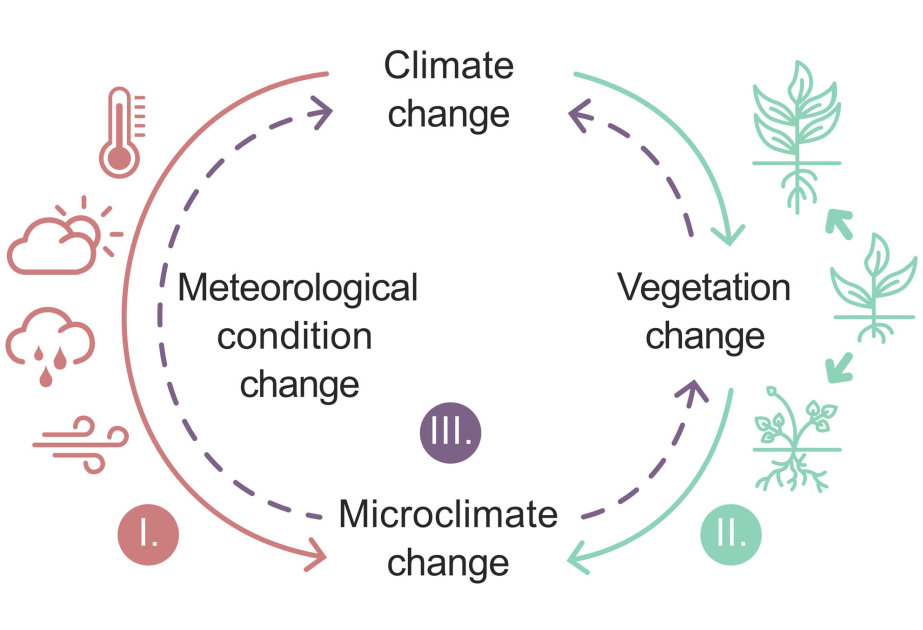
Climate change can affect forests, open fields, and hills located in the same area differently. Vegetation cover, cloudiness, soil moisture, and topography play a significant role in shaping local microclimates. Studying these differences is important for determining how biodiversity will react to climate change.
elchi reports that this was stated in an international study published in the journal “Global Change Biology”. Scientists investigated how microclimates change against the backdrop of climate change and identified the main factors influencing this process.
According to the lead author of the study, researcher at Stockholm University Caroline Grieser, although climate change is mainly assessed by regional and global temperature indicators, temperature changes in the environments where living organisms live can differ from these indicators. The research found that one of the main factors affecting microclimates is vegetation cover. Changes in forests, shrubs, and other vegetation affect the extent to which sunlight reaches the soil surface and the surface loses heat. As a result, temperature changes can vary in different parts of the same area.
According to one of the model simulations presented in the study, the spread of shrubs and trees into open fields in Turkey can significantly alter the temperature of the air near the ground. On the hottest days, temperatures in areas covered by shrubs can be up to 16 degrees lower compared to open fields. This scenario suggests that open areas may be more affected by regional warming.
Scientists also specifically note the impact of cloud cover on microclimates. Reduced cloudiness can lead to more sunlight reaching the ground and open areas warming up faster. In forested areas, shaded slopes, and moist soils, temperature changes can be different. The research emphasizes that new sensor networks, long-term observations, and computer models allow for a more accurate study of microclimate changes.
According to scientists, considering microclimate changes helps predict which areas plant and animal species will be able to continue to inhabit in the future, as well as which environments will be more sensitive to climate change. The results of the study are important for biodiversity conservation, efficient management of land resources, and the development of adaptation strategies to climate change.