
The Second World War fundamentally changed the system of international relations. However, the United Nations, created by the joint political will of the allies after the Soviet victory, is facing greater challenges and risks in its 81st year. With one difference – the current political agenda of the world’s number one organization proves the correctness of the path chosen by the Azerbaijani state to ensure its territorial integrity and sovereignty.
The speeches of hundreds of heads of state and government unite in a single context – a new world order is still very far away. The UN tribune itself is increasingly turning into an arena for demonstrating ideological confrontations, military power, geopolitical calculations, and interstate hostility, rather than a podium uniting peoples and states. Even the President of the General Assembly did not voice calls for unity in his opening speech; the fragmentation of the world was demonstrated in the main hall, and speeches emphasizing security, dialogue, and shared responsibility were rarely heard. The influential Reuters agency calls the current session a “major threat” to the existence of the organization due to the ongoing wars in Ukraine and the Middle East, and the expanding confrontation around Iran.
The renowned think tank Chatham House questions the fate of the UN in a rapidly forming multipolar world, while Brookings specifically emphasizes that the organization is in deep contradiction, that Security Council meetings are frequently blocked, and that the organization is facing financial shortages.
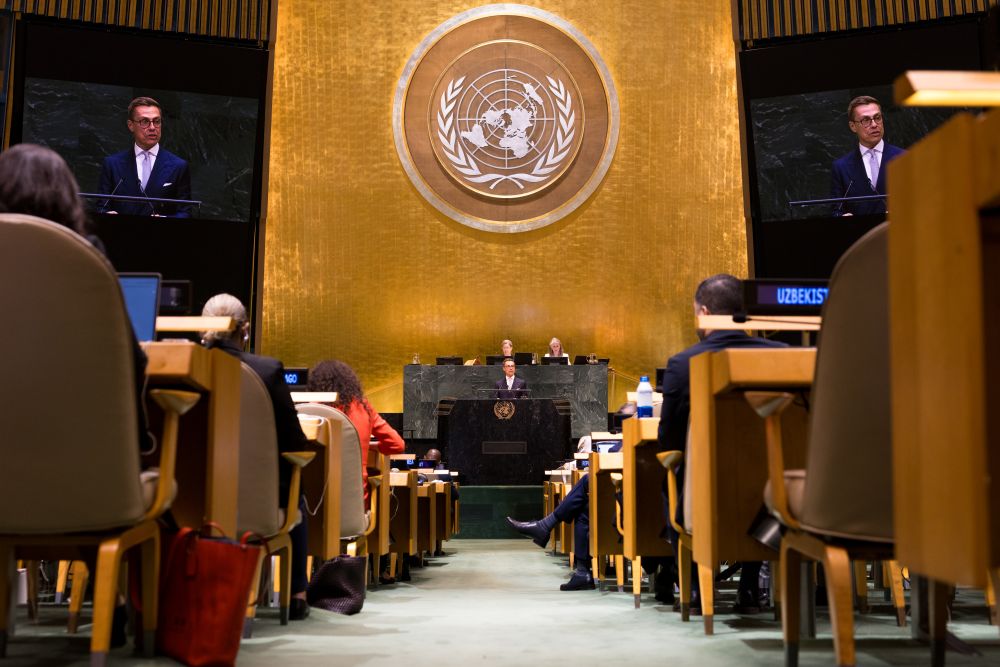
Now the number of conflicts in the world has increased compared to the previous period. After the Soviets, the West’s triumphal victory created an euphoric state. The reputable Uppsala Conflict Data Program recorded 65 armed conflicts in 2025, and the published figures are the highest since 1946. In such circumstances, Finnish President Alexander Stubb is putting forward a systematic institutional proposal. His approach, which he calls a “new San Francisco moment,” means adapting the international system created in 1945 to the power balance of the 21st century. The logic of a bold call for a small state is very clear: the world has changed, the balance of power is not the same as before, and the political architecture of the 21st century cannot remain as it is.
Canadian Prime Minister Mark Carney, who has been in a tariff war with the United States in recent years, sees building flexible coalitions on issues where all states cannot agree at once as a way out.
Brazilian President Lula da Silva touches on another problem – the crisis of representation in the international system. The growing economic and demographic weight of the Global South is not equally visible in the decision-making structures of the UN.
However, the former Soviet space can provide the contours of future world security as the main address of global clashes in the last 36 years, testing the ideas voiced from the UN tribune best.
Only the recent Ukraine war, hundreds of resolutions, statements, and endless diplomatic rounds were not enough to end the bloody war. Sanctions numbering more than 25,000, and military, financial, and humanitarian aid reaching one trillion dollars are powerless to prevent the tens of thousands of human losses declared by the parties every week.
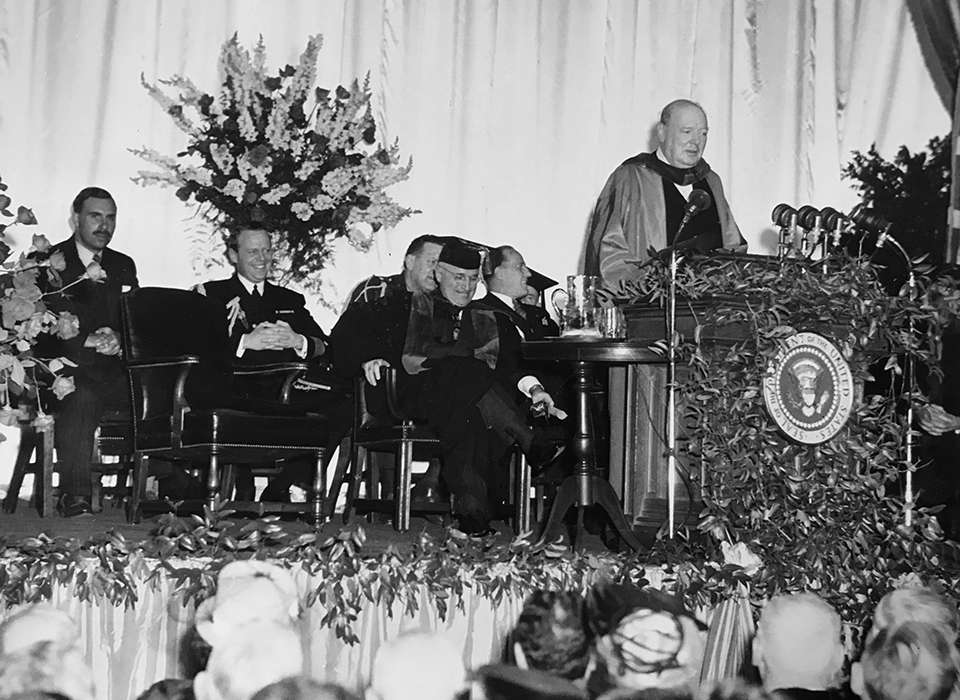
However, the results of one conflict now allow for building the new world order that leaders are looking for at the UN. A historical perspective is very necessary – it is known that the armed conflict between Armenia and Azerbaijan played an important role in the collapse of the Soviet system. The Cold War, founded by Churchill in Fulton, actually entered its hot phase in Karabakh. Because both republics were not independent, and the war of the two ideological poles, which ended with the unification of Germany, moved to a new stage in the Caucasus. In 1989, the 44th session of the UN General Assembly was being held, while Azerbaijan and Armenia were still part of the USSR. The collapse of the seventy-year empire was a direct result of a deep crisis in the system of national relations.
After the collapse of the USSR, the conflict turned into a war of influence and interests between three decisive members of the UN. The early 1990s were a period of great hope for international institutions; there was still a belief that regional conflicts would be resolved through political mediation. As a result, the Minsk process was created in 1992, and in 1993, UN Security Council resolutions 822, 853, 874, and 884 were adopted. At that time, in the conditions of weak diplomacy and the absence of a unified regular army, the documents demanding the withdrawal of Armenian military forces from the occupied territories of Azerbaijan were considered an important achievement.
Over the next twenty-seven years, the Karabakh conflict passed into the monopoly of the Minsk Group, turning the region into an international war zone between states dividing it into spheres of influence. However, the message that national leader Heydar Aliyev gave to the world from the UN podium back then could be considered the main formula for ensuring a just peace not only for the territorial integrity and sovereignty of a national state in the future, but for the whole world.
Although our country was already a UN member during the periods of Ayaz Mutallibov and Abulfaz Elchibey, neither of them had spoken in the general debate of the General Assembly. On September 29, 1994, Heydar Aliyev became the first head of state of independent Azerbaijan to take the UN podium. In that speech, he foresightedly put forward the way to resolve the Karabakh conflict. “We offer peace to the Armenian side based on international law, justice, and humanism,” said Aliyev, while simultaneously presenting the guarantee of the safety of Karabakh Armenians, the restoration of communications, and territorial integrity as his country’s unchangeable conditions.
Decades later, the historical messages Heydar Aliyev gave from the UN maintained their political significance and relevance: if the decisions adopted by the Security Council remain unimplemented, then no force can oppose the right of national states to liberate their lands by military means.
Time has shown that international institutions are tools for geopolitical interests. Azerbaijan is a rare country that has experienced most how European and Western organizations, including global media and the third sector, justify occupation. Therefore, September 27, 2020 – the day the Patriotic War began – is not so much a war for the liberation of occupied lands and sovereignty, but an open rebellion against the international relations system. The geopolitical revolution is, first and foremost, the destruction of the exploitative mediation mission built on defeat in the region. The recognition of the Victory, which demonstrates Ilham Aliyev’s world leadership, at the UN would not only be a sign of respect for a leader who implements adopted resolutions, but also a tribute to an organization that has taken on a global mission to save its prestige in the world. Now, the foundation of the new global security system that foreign heads of state are looking for was laid precisely in Karabakh – in 44 days.
It is impossible to equate Karabakh with other conflicts: their historical conditions, legal stages, and political status, demographics, the participation of foreign states, and the balance of power are different.
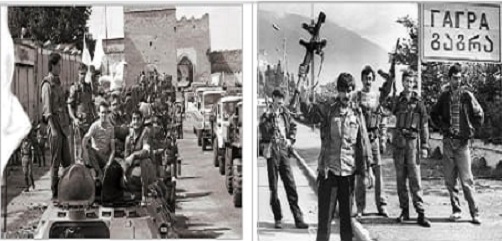
The Transnistrian conflict is also a product of the collapse of the Soviets. The wave of separatism that arose in Moldova during the same period of historical change has not found a final political solution even after three decades.
Abkhazia and South Ossetia are the result of a similar movement, but after the 2008 Russia-Georgia war, the problem entered a more complex stage. With the recognition of Kosovo, Condoleezza Rice, who built a new state in the place of the former Yugoslavia, gave the Kremlin a ready-made formula: Moscow recognized the two regions as separate states and took the territories completely under its military-economic control.
In the Middle East, the situation has historically been more complex. The Israeli-Palestinian conflict is much older than Karabakh; the centuries-old struggle of two peoples for recognition as a national state on the political map has now turned into an existential, that is, a struggle for existence and being. Therefore, the conflict has become sufficiently internationalized and has gained a religious essence; in the last three years, Gaza has been erased as an administrative territory and residential unit, a Peace Council has been created for the future status of the region, and the scale of the humanitarian catastrophe and the refugee problem have turned into a global political confrontation. It is no coincidence that the French leader tried to win the sympathy of the Islamic world through Palestine from the Assembly podium, and his impressive speech was applauded in the hall.
Global military confrontation around Iran is expanding even further. Iran’s nuclear program, multi-year embargoes and sanctions, missile strikes launched from Tehran at thirteen Arab countries, the frequent closure of the Hormuz corridor, and the use of force by states against each other continue the crisis, even if they lead to temporary agreements.
Compared to Karabakh, the Russia-Ukraine war has both similar and very different characteristics. Open interstate war, the participation of a nuclear state, and the future of the European security system completely change the scale of the war. Karabakh could not be an example for Kyiv. Because the messages Volodymyr Zelensky gave in New York were far behind the scale of personality, political courage, and strategic vision of the Great Leader Heydar Aliyev. He worked for a one-day media effect by saying he would “go to Moscow with missiles.” It is true that the Ukrainian leader has strong grounds for harsh lexicon. However, the Azerbaijan of the 1990s was fighting alone in the military-political arena. Now, a president who remains standing thanks to the unparalleled patronage and aid of 51 states, as well as the determination and heroism of Ukrainians, must be able to stop the global war being waged in his homeland.
.jpeg)
At that time, Heydar Aliyev stopped the war controlled from Moscow and then went to meet the Russian leader he hated in the Kremlin. Yeltsin, who defeated Gorbachev and gained influence in the image of a democrat with the slogan “Long live America,” used baseless expressions against Aliyev in the book he authored. However, politics requires putting personal antipathy and sympathy aside for the sake of the interests of the nation you represent. The meeting held in the St. George’s Hall can be called a turning point in the fate of our nation. Three years later, during his visit to Washington, Aliyev stated that certain circles in Moscow were trying to assassinate him and take complete control of Azerbaijan. However, at that time, the oil contract had already been signed, the regional balance of power had changed in favor of Baku, and on the contrary, the epicenter of instability had moved to Yerevan. The path leading to the overthrow of Levon Ter-Petrosyan resulted in the decisive victory won at the OSCE Lisbon summit and the complete exclusion of the Armenian community from the negotiations.
Therefore, the holy September days unite the UN session and the Karabakh war in the same political calendar. Azerbaijan’s Victory is an important event that brings the world to a just peace. If two states fully recognize each other’s sovereignty, territorial integrity, and borders in a legal document, renounce mutual territorial claims, establish diplomatic relations, and open communications, not only will an important precedent be created in the history of long-term conflicts in the post-Soviet space, but an example will also emerge to end other wars.
Ilham Aliyev’s speech at the 80th session of the UN General Assembly is of special importance here. The President emphasized that in previous years, he spoke from the high podium about occupation, non-implementation of resolutions, and the shortcomings of the international system. In 2025, he structures his speech as a “path to victory and peace.” Azerbaijan’s position at the UN does not wait for the resolution of the conflict from mediators and the mandate of the most powerful state; now, for the first time in history, the winner builds the security architecture itself.
By accepting the victorious Azerbaijan as a permanent member of the Security Council, new content can be given to the future reform of the UN. The Council, formed after the Second World War, was actually established as a club of winners – the five permanent members were the states that emerged victorious from that war. Eighty years later, the composition of the club of five is the same, even though the world has changed significantly. Azerbaijan’s mandate would be the voice of all peoples who have been subjected to occupation but have restored their territorial integrity through national will and strength.
The Karabakh war began in the days when the 75th session was ending. The starting point can be taken from there. The result we achieved with Aliyev’s UN and world leadership – Victory – allows the new world order to begin from the South Caucasus.
A historical example is emerging before the forces trying to find solutions to global conflicts. At the beginning of the last century, the Paris Peace Conference was the center that drew political maps in the world. Now the situation has changed fundamentally. Azerbaijan has managed to confirm the legitimacy of its victory and the construction of a new geopolitical architecture in Washington. It is a completely logical event that the US leader mentioned Ilham Aliyev’s name in his brilliant speech. Because our country has gained greater security and geopolitical results than its scale.
Azerbaijan has saved the UN. The more than thirty-year history of Karabakh clearly demonstrates an important result to the world: it is strong armies that implement resolutions; otherwise, our country would now be giving its next statement from New York to the world that injustice still continues.
The victory Azerbaijan won in Karabakh also allows for bringing the global security system out of crisis. At a time when the 81st session of the UN is talking about the fragmentation of the international system, the veto crisis, and the involvement of major powers themselves in various wars and confrontations, the South Caucasus is entering a new era. The Karabakh conflict, which once divided the world, is now moving to a peace phase where Azerbaijan and Armenia mutually recognize each other’s sovereignty, territorial integrity, and state identity. If the process is completed with a final agreement, the victory Azerbaijan won in Karabakh will not remain only as the success of one nation, but will turn into a brilliant international example of ending a long-term conflict between two peoples. The value of a new world order is not determined by how much a state intervenes in conflicts, but by which state turns historical enmity into lasting peace!
The victory of our people is the triumph not only of the national, or the Turkic world and the Islamic world, but also of all people who support justice, including the sacred ideals written into the foundations of the UN headquarters building!
Zahid ORUC,
Milli Məclisin İnsan hüquqları komitəsinin sədri