
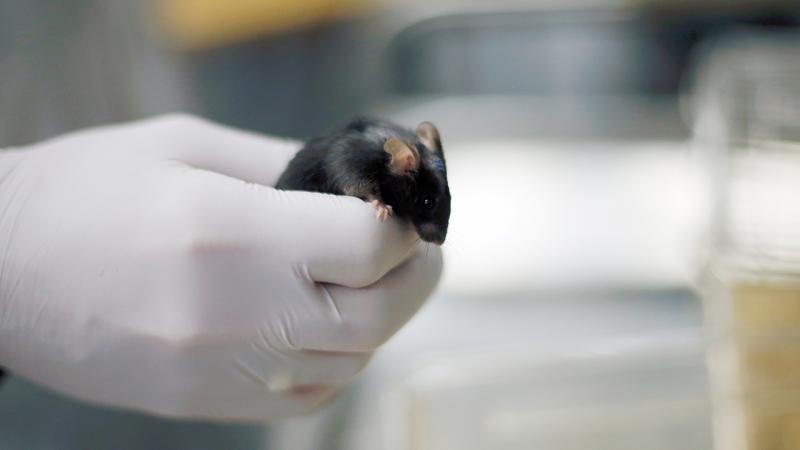
US neuroscientists have successfully ensured the presence of functional human cells in the brains of mice. Researchers hope that potential methods for treating psychiatric and neurodevelopmental disorders observed only in humans can now be tested on laboratory rodents.
elchi reports that while mice with partially human brains may create an impression of a Kafkaesque experiment, scientists have clarified that these are not “human-thinking mice.”
Genetic and surgical interventions were performed on the animals, resulting in a portion of the brain tissue being human tissue.
Scientists stated that this research, published in the journal Nature, was carried out under independent ethical oversight.
Brain diseases without treatment will be studied
Researchers were able to observe the connections between human brain cells and the rest of the mouse brain in scans of the implanted mice.
The goal of this ethically complex scientific achievement is to better understand the biology of brain diseases for which there are currently no effective treatment methods.
Some diseases cannot be studied in mice because these disorders do not occur naturally in these rodents.
Professor Sergiu Paşca, a lead researcher at Stanford University, explained at a press conference that the field of psychiatry has “one of the lowest success rates in clinical trials.”
“Even drugs that reach the clinical stage and show very good results in animal models fail significantly during clinical application,” Paşca said at the press conference, adding: “This shows us that we lack a lot of information about human biology, and obtaining that information will be crucial.”
Stanford researchers noted that this approach has the potential to “create fundamental changes” for some complex diseases such as epilepsy, autism, and cerebral palsy. Paşca said: “Here we are presented with a new model that allows us to observe certain aspects of human brain activity in a way that was not possible before.”
Şayəstə