
Early marriage is not only a legal issue but also a serious social problem related to children’s education, future, psychological well-being, and family relationships. Although this issue is sometimes linked to “tradition,” “family values,” and religious concepts, the extent to which such approaches are justified is a subject of discussion in society. The educational activities of families, educational institutions, public organizations, and especially religious figures play an important role in preventing early marriages.
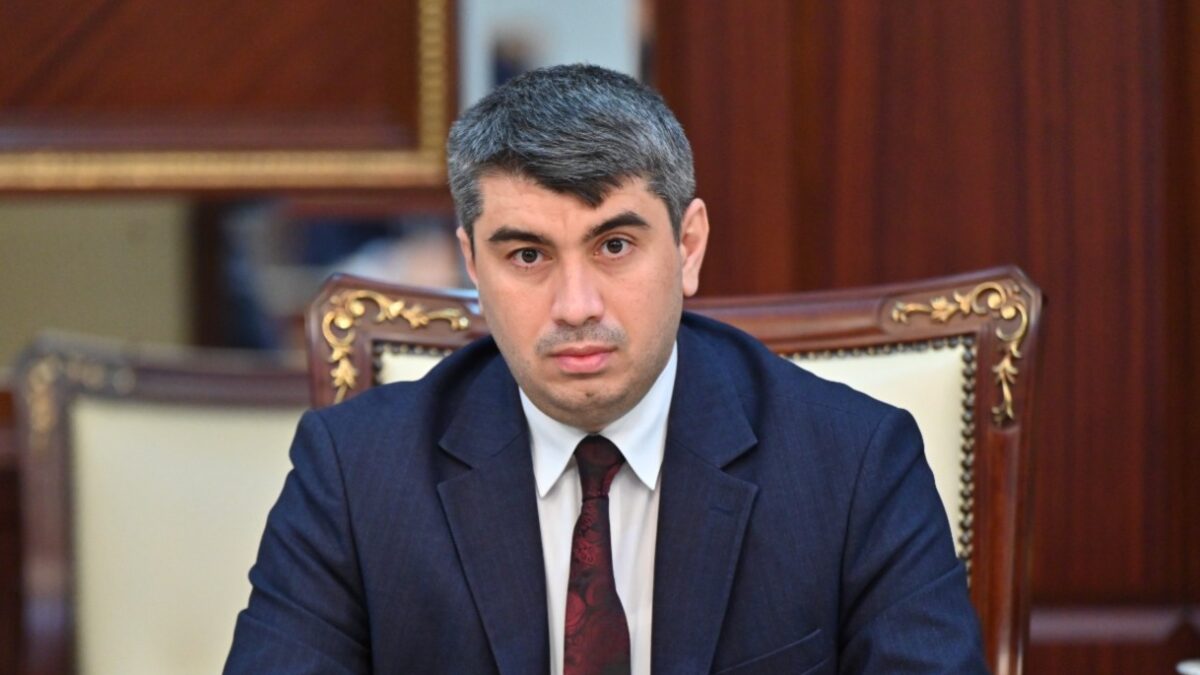
In his interview, Elnur Mustafayev, Deputy Director of the Institute of Oriental Studies named after academician Z.M. Bunyadov of ANAS, Chairman of the Public Council under the State Committee for Work with Religious Organizations, PhD in Philosophy, and Associate Professor, expressed his opinion on linking early marriage with religious and national-moral values, and spoke about the educational opportunities of religious figures and the responsibilities of parents and young people in this matter. He also explained the impact of social networks on the worldview of adolescents and the importance of proper communication methods in preventing early marriage.
-Elnur muallim, the issue of early marriage is sometimes linked in our society to “tradition,” “family values,” and even religious concepts. As the Chairman of the Public Council under the State Committee for Work with Religious Organizations, what results have you observed in this direction in your activities?
-Yes, observations show that even if rarely, there are cases of adolescents being married off at an early age in our society. It is true that compared to neighboring countries, the number of early marriages in Azerbaijan is very low, but even this small number forces our society to think. Of course, national-moral values, customs, and traditions have an exceptional place in the formation of every nation, the development of its public opinion, and the determination of its national identity. In other words, a value system is a collection of internal rules that guide the lives of individuals and societies. In fact, national-moral values, customs, and traditions—in short, a value system—should serve to make correct decisions, protect the individual, and ensure social harmony. However, an important point to consider regarding customs and traditions is that they cannot be a basis for limiting the rights and future of a person, especially a child. In this sense, the issue of marriage as a value should be based on the free and conscious consent, mutual respect, and responsibility of mature individuals. That is, family values become true values only when they support the well-being and future of the parties entering into marriage. Religions themselves, as part of national-moral values, attach great importance to principles such as family, responsibility, mutual consent, and human dignity. Therefore, using religious concepts to legitimize early marriage is not correct from either a legal or moral perspective. Because according to religions, human interest should be the main reference point. In this respect, early marriage is a concept contrary to human interest. Based on this idea, we can say that, in fact, religions themselves reject early marriage because it is contrary to human interest. In short, we can conclude that in the modern era, creating a correct and healthy attitude towards national-moral and religious values, as well as customs and traditions, is a very important and significant issue.
-What role can religious communities and religious figures play in preventing early marriage? Is it possible to use their educational opportunities more effectively?
-Yes, there is no doubt that religious communities and religious figures can play an exceptional role in preventing early marriage. It should be taken into account that the influence of religious figures in society is quite broad. Especially if we take into account the high trust society has in them, it is possible to use this potential in a more systematic way. However, first of all, special training on early marriage, children’s rights, and gender issues should be conducted for religious figures, and regular contact should be established with them. Religious figures can explain the negative consequences of early marriage, the interruption of children’s education, psychological and social risks, early parenthood, and intra-family problems more effectively in mosques and public places, including during sermons and meetings. Religious figures, including religious communities, must demonstrate a clear and consistent position against the normalization of early marriage under the name of “tradition.” Especially in villages and districts, in remote parts of our country, religious education events can be held with the participation of influential religious figures. The most important point is that religious figures should carry out educational work based on our national ideology in their activities. In addition to guiding our population and youth towards moral values, they should invite them to acquire knowledge, literacy, and higher education. The activities of religious figures should be educational, constructive, and supportive.
-Sometimes parents prioritize early marriage for their daughters, putting their education and career in the background as a “guarantee of their future.” Which educational methods are more effective to change this mindset?
-Strengthening educational work and organizing it in a consistent and systematic manner in the fight against such wrong and harmful ideas is one of the important tasks falling on state institutions and public organizations. A number of educational methods can be used to change such negative thoughts. For example, it is possible to organize small group and individual meetings with parents in schools, communities, and residential areas, have conversations about the negative consequences of early marriage, and show videos related to the topic. In such mass events, it should be explained with concrete examples how a girl’s education and professional opportunities contribute to the economic security of both herself and her family in the future. In addition, considering the influence of social media and social networks in the era we live in, it is possible to carry out educational work with various content on these platforms. Using such opportunities, it is possible to prepare short videos and real stories based on facts for young parents. Furthermore, it is possible to achieve greater results by involving teachers, doctors, psychologists, religious figures, and local community representatives in educational work. I believe that it is more effective to show parents that a daughter’s education and having a profession is not an alternative to marriage, but a factor that ensures her future in a healthier and more sustainable way. Just as the great philanthropist and patron Haji Zeynalabdin Taghiyev founded the first school for girls in the Muslim East in 1901 because he felt it was essential for girls to receive an education. In this regard, Taghiyev noted: “By educating a boy, you gain an educated individual, but by educating a girl, you gain an educated family.” Yes, as Haji said, it is important for girls to study, because if the mothers of the future are literate, they can raise more broad-minded, well-mannered, and knowledgeable children, that is, a whole healthy society.
-During religious education, besides using the opportunities of religion correctly in the issue of early marriage, how can we prevent religion from being turned into a tool in this matter?
-Comprehensive measures must be taken for this. That is, all institutions and public associations must work in unity. The greatest responsibility here, without a doubt, falls on religious figures. That is, in the activities of religious figures on this topic, issues such as not forcing the child and protecting their education and development opportunities should form the main part of the education. One of the most important points in this matter is that religious education must be distinguished from religious manipulation. Sometimes, certain circles use religious rules and customs to justify their ugly deeds. Actions carried out by any individuals or non-professionals, whether intentionally or unintentionally, should not be attributed to religion or customs. In fact, such negative cases are the result of subjective tendencies. Instead of selecting individual phrases from religious texts to legitimize early marriage, general religious principles related to family, responsibility, human interest, and rights should be mentioned. In other words, the impression that early marriage or forced marriage is a “religious requirement” should not be created by using individual religious phrases. As we mentioned a little earlier, human interest is taken as the basis in religion. If any situation is contrary to human interest, then according to religious values, such negative cases are not acceptable. In the fight against such cases, religion should not become a tool of the problem, but a part of its solution.
-Adolescents encounter very different and sometimes contradictory information on social networks. In your opinion, what mistakes should not be made when talking about early marriage? From this point of view, what effective communication methods should be used to convey correct information about religious and family values to young people?
-Yes, today social networks affect all aspects of our lives. In the modern era, it is possible to find very few people who do not use social networks. Young people constitute the main segment of social network users. That is, today’s youth are also a generation raised by social platforms, whose opinions are formed by them. Naturally, just as we encounter positive content on social networks, we also observe posts with negative content. Of course, in such a contradictory world, the need for healthy educational work arises again. It is possible to use various methods in the fight against such negative cases. First of all, it is necessary to teach young people the skill of checking who the source presenting the information on social networks is, and what fact or expert position the information is based on. The ability to determine the credibility of the source is of great importance in this matter. Along with this, the best method is an approach that listens to young people, engages in dialogue with them, and adapts to the communication channels they use. For example, religious figures and experts can answer young people’s specific questions through short videos, Q&A formats, podcasts, and social media posts. In addition, the messages of religious communities, public associations, and families should complement each other. Yes, starting a family is a value, but an early marriage built at the expense of a child’s future cannot be included among family values. A young person should be given correct and reliable information about both the essence of religious values and their own rights. In this matter, whether it is a religious figure or a holder of other professions, educational work should be carried out by professional and highly qualified personnel with sound thinking. It is unacceptable to involve people with incomplete knowledge and non-professionals in educational work, and such cases should not be allowed at all.
-Preventing early marriage requires the education of not only girls but also boys. What messages are especially important to convey to boys?
-One issue must be taken into account: in the issue of early marriage, not only girls but also boys are subjected to material and moral harm. In a family established by the compulsion of parents, the boy’s rights are trampled upon as much as the girl’s. Because a healthy family relationship is related not only to the girl’s but also to the boy’s preparation, responsibility, and choices. In solving this problem, the education of boys is at least as important as the education of girls. It must be understood that a girl’s opinion, choice, and boundaries are as valuable as a boy’s choice. Pressure and compulsion cannot be part of a healthy relationship. On the other hand, a boy cutting his education short to start a family early can limit the opportunities of both him and his future family. It should be conveyed to boys that starting a family is not just a wedding and social status, but a relationship that requires mutual respect, justice, responsibility, and care. Furthermore, respect for the future spouse, emotional support, and making joint decisions are the foundations of a healthy family. At this point, when starting a family, the rights, choices, and interests of both parties should be taken into account. At the same time, it is necessary to re-examine the ossified and stereotyped perceptions rooted in some minds. For example, thoughts such as “marriage is an indicator of manhood” stereotyped in our society regarding the marriage of boys should be criticized. Marriage should never be presented as a means of self-affirmation before society. On the contrary, marriage is a value that carries a great responsibility. That is, the family is an institution that forms the basis of the state and society. It is very important for every citizen to be responsible in this matter.
-Finally, if you had to give a message to parents and adolescents, what would you say?
-My advice to parents can be that, first of all, they should educate themselves in a healthy way. They should constantly develop their knowledge, skills, and moral world. It is a fact that where there is no development, decline is inevitable. A person who does not have proper education and morality can never educate others properly. The most correct way to ensure the future of your daughter or son is not to marry them off as soon as possible, but to give them the opportunity to get an education, acquire a profession, know themselves, and build their lives consciously. Listen to your child’s opinion, respect their choice and rights. Let us not forget that the greatest responsibility of a parent is to protect not the child’s today, but their future. I would tell young people that you have the right to make decisions about your life and future. One should not rush in this matter. Young people increasing their knowledge, working on themselves, and developing critical thinking is very important for their successful future. In parallel with this, enriching your moral world and remaining loyal to moral values can be very useful for you in the future. Do not hesitate to ask questions and ask for support from people you trust. Invest in your education, your dreams, and your self-development. Starting a family is a beautiful value, but for this, the right time, preparation, and most importantly, making a free and conscious choice is of great importance.
The interview was prepared within the framework of the “First knowledge, then unity” project implemented by the “Vatandash” Research and Development Public Union with the support of the Agency for State Support to Non-Governmental Organizations.