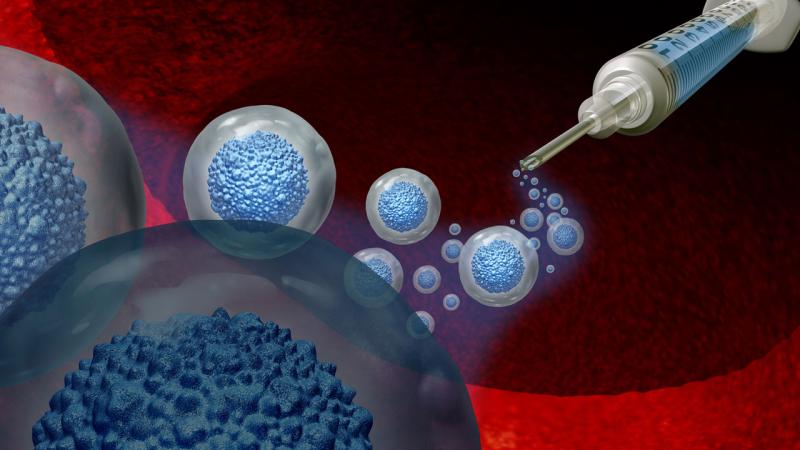
Researchers have redesigned microscopic lipid carriers to release a potent anesthetic drug more slowly than before. In studies on mice, this approach extended the duration of local anesthesia from hours to weeks, opening new possibilities for long-term pain relief after surgery.
elchi reports that these findings could help researchers extend the duration of local anesthesia in humans.
It is known that patients recovering from surgery may need pain relief for longer than the eight to twelve hours, or maximum one day, provided by most local anesthesia methods.
In search of a method with a longer-lasting effect, researchers at Boston Children’s Hospital redesigned liposomes, microscopic carriers made of fat molecules, to release the drug more slowly.
Compared to the approximately four to eight hours of effect from a commercially available preparation, the new preparation was observed to maintain its local anesthetic effect in mice for two to three weeks.
Re-evaluating the mechanism of drug leakage from liposomes
Although doctors have used liposomes for decades for the gradual release of drugs, the rate at which the drug leaks from liposomes is determined by the fat components called lipids.
Scientists generally believed that lipids that were more loosely packed and more fluid would allow drugs to leak out faster. It is known that such rapid release can create a stronger but shorter-lived effect and increase the risk of toxicity. Dr. Yuan Wang, a research engineer in Dr. Daniel Kohane’s laboratory, discovered that water-soluble drugs behave differently. It turned out that these drugs, which mix or dissolve easily in water (called hydrophilic), leak very slowly from more fluid liposomes.
Şayəstə
Scientists Develop Local Anesthesia Method With Weeks-Long Effect, Not Hours