
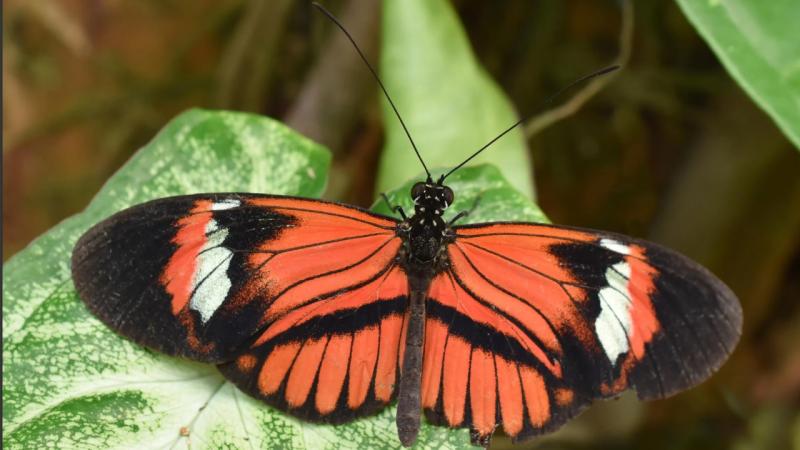
A study conducted by the University of Bristol in collaboration with the Smithsonian Tropical Research Institute has determined that some *Heliconius* butterflies inhabiting the tropical rainforests of South and Central America slow down the aging process and can live significantly longer than other butterfly species.
elchi reports that while most butterfly species live for only a few weeks, it has been determined that *Heliconius* butterflies can live for up to a year.
Pollen consumption and evolutionary factors
Unlike other butterflies that feed only on flower nectar, adult *Heliconius* butterflies also consume pollen.
However, researchers found that even when pollen was removed from their diet, these butterflies maintained their longevity advantage.
Experiments comparing the pollen-consuming *Heliconius hecale* species with its close relative, the non-pollen-consuming *Dryas iulia* species, showed that *H. hecale* lived significantly longer even without pollen.
The results of the study indicate that, in addition to diet, genetic and evolutionary differences play a role in ensuring this long lifespan.
In tests measuring physical indicators and muscle functions—specifically grip strength—it was observed that while aging *D. iulia* individuals weakened, older *H. hecale* individuals showed no signs of physical decline or muscle loss.
Differences in lifespan between species
According to the study published in the journal *Nature Communications*, the average lifespan of *Heliconius* species is approximately three times longer than that of their close relatives.
While the *Heliconius hewitsoni*, recorded as the longest-living butterfly species, lives up to 348 days, the lifespan of its short-lived relative *Dione juno* is only 14 days. This situation shows a nearly 25-fold difference in lifespan between two species belonging to the same butterfly family.
Scientists emphasize that the emergence of such a significant difference in lifespan in the recent evolutionary past provides an important model for understanding the biology of aging and the mechanisms of longevity.
Şayəstə