
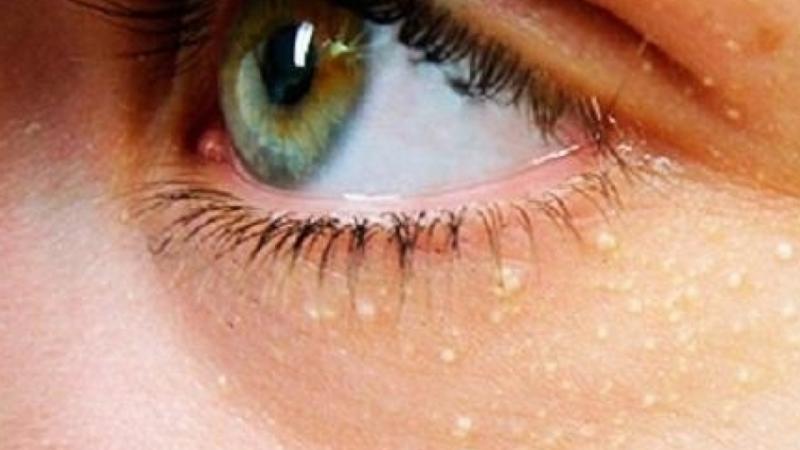
A new study published in the journal *Atherosclerosis* has revealed that pale, raised yellow spots (xanthelasma) appearing around the eyes may be an early indicator of the risk of heart attack, stroke, and transient ischemic attack (mini-stroke episodes).
elchi reports that these spots form when immune cells known as macrophages become filled with cholesterol and other fats.
Although often associated with high blood cholesterol levels and considered harmless in isolation, this condition involves a biological process similar to atherosclerosis (hardening of the arteries), which develops through the accumulation of fatty plaques in blood vessels.
In a study conducted by researchers at Stanford University, health data from 17,925 people diagnosed with xanthelasma were compared with a matched control group who had undergone eye exams but did not have xanthelasma:
The rate of heart attacks among xanthelasma patients was 1 percent, compared to 0.35 percent in the control group.
During the first year, the risk of stroke in the xanthelasma group was recorded at 0.95 percent (compared to 0.30 percent in the control group), and the risk of transient ischemic attack was 0.60 percent (compared to 0.19 percent in the control group).
Long-term effects: Although the difference between the two groups decreased over 5 and 10-year follow-up periods, the risk of heart attack, stroke, and transient ischemic attacks remained significantly higher in individuals with xanthelasma.
Risk persists even without high blood lipid levels
Another notable finding of the study is that the frequency of cardiovascular and cerebrovascular events remains equally high even in xanthelasma patients with normal blood cholesterol or lipid levels.
This suggests that spots around the eyes may be a sign not only of high cholesterol but also of other systemic risk factors that are not yet fully understood.
Opportunity for early diagnosis and prevention
Researchers emphasize that while individuals who consult dermatologists or ophthalmologists for xanthelasma often view the condition merely as an aesthetic concern, they may carry undiagnosed cardiovascular risks.
The early detection of these distinct growths around the eyes can facilitate the timely implementation of preventive measures such as lifestyle changes, blood pressure management, and cholesterol-lowering treatments.
Şayəstə