
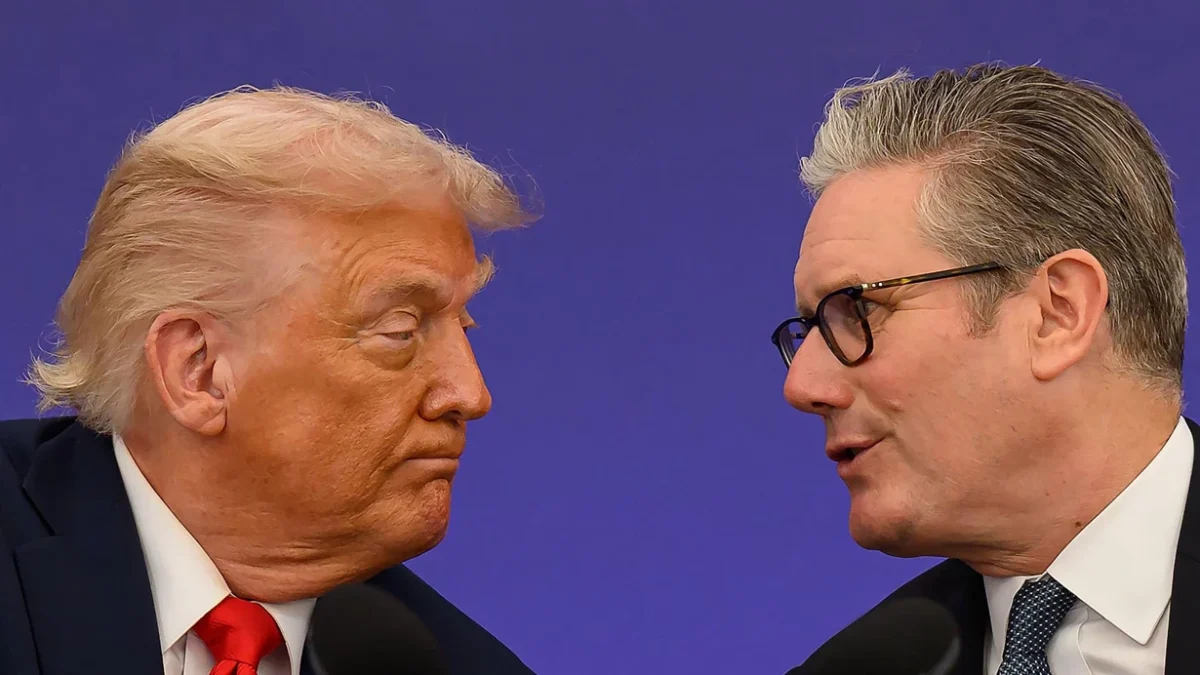
The US’s harsh actions targeting the Strait of Hormuz and Iranian ports have not only increased military tension in the region but also highlighted the fault lines within the Western alliance. The cautious stance of the London, Paris, and Berlin axis, which is not fully aligned with Washington, shows that the crisis has created a new division not only on the ground but also at the diplomatic table. In this hardening landscape, the biggest black box in the equation is the British statecraft, which is felt to be exerting its influence behind the scenes once again.
“Elchi” reports that the US’s harsh actions targeting the Strait of Hormuz and Iranian ports have not only increased military tension in the region but also highlighted the fault lines within the Western alliance. The cautious stance of the London, Paris, and Berlin axis, which is not fully aligned with Washington, shows that the crisis has created a new division not only on the ground but also at the diplomatic table. In this hardening landscape, the biggest black box in the equation is British statecraft, and its behind-the-scenes influence is felt to be showing itself again.
The US move targeting Iranian ports and the Strait of Hormuz has also caused disagreements within the EU. Great Britain’s clear message of “we are not participating” and France’s initiation of work on a multinational security formula separated from the war front are accepted as indicators that the crisis has turned from a military issue into a point of diplomatic and strategic disagreement. When cautious signals from Germany are added to this picture, assessments that Europe as a whole will not fully align with the hard line pursued by the Trump administration are strengthening. In diplomatic circles, it is expected that Great Britain and France will accelerate their relations regarding navigation security in the Strait of Hormuz in the coming days, and that the disagreements between Washington and European capitals will become more noticeable.
Great Britain’s calculation
According to behind-the-scenes information, London’s main calculation is to prevent Great Britain from being seen as part of a new war and to limit the pressure that could increase in domestic public opinion due to energy costs. Starmer’s statement that British citizens do not want to pay the price of this war with high energy costs stands out as one of the most obvious indicators of this approach in the analyses.
France’s plan
The framework drawn up in Paris is based on a more strategic line. The preparation for a multinational security conference mentioned by French President Emmanuel Macron is accepted not only as a diplomatic call but also as a sign of Europe’s search for a security architecture independent of the US. According to strategists, Macron’s emphasis on a “peaceful multinational mission” is particularly noteworthy. Analyses show that France’s goal is not a direct military intervention linked to the US pressure line, but rather to create a separate security umbrella that could include European and Gulf countries.
Şayəstə