
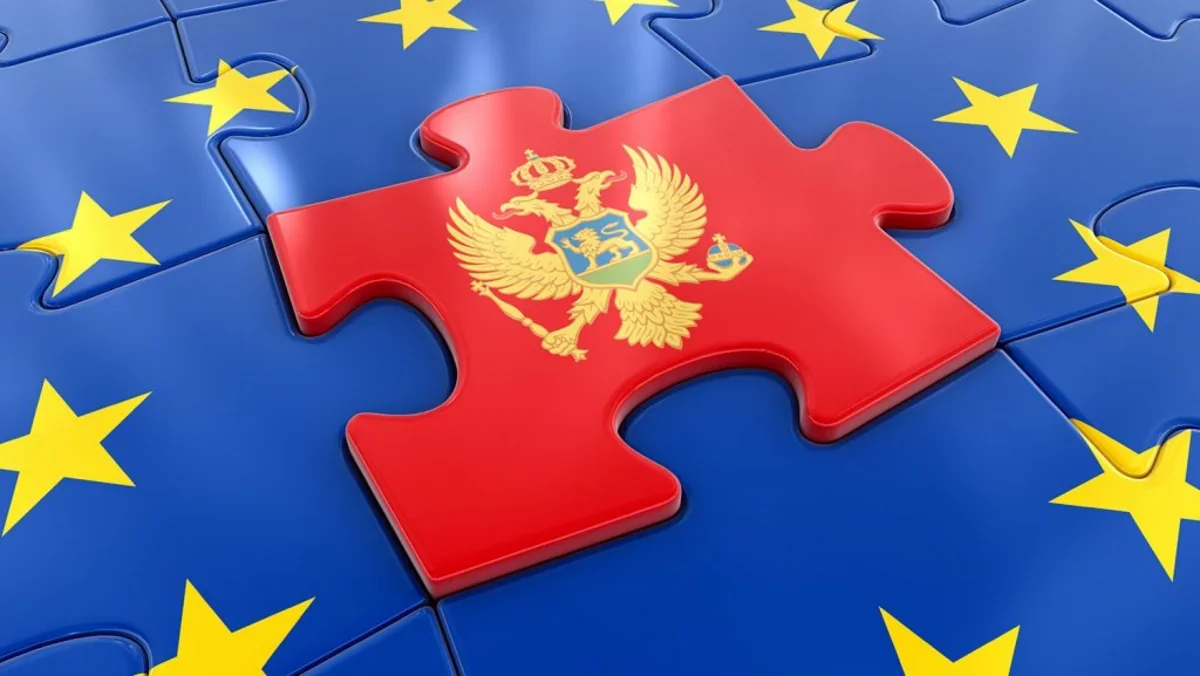
The European Commission has presented its annual enlargement package, assessing the progress of candidate countries over the past year and defining reform priorities for the near future.
“Elchi” reports that the document was published on the website of the European External Action Service (EEAS).
The document primarily focuses on the speed of reforms, strengthening democracy, the rule of law, and compliance with European standards. The greatest progress during the reporting period was recorded in Montenegro, Albania, Moldova, and Ukraine. Roadmaps covering the next stages towards EU membership have been prepared for these four countries. The report assesses the EU membership prospects of the candidate countries as follows:
1. Montenegro
Montenegro is considered the country closest to EU membership and a leader in negotiations.
Montenegro is in the most favorable position to conclude negotiations first. If the current pace of reforms is maintained and EU countries agree, the remaining negotiation chapters could potentially be closed by the end of 2026. The next stage involves preparing the accession treaty and agreeing on membership conditions.
2. Albania
Albania also demonstrates a high pace of progress towards EU integration. If the country maintains its current reform momentum, it could conclude negotiations by 2027. The main obstacles are strengthening democratic institutions, developing political dialogue, and improving the quality of reforms.
3. Moldova
Moldova has the prospect of concluding its EU membership negotiations by early 2028. To achieve this, the country must continue reforms in the judicial system and public administration, and strengthen the fight against corruption. The next important step is opening the remaining negotiation clusters and fulfilling the relevant criteria.
4. Ukraine
Ukraine has met the conditions required to open the remaining negotiation clusters. If the country accelerates reforms and maintains its institutional resilience amidst the war, it could conclude negotiations by the end of 2028. The main challenges remain the fight against corruption, judicial reform, and strengthening democratic institutions.
5. Serbia
Limited progress has been recorded in Serbia, with no significant advancements in membership negotiations. The country’s foreign policy remains largely unaligned with the EU, and political and social polarization is increasing. Serbia must fulfill its commitments to normalize relations with Kosovo. The country’s future prospects will depend on the steps taken by the new government, the restoration of democratic dialogue, the independence of the judiciary, and the alignment of its foreign policy course with the EU.
6. North Macedonia
The main obstacle to North Macedonia’s EU integration is the adoption of constitutional amendments. Without political compromise, the country may continue to wait for the start of full membership negotiations.
7. Bosnia and Herzegovina
The European integration process in Bosnia and Herzegovina is slowed down due to high political risks. No significant progress is expected in the near future. Key conditions include ensuring political stability, forming state institutions, and fulfilling commitments within the EU’s Reform and Development Mechanism.
8. Kosovo
The political and institutional crisis in Kosovo has hindered the implementation of reforms. However, progress has been made in combating organized crime. The country’s rapprochement with the EU will depend on political stability and the fulfillment of commitments regarding dialogue with Serbia. The European Commission is ready to prepare an opinion on Kosovo’s membership application if a relevant request is received from the EU Council.
9. Turkey
Turkey’s EU membership negotiations remain frozen. However, the country retains its candidate status and its position as an important partner of the EU. The European Commission does not consider the resumption of negotiations realistic in the near future.
10. Georgia
Georgia’s European integration has effectively stalled. The report states that if the political course does not change, Georgia will not be able to progress towards EU membership and will face the risk of losing the practical benefits of candidate status. Nevertheless, the EU will continue to support Georgia’s sovereignty, territorial integrity, and the Georgian people’s desire for European integration.