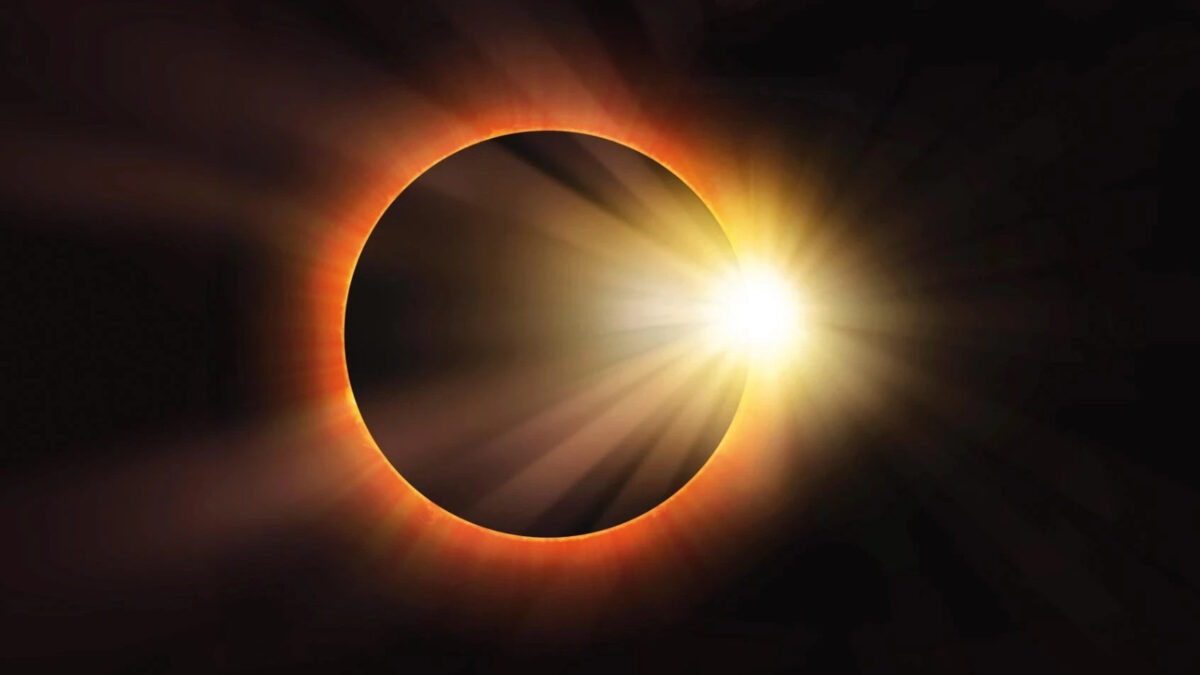
In August, sky enthusiasts can look forward to a series of fascinating astronomical events. Throughout the month, a total solar eclipse, the Perseid meteor shower, the days when Venus will appear at its brightest, and a partial lunar eclipse will take place.
elchi reports that the total solar eclipse on August 12 will be fully visible from Northern Russia, Greenland, Iceland, northern Spain, and a small part of Portugal.
In some areas of the USA, stretching from Alaska to North Carolina, the eclipse will be partially visible.
Experts recommend using only certified protective glasses when observing the solar eclipse. Looking directly at the Sun without a special filter or observing through a telescope, binoculars, or camera can pose a serious risk to the eyes.
That same night, the Perseid meteor shower will reach its peak activity. The most favorable observation time will be from the evening of August 12 to the morning of August 13. Due to the New Moon phase, the darkness of the sky will allow for a clearer view of the meteor shower.
On August 14-16, Venus will reach its greatest eastern elongation. The planet will be visible on the western horizon shortly after sunset and will be one of the brightest objects in the sky.
At the end of the month, on the night of August 27 to 28, a partial lunar eclipse will occur. At the maximum phase of the eclipse, approximately 93 percent of the Moon’s diameter will be in the Earth’s shadow. Although the Moon will not be fully eclipsed, a large part of its surface will darken and take on a copper-colored appearance.
Note that there is no need for special protective equipment to observe the lunar eclipse.