
The average statistical portrait of applicants who took exams for higher education institutions has been determined separately for the Azerbaijani and Russian sections.
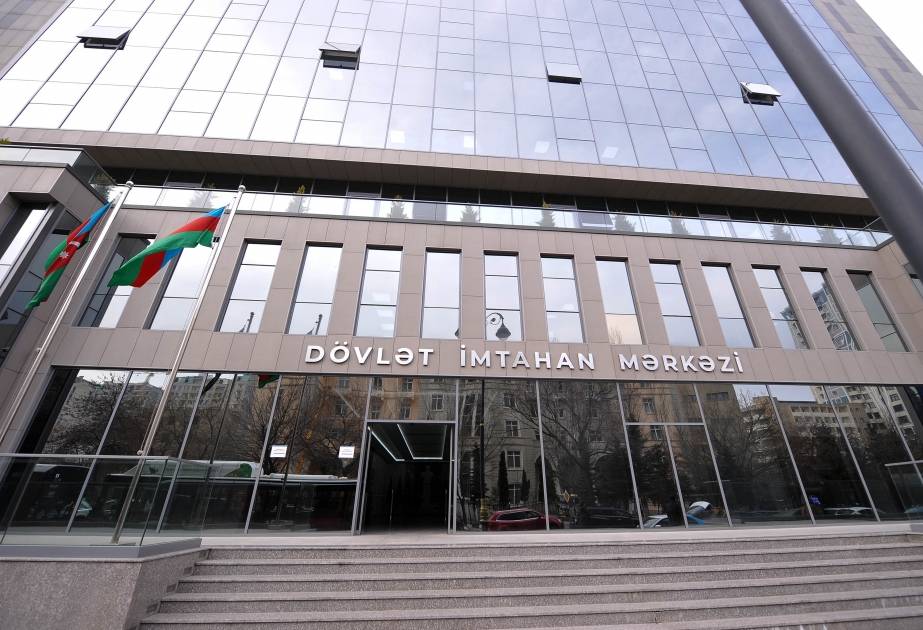
elchi reports that this was included in the scientific-statistical materials on student admission and graduation exam results for general education institutions for the 2025/2026 academic year, published in the 12th issue of the State Examination Center’s “Abituriyent” magazine.
It is stated that in the Azerbaijani section, the average applicant answered 57.05% of test items in the language of instruction, 31.38% in mathematics, and 43.59% in English in the first stage; and in the second stage, they answered 56.75% in the language of instruction, 55.18% in literature, 28.96% in mathematics, 36.27% in physics, 30.36% in chemistry, 53.66% in biology, 29.26% in history, 37.94% in informatics, and 25.99% in geography correctly: “In the Russian section, the average applicant answered 54.20% of test items in the language of instruction, 34.08% in mathematics, and 59.60% in English in the first stage; and in the second stage, they answered 53.36% in the language of instruction, 48.41% in literature, 29.81% in mathematics, 34.39% in physics, 31.83% in chemistry, 47.92% in biology, 24.36% in history, 34.06% in informatics, and 23.01% in geography correctly.”
It was noted that it is clear from the applicants’ response indicators that the average applicant answered only 23-60 percent of the tests in the subjects correctly:
“Considering that the test items are prepared within the framework of the educational program and do not go beyond this framework, and that those participating in the entrance exam are selected students from schools, it can be concluded that the average graduate does not master 40–77% of the educational program. This stems from the fact that the teaching process is not conducted normally in the majority of our general education institutions, the lack of high standards, and most importantly, the low level of professionalism of many teachers and their inability to use new teaching methods and technologies in the teaching process. Therefore, along with other measures that are important to implement in this area, issues such as improving the qualifications of teachers on modern scientific grounds, raising the level of training of pedagogical staff in higher education institutions, and instilling the necessary pedagogical-methodological knowledge and skills in future teachers should be in the spotlight. In addition to the above, the advanced experience of leading regions and schools whose applicants achieve high results, as well as teachers who distinguish themselves with high results, should be studied and disseminated. The average statistical indicators of applicants’ responses to exam subjects are presented in the tables below by group.”