
Work is rapidly continuing towards connecting the Nakhchivan Autonomous Republic to the country’s main energy system and forming the Azerbaijan–Turkey–Europe energy corridor.
Regarding this, “Elchi” reports, citing AzerEnergy OJSC.
“Within this framework, a 330-kilovolt high-voltage transmission line with a load-carrying capacity of 1000 megawatts, consisting of two circuits, is being constructed starting from Jabrayil. In the next phase of the project, an additional transmission line will be built over a distance of 44 km, passing through the Zangezur corridor. With this, Nakhchivan’s strategic position in the international energy corridor will be raised to the highest level,” the statement notes.
According to the information, AzerEnergy is fundamentally upgrading the energy infrastructure in Nakhchivan, building a modern energy system based on digital and intelligent management.
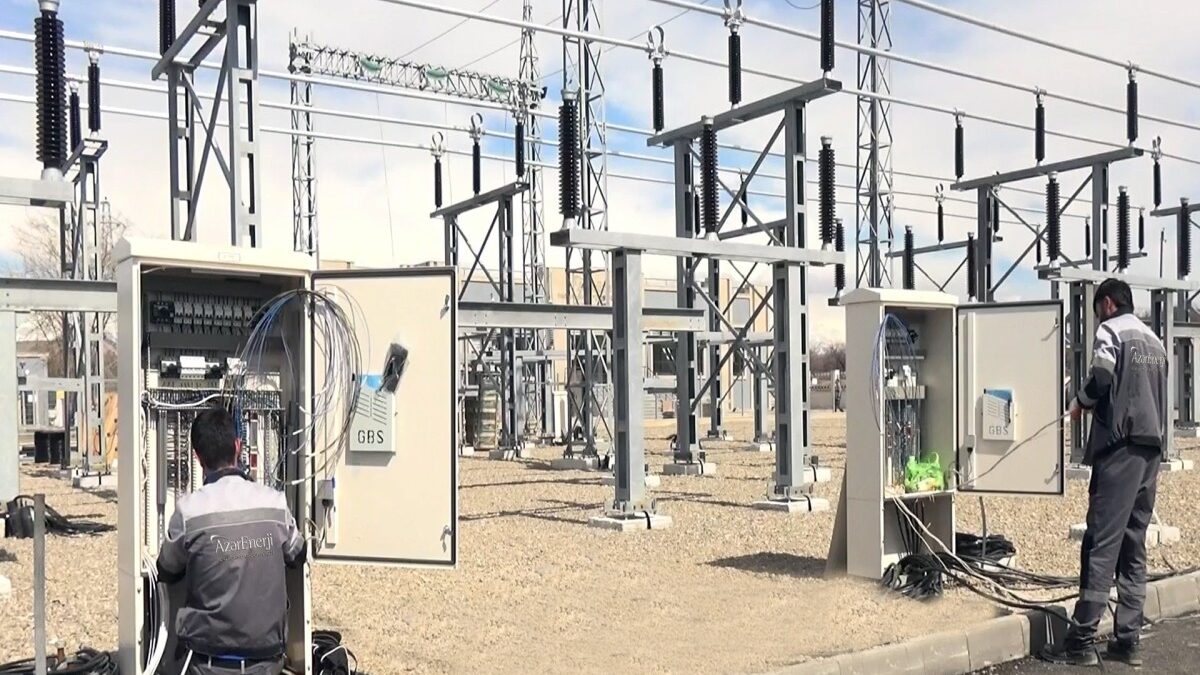
Within the project, the 110-kilovolt “Nakhchivan”, 154-kilovolt “Babek”, and kilovolt “Cheshmebasar” substations, which play an important role in the region’s energy supply, are being completely rebuilt, and the work has reached the final stage. In particular, the “Nakhchivan” substation is being built as the first closed-type substation in the region, which will significantly increase safety and operational management.
At the same time, important steps are being taken towards the digitalization of the energy system. The construction of the Regional Digital Management Center by AzerEnergy is ongoing, and existing stations and substations will be integrated into a unified SCADA network. These innovations will ensure remote, operational, and fully digital management of the energy network.
The transmission network is also being updated in stages. The 110-kilovolt overhead lines dating back to the 1950s are being replaced with modern transmission lines. In the initial phase, the “Julfa”, “Ordubad-1”, and “Ordubad-2” power transmission lines with a total length of 69 km have been reconstructed as double-circuit lines. In addition, a 5.2 km section of some overhead lines passing through residential areas is being replaced with underground cable lines in accordance with modern urban style.