
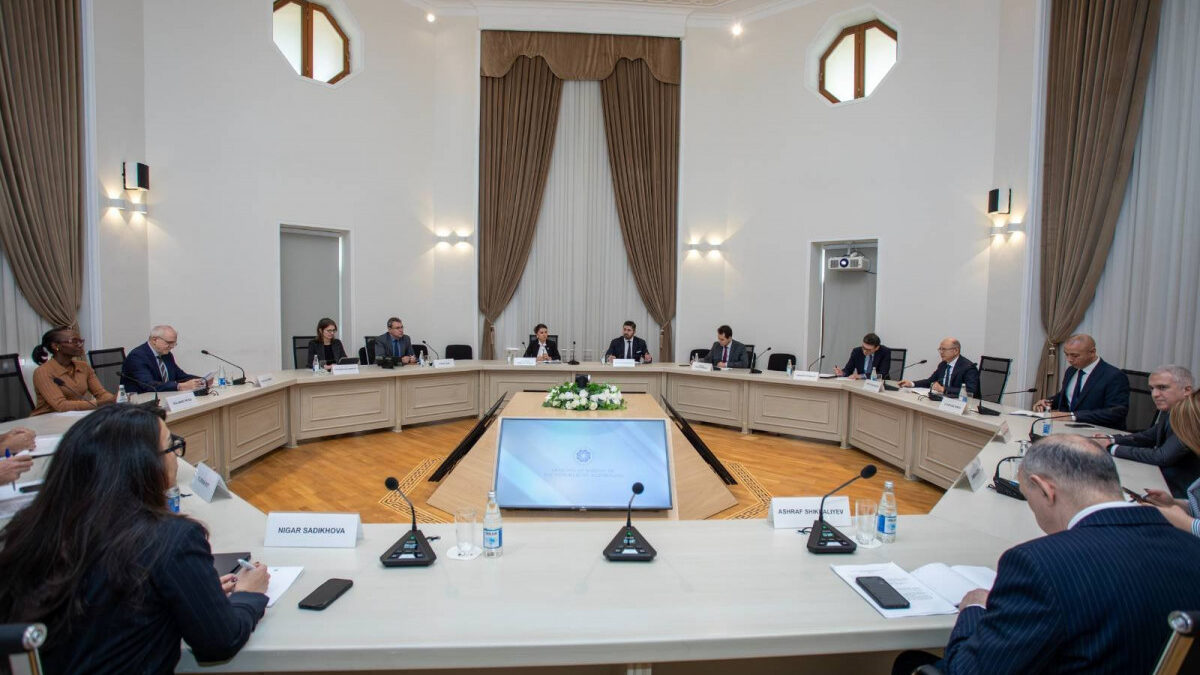
Minister of Energy Parviz Shahbazov met with Charles Cormier, World Bank Regional Director for Infrastructure in Europe and Central Asia, as well as Roland Price, Regional Director for the South Caucasus.
According to the information provided to Elchi.az from the Ministry, the current projects implemented in the energy sector of Azerbaijan, new cooperation opportunities, including renewable energy, energy efficiency, modernization of electrical networks, energy storage systems, rooftop solar energy and regional energy projects were discussed at the meeting. The progress of the AZURE project implemented jointly with the World Bank was discussed, and the importance of the project in terms of sustainable integration of renewable energy sources into the electrical network was emphasized. The importance of modernizing, digitalizing and increasing the reliability of electricity transmission and distribution networks in the context of demand from data centers and artificial intelligence, and the increase in electric vehicles was noted.
Cooperation opportunities with the World Bank on the “Caspian Sea-Black Sea-Europe Green Energy Corridor” project were also discussed. The mutual connection between the “Caspian Sea-Black Sea-Europe Green Energy Corridor” and the “Georgia-Romania Black Sea Submarine Cable” projects, the contribution of these initiatives to Europe’s energy security and their role in regional integration were also reviewed. The prospects of expanding Azerbaijan’s role as a regional energy supplier not only in electricity, but also in gas exports were touched upon. The meeting also discussed the work done in the field of energy efficiency and future steps in this direction. The existing potential for reducing energy consumption in public buildings, the activities of the Energy Efficiency Fund, as well as the possibilities of applying international experience were discussed. It was considered appropriate to continue technical assistance and knowledge exchange in this area.