
The plan presented to the European Union leaders regarding the financial needs for Ukraine’s post-war recovery and reconstruction can be characterized as a “financial bomb.”
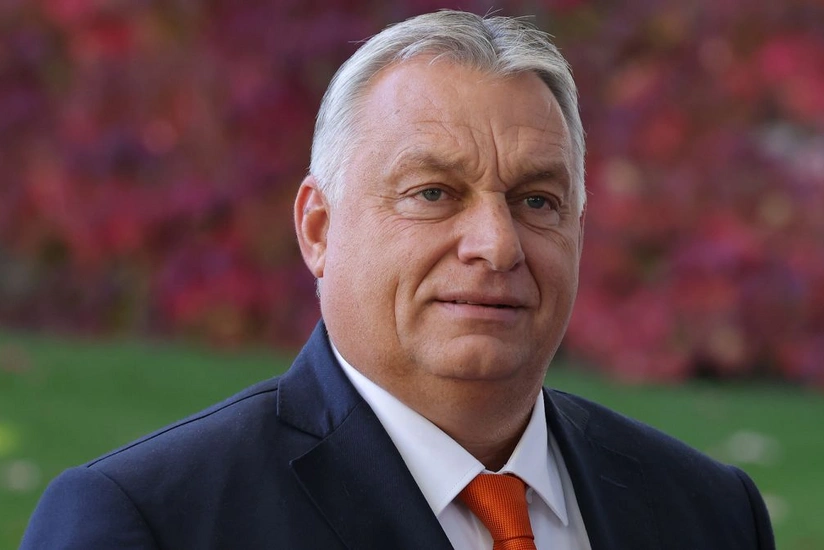
According to Elchi.az, this was stated to journalists by Hungarian Prime Minister Viktor Orban, while noting that he should not disclose the content of the document.
“We gathered for an extraordinary summit to discuss transatlantic relations, and we received this document, which envisages extensive financial commitments and the rapid integration of Ukraine into the European Union,” Orban noted.
He sharply criticized the proposed financing model, emphasizing that the implementation of such a plan means an increase in the debt burden of the European Union. According to him, Hungary is not against individual countries providing financial assistance to Ukraine, but this should not be at the expense of the European Union’s general budget.
According to Orban, aid should be provided voluntarily and individually by each country, not through the mechanisms of the European Union.
“The document is based on Ukraine’s financing needs for the next ten years in the amount of 800 billion euros. The first stage envisages 500 billion, and the second stage 300 billion euros,” the Hungarian Prime Minister said.
In addition, he noted that approximately 700 billion euros of additional military spending is also possible for the same period.
Orban called this approach the “atomic bomb effect” for European politics and emphasized that although the possibility of reducing or softening Ukraine’s demands was previously considered, they were ultimately adopted almost unchanged.
The Hungarian Prime Minister highlighted the part of the document where the date of Ukraine’s accession to the European Union is set as 2027.
“Hungary is against it,” Orban said, emphasizing that in the near future, the Hungarian Parliament will not support Ukraine’s accession to the European Union.
Thus, he questioned not only the scale of financial support to Ukraine but also the strategic course of the European Union, stating that the proposed plans could undermine the stability of the European Union.
Earlier, the publication “Politico” published some details of the 18-page plan for the restoration of Ukraine, which the European Commission distributed among the member states on Thursday before the start of the summit in Brussels.