
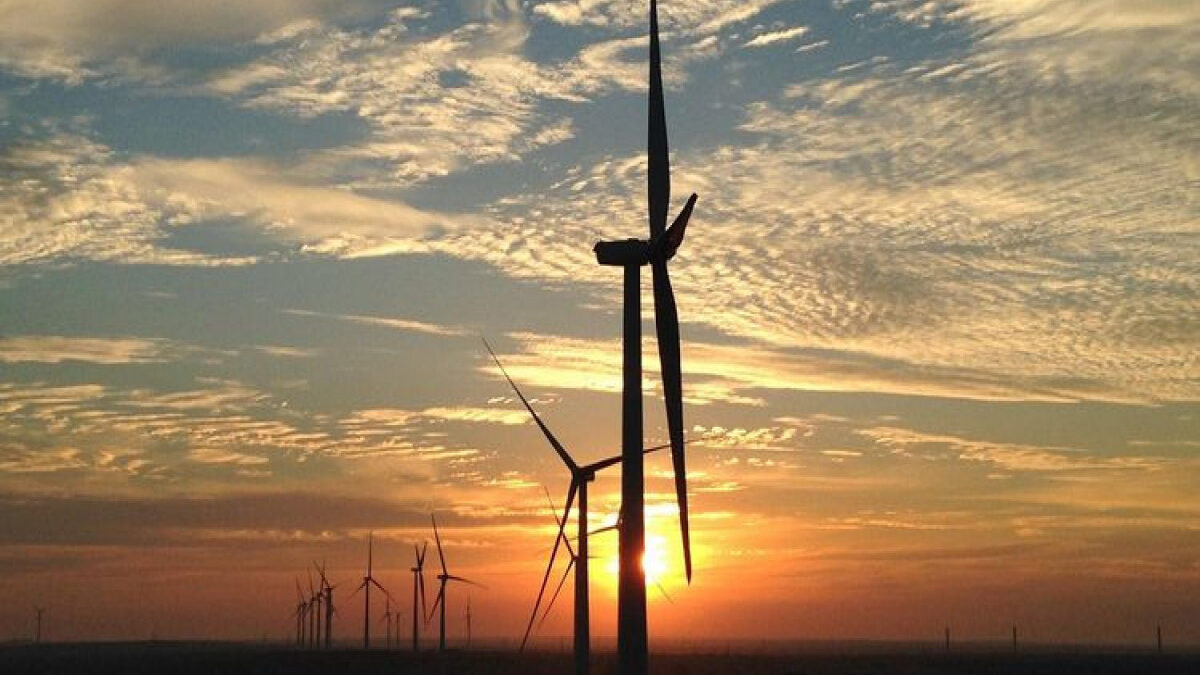
The commissioning of the 240 MW “Khizi-Absheron” Wind Power Plant on January 8, 2026, signifies not only the addition of new generation capacity in Azerbaijan’s green energy policy but also the transition to a structural transformation of the entire energy system.
The project being implemented by Saudi Arabia’s ACWA Power company and the participation of President Ilham Aliyev in the opening ceremony indicate that this station has strategic and political significance along with its economic content.
“I remember well that we laid the foundation of this station in this hall exactly four years ago – in January 2022. Active work has been carried out during these years, and today we are celebrating this wonderful event together. First of all, I would like to express my gratitude to all the people and companies who contributed to the construction of this station, first of all, to ACWA Power, the investor, and its management. This is the first renewable power plant built by ACWA Power in Azerbaijan, but not the last. The company has bigger plans, and the Azerbaijani government fully supports these plans. I must also say that ACWA Power is one of the leading companies in the world in this field and is also interested in implementing new projects in cooperation with Azerbaijani institutions. Including the project of desalination of the Caspian Sea water, which will be built for the first time in our country, will again be implemented by this company as an investor,” President Ilham Aliyev noted.

Energy potential: resource abundance creates a system challenge
Azerbaijan’s wind energy potential alone is more than 150 gigawatts, and this figure exceeds the country’s existing electricity generation capacity many times over. This fact shows that the main limitation for Azerbaijan is not the availability of energy resources, but the transformation of these resources into a real energy system from a technical and institutional point of view.
The map of the location of solar and wind power plants on land and at sea, including in the liberated areas, has already been approved, and the main task at the current stage is to expand the system’s ability to accept energy sources.
Investor portfolio: global companies take positions in green energy
The projects implemented in recent years show that Azerbaijan has become an attractive platform for global investors in the field of green energy, and this interest is already confirmed by specific projects. The first 230 MW Solar Power Plant was built by Masdar company of the United Arab Emirates, the investor of the 240 MW “Khizi-Absheron” Wind Power Plant was “ACWA Power”, and another large 240 MW station is being built by BP in Jabrayil region.
At the same time, the interest of Chinese and Turkish companies in green energy projects shows that the investment environment in this area is not limited to just one region or one source of capital, and a diversified model is being formed.

Powers to be included in the system: the main burden falls on the transmission infrastructure
Within the framework of the existing state plans, 6000 MW of solar, wind and hydro energy by 2030 and 8000 MW by 2032 will be included in the energy system of Azerbaijan. These volumes create a serious need for modernization not only in terms of production, but also in terms of transmission lines, substations and system management mechanisms.
The head of state’s special emphasis on the concept of “digestibility of the energy system” expresses the technical and institutional challenges that arise at this stage.
Battery storage: green energy balancing mechanism
As the share of renewable energy sources increases, energy storage systems become strategically important, and this area becomes one of the main directions of state policy. The first battery storage systems with a capacity of approximately 250 MW are already being installed through the state, but this volume is not considered sufficient and will be significantly increased in the future.
According to him, short-term plans include the creation of energy production and balancing opportunities in the amount of 8 gigawatts, and in the long term, Azerbaijan should become such an energy center that it is possible to receive and transmit energy flows of 20, 30, or even 40 gigawatts.

State goals: phased transition and economic logic
In accordance with the strategy adopted in 2020, Azerbaijan aims to increase the share of renewable energy sources in the installed capacity of electricity by 30 percent by 2030, and according to current forecasts, this indicator will already increase to 25 percent in 2027.
Within the framework of the first phase currently being implemented, that is, by the end of 2027, it is planned to put into operation BOEM projects with a capacity of approximately 2 gigawatts, and in the next five years and longer, it is planned to include more than 6 gigawatts of additional capacity into the system. It is planned that the capacities created in the first stage will be mainly directed to domestic consumption, and in the subsequent stages, export and energy supply of data centers will be brought to the fore, taking into account economic efficiency.
Regional green zones and hydropower component
The economic regions of Karabakh and Eastern Zangezur, as well as the Nakhchivan Autonomous Republic, have been declared “green energy zones”, and the technical potential of renewable energy resources in these regions is estimated at 10 gigawatts in Karabakh and Eastern Zangezur, and 5 gigawatts in Nakhchivan.
Currently, the total capacity of hydroelectric power plants is 1444 MW, which is 14.7 percent of the total installed capacity, and it is planned to increase this figure to 1800 MW by 2030. The total capacity of 38 hydroelectric power plants operating in Karabakh and Eastern Zangezur is 307 MW, and it is expected that this figure will exceed 600 MW with the commissioning of the “Khudaferin” and “Giz Galasi” projects.
Green energy corridors: from internal transformation to export
Azerbaijan is shaping its green energy policy not only as an internal balancing tool, but also as a strategic resource that creates access to regional and European markets, and this approach is reflected in a number of international green energy corridor projects. The Caspian-Black Sea-Europe, Central Asia-Azerbaijan, Azerbaijan-Turkey-Europe and Azerbaijan-Turkey-Georgia-Bulgaria routes are considered as the main directions in this regard.

The main issue is not power, but the system
The commissioning of the “Khizi-Absheron” Wind Power Plant shows that Azerbaijan has already left behind the stage of creating new capacities in its green energy policy and has entered the period of transformation of the energy system. In the coming years, the success of this policy will be determined not so much by the number of stations, but by the expansion of transmission capacities, the application of energy storage technologies and the deepening of regional energy integration, and the logical result of this process will be the transformation of Azerbaijan into a regional green energy center.