
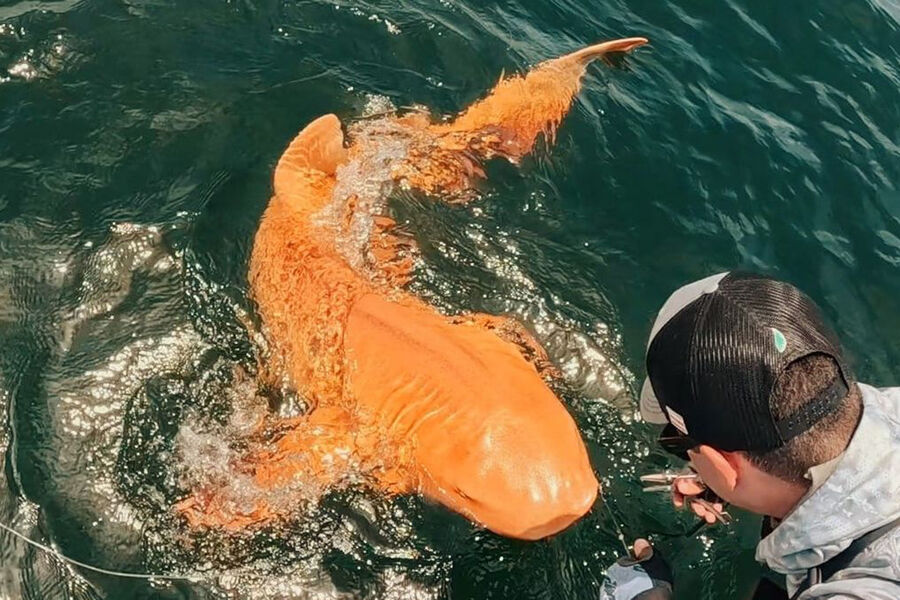
Scientists have described a rare case of pigmentation anomalies in a nurse shark caught off the coast of Costa Rica.
Elchi.az reports that, as reported in the journal “Marine Biodiversity,” the animal exhibited both albinism and xanthorism, which had not been previously recorded in this species.
The unusual shark was caught near Tortuguero National Park on August 10, 2024. A two-meter-long female nurse shark (Ginglymostoma cirratum) was caught by a sport fisherman who raised it from a depth of approximately 37 meters. The fish immediately attracted attention due to its unusual appearance: its skin was golden-yellow, and its eyes were white – a stark contrast to the species’ typical gray-brown color. Fishermen and scientists acted cautiously: the shark was measured, carefully photographed for scientific documentation, and then released back into the sea. The analysis of the descriptions and morphological characteristics was carried out by an international research group led by Marioxis Macias-Cuayar.
According to their findings, the animal showed signs of a condition known as albino-xanthorochromia, a rare combination of two pigmentation disorders. Albinism is associated with a lack of melanin and usually results in light skin and eyes, while xanthorism causes a predominance of yellow pigments. This combination has not been previously described in nurse sharks.
Scientists note that such characteristics can reduce the chances of survival in the wild by making animals more visible to predators or prey. Nevertheless, the shark appeared physically healthy.
Nurse sharks can live up to 25 years and are known for their unusual ability to actively pump water through their gills, allowing them to remain motionless on the bottom for extended periods. The new case expands scientists’ understanding of pigmentation diversity in cartilaginous fish and highlights how rare genetic events can still occur in the ocean.