
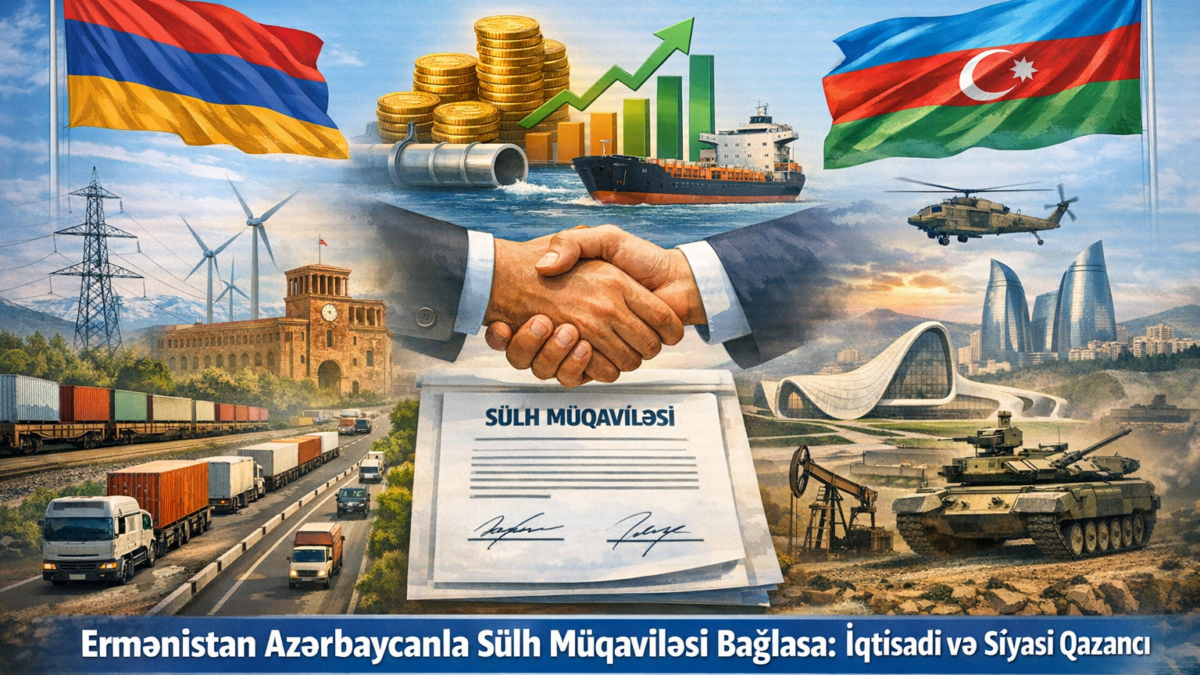
The decades-long conflict between Azerbaijan and Armenia is nearing resolution. As a result of the 44-day war in 2020, Azerbaijan restored its territorial integrity by liberating its internationally recognized territories from occupation. In this process, Azerbaijan’s position was fully justified according to both the USSR Constitution and international law norms. The four resolutions adopted by the UN Security Council in 1993 also demanded the withdrawal of Armenian troops from Azerbaijani territories, but official Yerevan did not comply.
Finally, the Armenian leadership has begun to accept reality – in 2023, Prime Minister Nikol Pashinyan declared their readiness to recognize Azerbaijan’s territorial integrity of 86.6 thousand sq. km (including the Karabakh region). This historic turning point creates the conditions for the signing of a peace agreement and indicates that a new era is about to begin in the region. The signing of a peace treaty not only puts an end to the conflict but also promises broad economic and political dividends for both Armenia and the entire region. In particular, in a state of peace with Azerbaijan, Armenia can emerge from years of isolation and gain significant advantages in trade, energy, transportation, and diplomatic relations. Below, some of the main benefits of peace for Armenia are analyzed across various sectors. For these benefits to materialize, it is essential to ensure lasting peace in the region by proceeding from the fair and just position that Azerbaijan has always emphasized.
Restoration of Trade and Transport Links
For many years, Armenia has been excluded from regional trade and transport projects due to the closure of its borders with Azerbaijan and Turkey. The opening of these borders and the restoration of communications are expected as a result of the signing of a peace agreement. In particular, with the opening of the Zangezur corridor (referred to in some sources as TRIPP – Trump Route for International Peace and Prosperity), Azerbaijan will gain a new road and railway connection linking its main part with the exclave of Nakhchivan. This corridor will also become part of the Middle Corridor, which accelerates cargo transportation between China and Europe. For Armenia, this means international transit opportunities through its territory: thanks to peace, Armenia will gain direct land access to the markets of Russia, Iran, Central Asia, and Europe.
In other words, Armenia, which has been in a dead end for years, can join the main trade routes and become a transit country. A significant reduction in trade costs is expected as a result of the opening of borders. According to experts, opening the Armenia-Turkey border will shorten the distance of import-export shipments, which could reduce transportation costs by approximately 30%. Currently, a large part of Armenia’s foreign trade is carried out through its only northern neighbor, Georgia. After peace, faster and alternative routes, especially access to Europe via Turkey, could strengthen Armenia’s medium-term economic growth prospects.
As a first step, Azerbaijan has already completely removed restrictions on cargo transportation to Armenia through its territory. For example, in October 2025, for the first time after a long break, Kazakh grain was transited to Armenia with Azerbaijan’s participation. Official Baku called this “the economic benefit of peace,” while Yerevan called this step an important step towards opening regional communications and strengthening mutual trust.
New transport links will also create a leap in cargo volumes. According to calculations, after the Zangezur corridor and related railway lines are put into operation, cargo turnover through the Middle Corridor can be carried out 30-40% faster. The transit volume is projected to increase to 15 million tons of cargo per year. This scale of cargo flow means transit fees and new jobs not only for Azerbaijan but also for Armenia. It is even believed that after the new railway line is fully operational, Armenia’s economy could see a 30% increase in just two years. Open borders and restored infrastructure will revitalize not only cargo transit but also tourism.
Energy Cooperation Prospects
One of the most important dividends that Armenia will gain from a peace treaty will be in the energy sector. The country does not have its own natural gas and oil reserves, and until now, it has been dependent on Russia, Iran, and other countries for energy supply. In particular, the Armenian branch of Gazprom is a monopolist in the country’s gas market, which means high prices and vulnerability to political influences in supply. A peaceful environment can open new routes for Armenia to supply energy from neighboring Azerbaijan and regional countries.
The new transit corridors planned in the region also create a basis for cooperation in the electricity and green energy sectors. According to Azerbaijan’s energy strategy, it is planned to export more than 70% of the “green energy” to be created by 2030 and to build an energy corridor connecting the Caspian Sea with the Black Sea, Turkey, and Europe. Azerbaijani officials have openly stated that “the energy corridor in the South Caucasus extending from the Caspian Sea to Turkey will pass through Zangezur.” The realization of such a project could be an incentive for Armenia to gain access to new energy markets and revitalize its economy by attracting investments in this area.
Foreign Investments and Economic Development Prospects
As a result of the renewed outbreak of war in 2020, a sharp decline was observed in foreign direct investment (FDI) flows in both Armenia and Azerbaijan. As the conflict increased geopolitical risks in the region, the volume of FDI in both countries in 2020 fell significantly compared to previous years. However, improving political stability and the security environment will increase investor confidence, as a result of which more foreign capital can enter both Azerbaijan and Armenia. International analysts note that normalization of relations “can unlock new investment opportunities.”
As one of the first effects of peace, while Azerbaijan attracted approximately $1.5 billion in FDI in the first quarter of 2025, Armenia was able to attract only $113 million in investment. This is a consequence of Armenia’s decades of isolation from the routes. With the peace agreement, Armenia will become part of global trade networks and will start earning income from customs and transit fees.
The European Union has announced an investment package worth 2.5 billion euros to Armenia within the framework of the “Global Gateway” strategy. The EU leadership has also expressed support for Armenia’s “Crossroads of Peace” regional connectivity initiative put forward after the peace. The Asian Development Bank (ADB) has also noted that Armenia’s initiative coincides with their concepts.
Ankara and Yerevan have started a dialogue on the normalization of relations since 2022. The Turkish side stated that if there is progress in the Azerbaijan-Armenia peace process, the borders can be opened. The parties are already discussing opening the border for the passage of citizens of third countries. According to Armenian Finance Minister Vahe Hovhannisyan, if the border is opened, transportation costs will decrease and Armenia will become a transit center.
Due to the conflict, Chinese investments in Armenia have been very small until now, but after the signing of a peace agreement, the participation of Chinese investors in infrastructure projects is also possible.
Normalization of Diplomatic Relations and Regional Cooperation
Armenia has reconstructed the Metsamor (Margara) border checkpoint and brought it to a ready-to-open state. Within the framework of the initial peace agreement reached in Washington in August 2025 with the mediation of the United States, an initiative to create a strategic transit corridor was announced. This project will also strengthen bilateral economic relations between Azerbaijan and Armenia.
International rating agencies note that the resolution of the conflict will reduce Armenia’s political risks and may have a positive impact on the country’s sovereign credit rating.
Military and Security Aspects
International observers emphasize that a peace agreement can accelerate economic growth through the expansion of trade. As the Pashinyan government also noted, confidence that there will be no new war in the region is the main foundation of peace.
In the 2025 budget, defense spending in Armenia has increased to 6.1% of GDP. Fitch Ratings notes that lasting peace can reduce Armenia’s financial risks. At the same time, peace will also allow Azerbaijan to diversify its economy.
Conclusion
Azerbaijan has demonstrated its rightful position by ensuring its internationally recognized territorial integrity. The peace agreement turns Armenia into an attractive market for foreign investors. Diplomats note that this alternative route is becoming even more important against the background of the war in Ukraine.
Sources: The facts in the document are based on the analyses of institutions such as Fitch Ratings, Reuters, and Caspian Policy Center.
Prepared by: “Elchi.az” Research Group